
Spring Beware the World Wide Nature of the Wild
My what big teeth you have

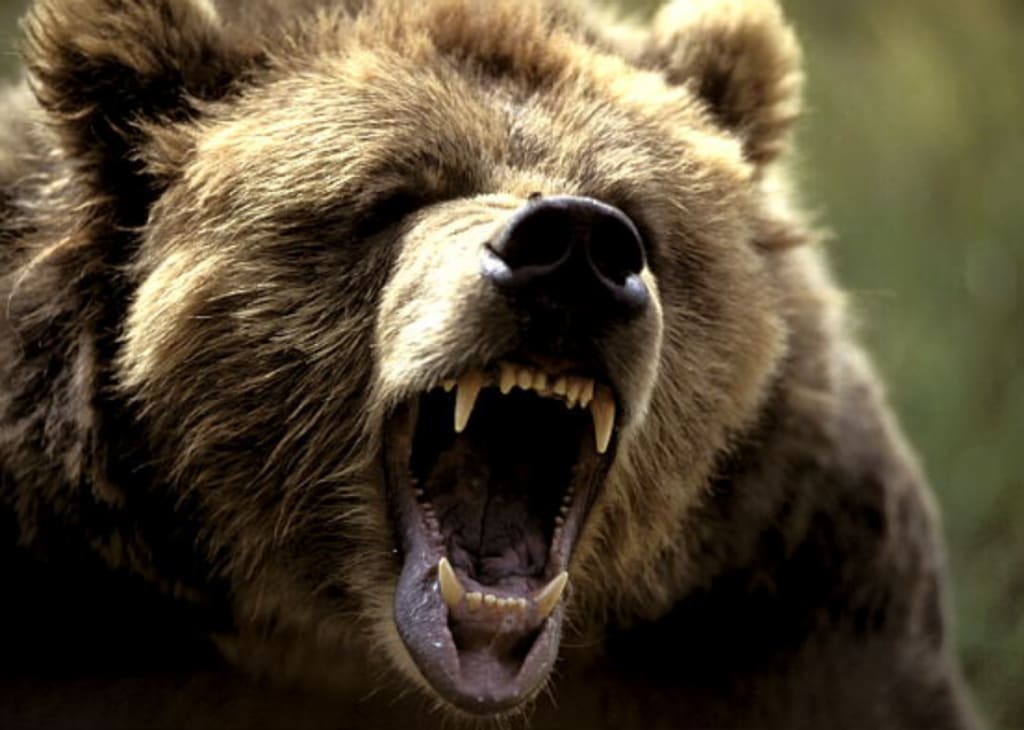
If Red Riding Hood or Goldilocks could bite back then this story wouldn't need written. There may be no such thing as 3 bears in fairy tales or Winnie the Pooh may not be so entertaining to the brave and daring but I for one think people's awareness should be raised when it comes to dangerous wildlife raising its head every spring. Not just in Canada either.
I have heard it all on social media - I have been called a "fear mongerer," (lol, oh the irony), over-cautious. fear-ridden, flat-out ridiculous, or argued with the usual seasonal reasoning, "but we are invading their space" Like that gives the bears an excuse to eat people's faces off, and they do.

So I am going to get straight to the facts and support my argument with links to real-life stories and complete this article with a link that summarizes the most widely known media stories. Though there are more, many more stories than that.
Newfoundland, Canada. It is estimated there are enough Polar Bear in some areas that they could take over an entire village.
MYTHS
- The Bears won't bother you unless you bother them - WRONG! There are many stories that example the predatory nature of bears. Eg: a woman mentions to friends and family that she believes a bear to have followed her home from her walk not once but twice. Not long after the woman is found deceased in her home after the bear climbed through her kitchen window and entered her house, killed her, and partially ate her.
- Another example, a man also tells his friends that he knows a bear has spotted him on the path home that he takes when cutting through a wooded area. Sure enough a short time later he is found dead near the path, killed by the bear.
- A woman on a farm leaves her baby near the front porch to step in the house for just a moment, and comes back out of the house to see a bear has crossed the field with the child in its mouth. The bear is later shot but the child died. In these few examples, none of the people ventured near their den or provoked them in any way. There are other stories of bears out and out stalking people. Yet some wildlife experts will still claim it is not usual behavior for them. Maybe their behavior is changing then because I would think that half a dozen such stories would prove otherwise. Part of science is adapting our theories once there is evidence that might prove the change in what was once previously believed.
How backward is the headline? The human should find a new route so that the bear can be comfortable and attack again?
- Polar bears are only in the far north - WRONG! As the artic grows smaller due to global warming for survival the Polar Bear have moved inward. They have been spotted in Newfoundland even on the Bay of Fundy, where many people go. There are also living examples of hybrids, where Polar Bear and Grizzlies have mated. Check out these links!!
https://www.cbc.ca/news/canada/newfoundland-labrador/nl-polar-bear-sightings-2022-1.6415937
https://nypost.com/2021/04/14/polar-bears-are-mating-with-grizzlies-to-become-pizzly-bears/
- Bears are not predatory - WRONG!- it has been proven that bears will stalk. Some of the attacks seem almost vengeful in nature. They will follow and watch humans. Example: a pair of researchers who know the behavior of bears and the distance to keep and did not interfere but observed only in their study, are found dead by bears. They were followed back to their cabin the day before they were scheduled to leave and had noted in their journal they had observed a bear following them back. The couple was found with their faces eaten off. Another example: a hunter who is cleaning a caribou is found dead, still standing, with a knife in each hand also with his face eaten off.
- If you see a bear on your property and it comes back a 2nd time, it knows you are a food source and is stalking the feeding ground.
- They deserve their space - SO DO WE! this argument amazes me. So are humans entitled to their own space? Are people responsible for how many offspring the bears have? In BC alone there are 150,000 Black Bears and 15,000 Grizzlies. In some areas there are enough bears to take over a small village. As they overpopulate their resources become less which has nothing to do with us encroaching their space. Who says they own the land?
- Keep lids on garbage cans or keep them inside and don't cook outside and the bears will not find you. WRONG! Bears can smell a food source 50 miles away and reach it within a day, they move fast. It is not uncommon in some northern areas to see bears unscrew and take the lids off of garbage cans before rummaging. They are also attracted to bird feeders or fruit bushes, anything outdoor food source. There are YouTube Videos that show bears hunting on farms and attacking and eating cattle and hogs.
- Bear spray cans work - NOPE! There is more than one person who has been found dead by a bear attack with an empty can of bear spray next to them. A can of spray may very well not protect you against a 500 - 1500 lb animal. A rifle will not stop them either unless they are shot in a vulnerable spot. Wildlife spray might work on coyotes or wildcats though.
- Coyotes or wolves always stay in the wild and it is rare for a lone one to wander - QUESTIONABLE If one is wandering there is a pack somewhere in his roaming distance. They have watchers as part of the peck and order of the pack who alert the others by howl or return trips. Barbed wire around your windows and roofs might be a good idea.
- Here is the big one - we need them for the food chain - Scientists sit down because there is no evidence otherwise. The food chain is an abstract thesis based on observational study of how nature fits together but not necessarioy how it functions as a whole unit which it is perceived as. Many animlas have gone extinct over centuries and it didn't upset nature. If the food chain was relative where do humans fit in at all? We are not at the top. Large animals are. In terms of intelligence we are but to a bear we are mere big rabbit. When dinosaurs roamed the earth the bigger ones survived until they ran out of food, then they died out, simple. That has nothing to do with a range of nesting features and which animals consume each other in order. No longer do we grow our food in the woods and what's dung got to do with it? Why again do we allow monstrous-sized man-eating animals to roam areas where people are? Humans altered the food chain as soon as we started raising cattle for consumption. As soon as we destroyed the buffalo population. Humans will continue to in their own need for survival. So far we are still around.
- If there were dragons walking the earth would there be activists? These might not blow fire but they are as dangerous.
In England, for example, wolves and bears have been eradicated for over 100 years. Smart people there, who seem to do magnificently well without them.
The number of attacks is greater than advertised
People go fishing or nature walking or take a shortcut through the woods to get home and never come back.
Then I saw a couple of articles in the news online that I read that piqued my curiosity. Could this be? I was checking out off-grid land in remote areas as research for a hobby of mine, tiny houses. This was seriously concerning to me. People were/are venturing out in tiny houses to remote areas, unorganized townships, or to wooded areas where there are very real dangers: besides bears, there are bobcats, wolves, and coyotes. Wait, a little can of spray is supposed to protect from a 500 - 1500 lb animal? As part of my research, I had a conversation with one of the organizers of an off-grid huge development area. He believed there to be only a handful of bears per every 50 miles. That may be but they populate every year and no one is hunting them. They can have 3-5 offspring, on average.
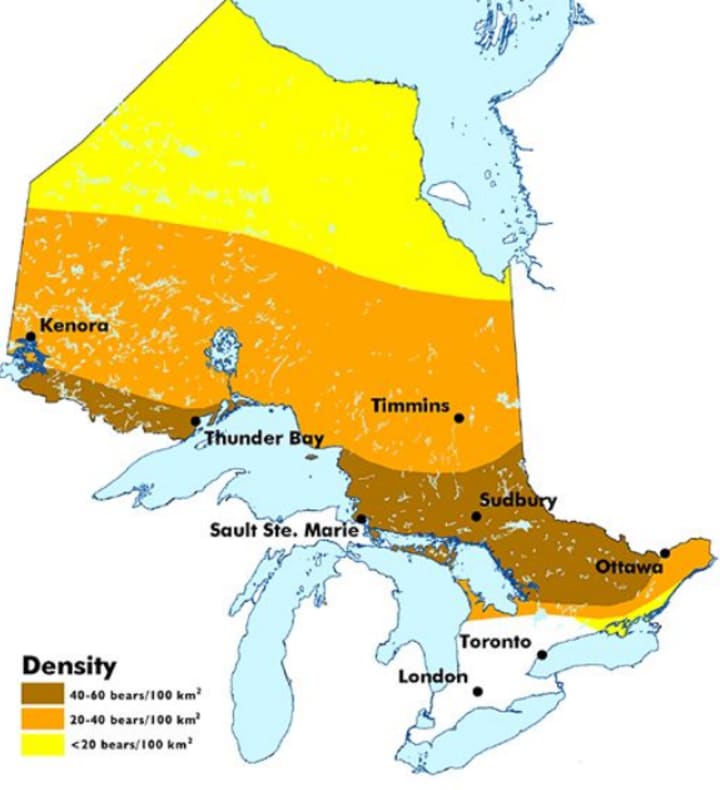
So I checked online for the environmental data and sure enough, there are bear maps that one can source. However, much of what I could find was dated, some of it by even a decade. I believe at the time it was approximately 20 bears per 50 mile radius in the most northern areas. That's easily one per mile in the woods depending on their movement and offspring. These animals can migrate 5o miles in a day and get this - they can smell a dog 50 miles away. Not to mention a child.
I then clicked on some imagery of the off-gridders happily preparing their building site and see a picture of a little toddler helping mom and dad by holding on to a twig she has just cleared. In the background of the photo a thickly wooded brush area of what most definitely has wild cats at least in there. I just sat and stared and took that in.
(I try to reconcile that with Bylaws that promote the "safety," (?) of not parking an RV in a driveway when the campground encouraged to keep it in, the municipalities do absolutely nothing about the predatory nature of the furry neighbour there.)
The point being there are numerous online articles where environmentalists or the Ministry of Natural Resources seem to downplay the dangers of wildlife. There is more than one account of them getting onto family campgrounds, cities, and people's homes.
I am a huge Animal Rights advocator - for small mammals and domesticated pets. Fur coats - no. Puppy mills - no. Overstocked farms - no. But after doing hours and hours of reading and research I now include Dangerous Animals as in, those who can attack people and pets - a resounding No!
In fact, since the government spends billions of dollars on animal control offices in wages annually, why can they not be responsible for controlling the wildlife population since the wildlife is now in municipalities (it might be a better effort than euthanizing domestic animals).
A Resolution
I do have a resolution for my argument - create more Wildlife Preservation Areas, many of them. Canada has much open space that is wild and wooly and undeveloped and perfect for wildlife. So why not use it and make it touristy even, or science-based as natural observation study areas. Like a Jurassic Park without the dinosaurs. Basically re-locate and cordon off all the wildcats, bears, coyotes, wolves, etc. Make separate areas to preserve some species. Then they have a plentiful food source without going outside their boundaries and can control their own population (as horribly as they do.) Create watch towers or enclosed viewing areas and charge people a fee and create a new tourist zone. There are Lion Safaris isn't there? So then why not. It might take a while, even a year or two to develop but that would also create jobs.
Quickly Populating Ravenous Animals is Real
There is a provincial park near where I live called Ipperwash. A few years ago there was the usual annual attention to the presence of a few new bears and the same cautionary information given to the public that has been put out for 20 years now. It's good advice but does not prevent attacks. Three years later those few bears, as of last year had overgrown to some people's accounts of over a dozen. This means they are going to soon enough migrate to rural areas. No criticism to the government but the results of decades of brainwashing means that people, get this, want to leave them alone. "Don't hurt the bears," they exclaim. Ipperwash, I might add is a popular family camping area. One woman I talked to last year was very clear, they went to go camping there for a weekend and left after a day - "there are not 3 or 4 bears there, it's full of them," she exclaimed. Said based on what she saw with her own eyes.
So read on, and when you are done reading some of these articles tell me if your opinion at all changes as to what to do with these big giant fluff muffins with teeth.
These. are. not. big. cute. animals. Even a sweet cub will eat your dog or cat given the chance to.
Check out YouTube For Actual Videos of Bear Attacks
Watch just one or two of these videos and see real footage and stories and it won't be long until you come to the conclusion to shoot them all. They are too big, too dangerous, overpopulated, and do not serve any purpose in the wild.
Documented Attacks
When reading about the high number of women missing in certain areas of Canada and other areas I wondered about the number of people going missing by wildlife attacks. I found a blog written around the Kincardine area where naturalists, hunters, locals, and LE would write about the information they had specific to missing persons in areas known for the wildlife population. There were many accounts of items of people being found in wooded areas where known bears had been sighted. At other times, no items to discover but vehicles left near fishing and hunting or blueberry picking areas. I can't find the blog anymore online but I did find this wonderful compilation of research and documentation here:
Urban jungles or wildlife terror-territories in this big wide world living safely is still the main driver of the human food chain. I sincerely hope this article makes you think before you camp or nature walk and that you are prepared or at least aware to make an intelligent decision as to what is safe.
Bear Wise
More of Lachapelle's work HERE.
~/\~
Copyright © 2022 Lisa A Lachapelle. All rights reserved.
Leave a tip or a pledge if you wish to and I in turn will wish for you.
If you would like to be updated on all my writing just sign in to Vocal for free and click Subscribe on my work. Or brighten my day with an email canuckscribe@gmail
About the Creator
Canuck Scriber Lisa Lachapelle
Vocal Top Story 13 times + Awesome Story 2X. Author of Award Winning Novel Small Tales and Visits to Heaven XI Edition + books of poems, etc. Also in lit journal, anthology, magazine + award winning entries.
Keep reading
More stories from Canuck Scriber Lisa Lachapelle and writers in Earth and other communities.
If Vocal Was a Tree I'd Hug It
A tree is an awesome thing. A magnetic force with much virtue. As a statue of nature it is living and breathing. Much more awesome is a thing with magnitude. A simple statuesque form has much to offer. Not just aesthetics but as in function.
By Canuck Scriber Lisa Lachapelle4 years ago in Earth
Asia’s Second-Best Island in DestinAsian Ranking
Vietnam’s largest island, Phu Quoc, has achieved a remarkable milestone in global tourism by being ranked the second-best island in Asia in the prestigious DestinAsian Readers’ Choice Awards 2026, surpassing the world-famous Maldives. The recognition marks a major moment for Vietnam’s tourism industry and highlights the island’s rapid rise as one of the most desirable tropical destinations in the world. 
By Irshad Abbasi 3 days ago in Earth



Comments (5)
We don't see much wildlife were I live. This is very interesting. Thank you for sharing.
This should have been Top Story , extremely in-depth, informative and interesting
Great story
Wow this was a very informative read
Great story with important information!!!💖💕