
Spotlight on the Risks of An Exploding Sea Urchin Population
A global sea star blight has contributed to the uncontrolled proliferation of sea urchins, which have in turn decimated the oceans’ kelp forests.

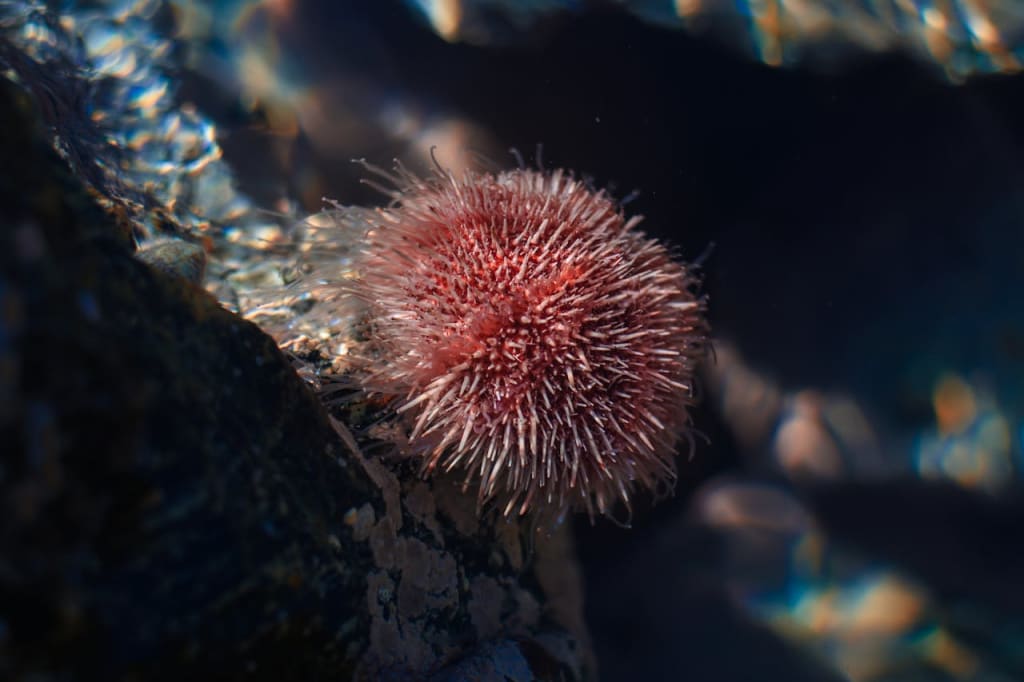
The marine ecosystem is a complicated place full of millions of species and hundreds of thousands of critically interdependent relationships. While the decline of some species populations might have only marginal effects on the health of the world’s oceans, others could set off a chain of events that could ultimately be catastrophic.
Many of these essential populations are widely known apex predators—which are predators at the top of the food chain—that loom large in popular culture, such as sharks. Others are popular sources of food that are being overconsumed, such as the bluefin tuna. But not all keystone species are large—or largely known—and one small sea creature that has been disappearing in recent years is having an outsized impact on the future of the oceans.
Sea stars disappearing
Sea stars—more popularly known as starfish—are a type of marine invertebrate. These colorful, aesthetically shaped creatures have been disappearing in recent years due to a number of factors. A blight of sea star wasting disease infected creatures in a variety of areas, leading to gruesome withering and the deaths of a large portion of the population.
At the same time, warming in the oceans—including a marine heat wave colloquially known as the “blob”—compounded the spread of the vibrio bacteria-caused illness, killing over 5 billion sea stars between 2013 and 2025. An estimated 90 percent of sunflower sea stars along the west coast of North America have vanished, as have sea star populations in other areas of the Pacific and throughout the world. In 2021, the sea star wasting episode that began in 2013 was classified as a record-breaking marine epizootic.
While the loss of a large portion of the sea star population might be sad for children and ocean enthusiasts who love the cute creatures, it has also led to a series of changes in the ocean flora and fauna that are having significantly negative effects. Sea stars are one of the few predators that feed on sea urchins—the spiny echinoderms that are best known for stabbing snorkelers’ feet and hands while they explore reefs during tropical vacations. Along with sea otters, lobsters, and a few fish, sea stars feast on sea urchins, keeping their numbers in check. But with the dwindling sea star population, suddenly one of the biggest predators of sea urchins is no longer able to keep the ecosystem in balance.
Rapid proliferation of sea urchins
This, combined with a number of other factors (including the 2011 tsunami in Japan, a relative lack of other natural predators, and the fact that sea urchins can go “dormant” and survive for long periods of time without food), has led to the rapid proliferation of sea urchins throughout the marine environment. In the aftermath of the 2011 Japan tsunami, which washed ashore a large portion of the sea urchin’s natural predators), local fishermen and scientists noted a seven-fold increase in sea urchin biomass within less than two years. When the sea star wasting episode began in 2013 and decimated the remaining sea star population in the area, the problem only became worse.
As with virtually all species in the marine ecosystem, the unregulated proliferation of sea urchins is problematic. In this case, the problem comes from the fact that sea urchins eat kelp, which serves a number of critical purposes in the ocean. Not only do kelp forests provide a natural habitat and food source for countless marine species, they also serve as enormous carbon sinks for the planet.
Kelp forests decimated
Unfortunately, kelp forests throughout the world have been decimated not only by an overabundance of sea urchins, but also a concurrent warming of the oceans that has interfered with kelp growth and reproduction. And even in places where kelp forests were effectively destroyed, the sea urchin population could sit dormant for years, waiting for the kelp to begin to grow back—and then immediately “wake up” and start attacking and consuming them again.
The ongoing sea urchin/kelp forest situation has existential implications, not only for the sea creatures that the forests play host to, but also the rest of the life on the planet that is affected by rising carbon levels. This has led some people to propose creative—and sometimes controversial—solutions, such as the mass harvesting of sea urchins (which produce “uni,” the creamy sushi ingredient that is wildly popular in Japan, but that has received a mixed response in Western markets).
Importance of marine conservation
The theory is that the destructive overabundance of sea urchins can be mitigated by growing the uni market exponentially and harvesting huge quantities of the sea urchins, providing food to consumers while giving kelp forests a chance to regenerate. This may be one of the rare instances when conservationists and the seafood industry have a common interest—although the plan does pose additional issues for those who oppose the consumption of seafood on ethical grounds (not to mention the need for potential regulation to ensure sea urchins are not subsequently overfished, causing other problems).
Regardless of how the sea urchin/kelp forest crisis plays out, it remains a classic example of how the loss of a single species in the food chain can have a catastrophic effect on the planet—and a reminder of why marine conservation, in general, is vitally important.
About the Creator
Virginia Chipurnoi
For over two decades, Virginia Chipurnoi—widely known as “Mrs. C”—has guided the Humane Society of New York (HSNY) with a blend of operational discipline and mission-driven compassion.
Keep reading
More stories from writers in Earth and other communities.
You and Me and Baby Makes Three
Albatrosses are known for their amazing wingspan and the partnership they form for life. After choosing a mate, when these seabirds are gliding over oceans and separated for long periods of time, they return to their chosen mate. Their courtship involves dancing and calls. Albatrosses are symbols of faithful companionship over time and distance.
By Rasma Raistersabout 18 hours ago in Earth
New Bipartisan Congressional Bill Would Regulate Hemp Products, In Contrast To Ban Trump Signed
The debate over hemp regulation in the United States is once again taking center stage in Congress. A new bipartisan congressional bill aims to regulate hemp-derived products, marking a clear contrast with a previous ban signed by former President Donald Trump. This proposed legislation reflects a growing recognition among lawmakers that hemp is here to stay — and that regulation, not outright prohibition, may be the most effective way forward.
By Muhammad Hassan6 days ago in Earth
🅼🅸🅳🅽🅸🅶🅷🆃 🆂🅽🅰🅲🅺🆂
"It's 10 in Tuscon! We all know what that means... It's Time for Midnight Snacks with your man, Gerald Gee! Ready to spend the night together? Me too! I'm full of snacks and can't wait to regurgitate them all back into your hungry ears. Crack a brew! Pop some corn! Anything to get ready for one hell of a show where the talk maybe cheap but the words cut deep...
By Lamar Wiggins8 days ago in Fiction


Comments