
Socotra Island's Unique Flora: Nature’s Alien Wonderland
Discover the Mystical Beauty of Socotra Island

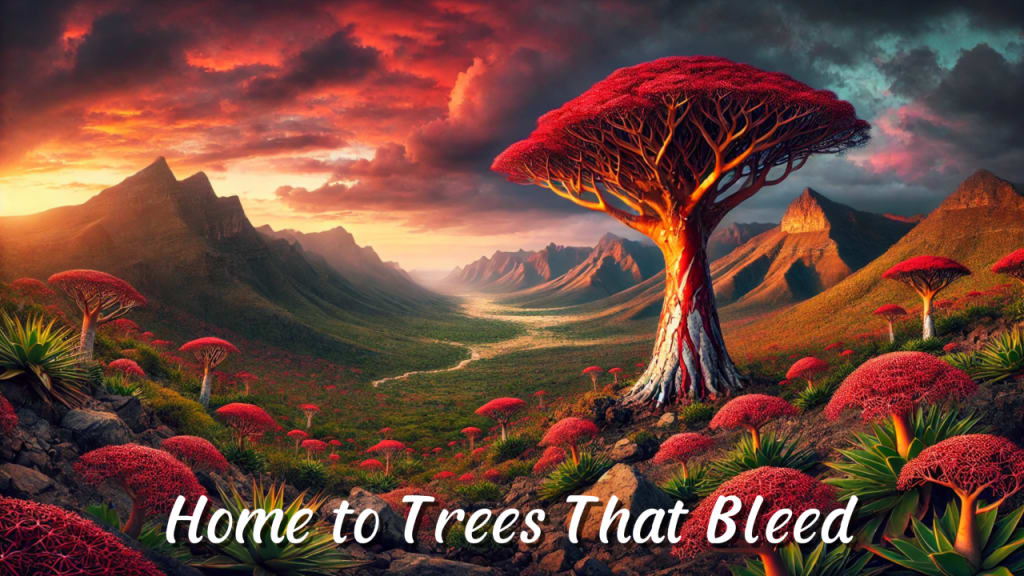
When it comes to Earth’s most peculiar landscapes, Socotra Island stands in a league of its own. Located in the Arabian Sea, just off the coast of Yemen, this remote island looks like it was plucked from the pages of a science fiction novel. But Socotra’s not just about stunning scenery—it’s the flora here that steals the show. From trees that ooze blood-red sap to plants shaped like giant green bottles, Socotra is home to some of the most unique botanical wonders on the planet.
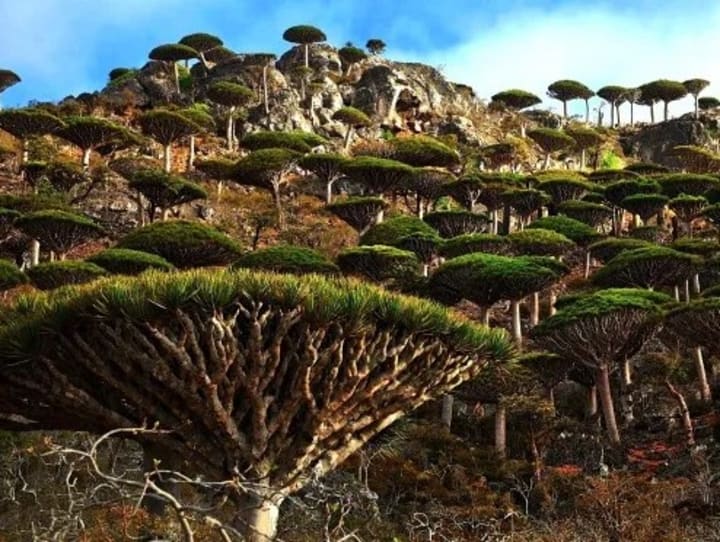
Where Is Socotra, and Why Is It So Special?
Socotra is part of an archipelago consisting of four islands, but it’s the largest one that draws all the attention. Often called the “Galápagos of the Indian Ocean,” this UNESCO World Heritage Site boasts one of the most biodiverse ecosystems in the world. Around 37% of Socotra’s plant species are endemic, meaning you won’t find them anywhere else on Earth.
How did it become such a treasure trove of biodiversity? Isolation is the answer. Socotra has been geologically separated from mainland Africa and Arabia for over 20 million years, giving evolution a blank canvas to create some of the strangest flora imaginable.
Meet the Stars of Socotra’s Flora
Let’s dive into the botanical oddities that make Socotra famous:
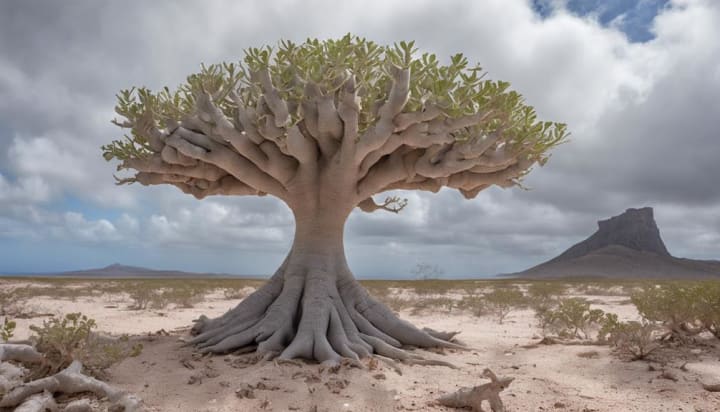
1. Dragon’s Blood Tree (Dracaena cinnabari)
The undisputed icon of Socotra, the Dragon’s Blood Tree, looks like a giant umbrella flipped upside down. Its dense, dome-shaped canopy provides much-needed shade in the arid landscape. But the real intrigue lies in its crimson sap, often called “dragon’s blood.” Ancient societies prized this resin for everything from medicine to dye, and today, it still holds an aura of mystique.
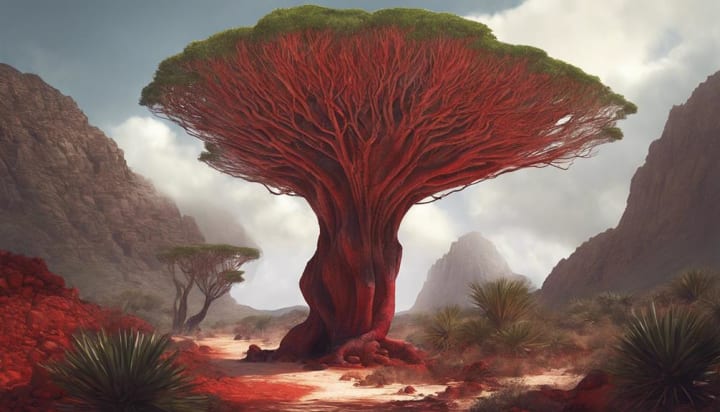
2. Desert Rose (Adenium obesum socotranum)
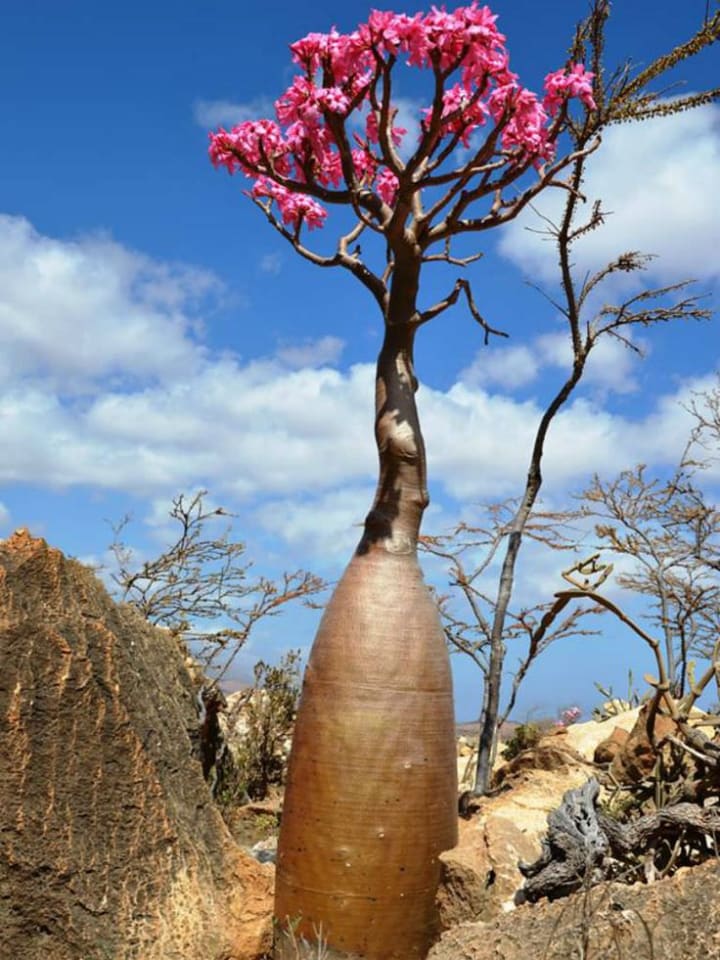
Imagine a tree trunk that looks like it’s been pumping iron at the gym—it’s swollen, bulbous, and utterly bizarre. That’s the Desert Rose. Known as the “bottle tree,” its inflated base stores water, helping it survive Socotra’s unforgiving environment. And as if it wasn’t striking enough, it bursts into pink, rose-like blossoms during the rainy season.
3. Cucumber Tree (Dendrosicyos socotranus)
A tree named after a vegetable? Why not? The Cucumber Tree is another quirky marvel, with its fat trunk and spindly branches covered in tiny, cucumber-like fruits. It’s one of the few surviving members of the gourd family that has evolved into a tree—a botanical oddball, even by Socotra’s standards.
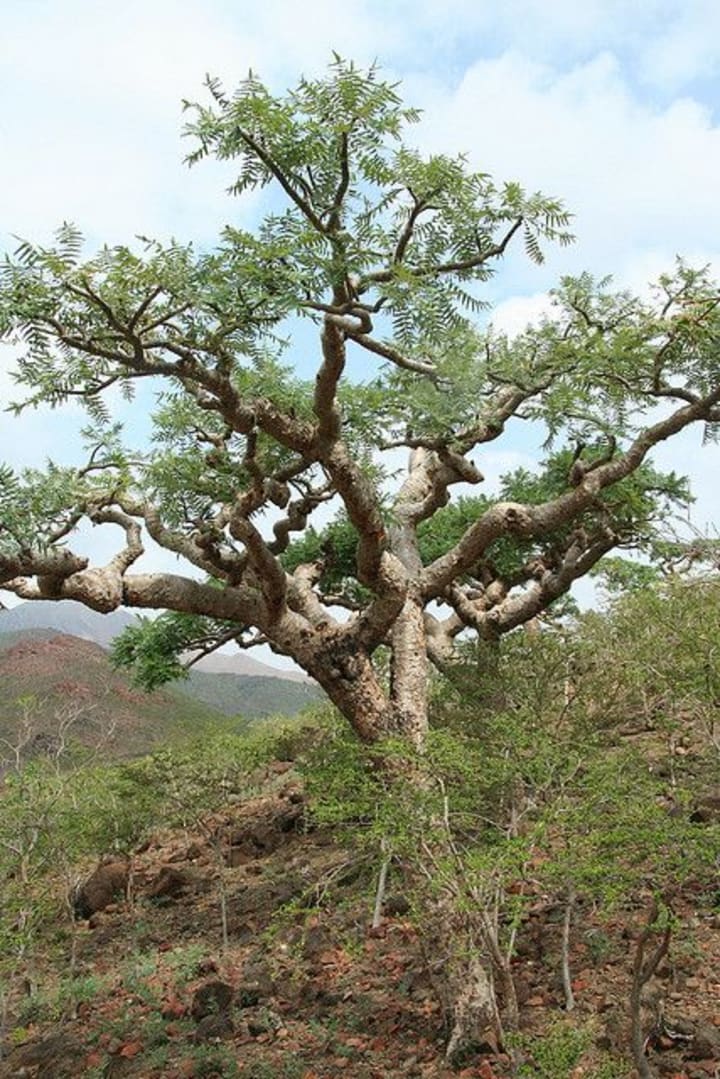
4. Frankincense Tree (Boswellia elongata)
While frankincense may conjure images of the biblical Magi, on Socotra, it’s a vital part of the ecosystem. These hardy trees cling to rocky cliffs, producing the aromatic resin that’s been traded for centuries. Its sweet, earthy scent adds a spiritual touch to Socotra’s already ethereal vibes.
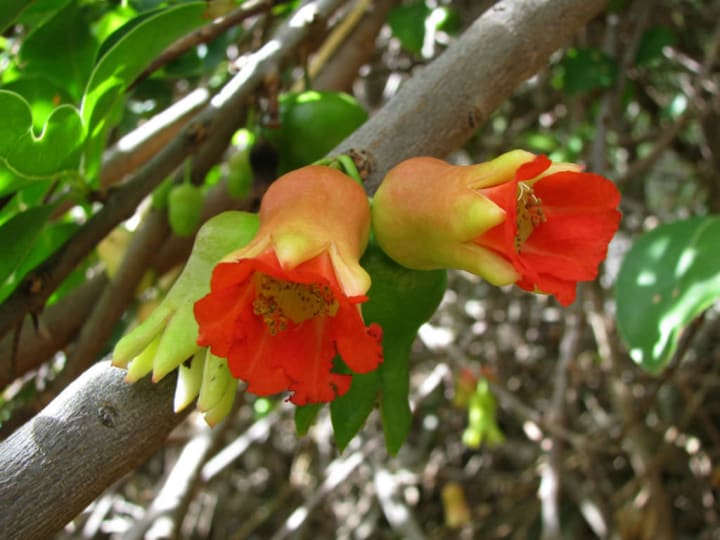
5. Socotran Pomegranate (Punica protopunica)
Think you know pomegranates? Think again. The Socotran variety is smaller, wilder, and boasts pale pink fruit. It’s considered a living fossil, offering a glimpse into the evolutionary history of one of humanity’s oldest cultivated fruits.
Survival in a Harsh Climate
Socotra’s unique flora isn’t just eye-catching; it’s also incredibly resilient. The island’s climate is hot, dry, and often unforgiving, with monsoon winds whipping through its rugged terrain. Many plants have evolved thick bark, water-storing trunks, and deep roots to survive in these conditions.
But the flora doesn’t just survive—it thrives. These adaptations allow the plants to flourish in a landscape that would leave most vegetation waving a white flag.
Socotra - The treasure island between Yemen and Somalia | DW Documentary
Threats to Socotra’s Natural Heritage
Despite its isolation, Socotra isn’t immune to the pressures of the modern world. Climate change, invasive species, and unsustainable development are growing concerns. Overgrazing by goats has particularly impacted the island’s fragile ecosystems, threatening some of its rarest species.
Thankfully, conservation efforts are underway. Local communities, international organizations, and the Yemeni government are working together to protect Socotra’s unique flora for future generations.
Socotra: A Natural Wonder Worth Protecting
Socotra Island isn’t just a botanist’s dream; it’s a reminder of nature’s boundless creativity. Its otherworldly plants transport you to a time and place where evolution ran wild and imagination knew no limits.
So, whether you’re a science geek, an adventurer, or someone who simply appreciates the bizarre beauty of our planet, Socotra’s flora is a story worth knowing—and preserving. After all, there’s only one Socotra, and it’s as irreplaceable as it is extraordinary.
About the Creator
Keep reading
More stories from Marveline Merab and writers in Earth and other communities.
Inside the Chernobyl Exclusion Zone: Exploring the World's Most Dangerous Tourist Destination
If the idea of walking through a radioactive wasteland sounds more like a horror movie plot than a vacation plan, think again. The Chernobyl Exclusion Zone, once the site of the world’s worst nuclear disaster, has transformed into a grim yet oddly captivating tourist destination. Thousands of adventurous travelers flock here every year, armed with Geiger counters, a dash of morbid curiosity, and a lot of questions: Is it safe? What’s it like? And why would anyone voluntarily visit a radioactive ghost town?
By Marveline Merababout a year ago in Earth
Stock Market Today: Nasdaq Futures Rise; Oil Skids After Trump Dials Down Iran Tension
If you’ve been following the markets this week, you’ve probably noticed how sensitive traders are to geopolitical headlines. On Thursday, Nasdaq futures rose, while oil prices dropped after U.S. President Donald Trump made remarks that dialed down fears of immediate military escalation with Iran. It’s a classic example of how news can move multiple markets at once — tech stocks climbing while commodities react in the opposite direction. Nasdaq Futures Bounce Back Technology and growth-focused stocks led the recovery in futures trading. Nasdaq futures climbed, signaling that investors are regaining confidence after recent volatility. Many traders have been cautious, with some taking profits from high-flying tech names, but today’s rebound shows that market optimism is returning. Corporate earnings are a big factor here. Several tech giants, including semiconductor and software companies, have beaten analyst expectations in recent weeks. These results support longer-term growth narratives, giving investors confidence that the tech sector can continue to outperform even amid economic uncertainty. For anyone watching the markets, this is a reminder: futures are forward-looking indicators. When traders see signs of stabilization — like reduced geopolitical tension or strong earnings — markets often react positively before the official trading session even begins. Oil Prices Fall Amid Eased Tensions On the flip side, oil prices skidded. The energy market had been pricing in potential supply disruptions due to the tension with Iran, particularly in critical regions like the Strait of Hormuz. But after Trump’s comments, traders interpreted a lower risk of military conflict, and crude futures dropped sharply. West Texas Intermediate (WTI) and Brent crude both saw declines of around 4–5%, as investors adjusted their positions. This shows how geopolitical risk premiums can inflate commodity prices — and how quickly they can disappear once the perceived threat diminishes. Lower oil prices are a double-edged sword. On one hand, cheaper fuel eases costs for consumers and businesses. On the other, energy companies and oil-exporting nations may face pressure on revenue and profits if prices remain soft. Why Geopolitics Moves Markets The Middle East continues to be a major driver of global market sentiment. Even the possibility of conflict in oil-rich regions can make investors nervous, sending equities lower and commodities higher. Conversely, statements that calm these fears can produce quick rebounds in risk assets like stocks and a decline in commodities like oil. This week’s developments show just how reactive the markets have become. A single remark from a world leader — in this case, Trump — can shift risk perception and trigger immediate moves across multiple asset classes. Earnings and Economic Data Still Key While geopolitical headlines dominate daily moves, corporate earnings and economic data remain critical for long-term market trends. Financial giants like Morgan Stanley recently reported results that beat expectations, boosting their stock prices and reinforcing positive sentiment in the sector. Investors are paying close attention to these fundamentals. Earnings reports and macroeconomic indicators provide insight into underlying trends, helping traders separate short-term volatility from sustainable growth. What Investors Should Watch For stock investors: The rebound in Nasdaq futures suggests that growth and technology stocks are finding support, but volatility is still high. Active risk management and portfolio diversification remain essential. For energy markets: Today’s slump in oil prices highlights how commodities react to geopolitical sentiment. Traders should watch for developments in the Middle East, as any escalation could reverse the decline in prices almost immediately. For global markets overall: Investors must balance multiple narratives — geopolitical events, corporate earnings, economic data, and interest rate expectations. This interplay shapes risk appetite and influences how capital flows across sectors and regions. The Takeaway Today’s market action illustrates a broader theme: markets are highly sensitive to shifts in risk perception. When geopolitical tension eases, equities tend to rise, and risk-sensitive commodities like oil fall. But when threats reappear, sentiment can flip, reminding investors that global markets are dynamic and interconnected. This combination of Nasdaq gains and falling oil prices isn’t just about numbers — it’s about investor psychology, risk management, and the speed at which news travels in our global economy. The lesson is clear: staying informed and flexible is more important than ever for anyone participating in today’s markets.
By Muhammad Hassan4 days ago in Earth
Cement's Quiet Pivot
Why this is under-the-radar progress Cement and concrete account for a sizable slice of global CO₂, but the fastest cuts right now aren’t headline-grabbing moonshots — they’re practical shifts already filtering through specifications, standards, and procurement. Three forces are converging: (1) modern cement standards that enable big clinker reductions with reliable performance; (2) rapid market adoption of Portland-limestone cement (PLC) and new ternary blends such as limestone–calcined clay cements (LC3); and (3) public buyers setting embodied-carbon requirements that move the market. Together, these are driving real-world emission declines from the most-used construction material on earth — often without changing how structures are designed or built [8].
By Futoshi Tachino7 days ago in Earth



Comments
There are no comments for this story
Be the first to respond and start the conversation.