
Snow Causes Rush Hour Misery: How a Winter Blast Disrupted Commuters Across the UK
Chaos on Roads and Rails: How a Sudden Snowstorm Turned the UK’s Morning Commute Into a Winter Nightmare”

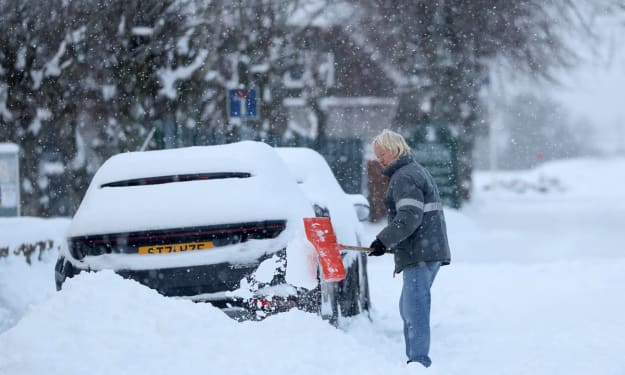
Commuters across the UK faced widespread disruption as an unexpected snowstorm hit during morning rush hour, leaving roads treacherous, public transport in chaos, and many struggling to reach work on time. From London to Glasgow, icy conditions and snow-covered streets created a perfect storm of travel misery, prompting warnings from authorities and emergency services.
A Winter Commute Like No Other
The snowstorm, which began in the early hours, caught many drivers and public transport users off guard. Major roads and highways quickly became clogged as vehicles struggled for traction, while smaller streets turned into slippery, near-impassable pathways. Commuters reported long delays on key arterial routes, with some stuck in traffic for over two hours.
Rail services were equally affected. Trains across several regions, including the Midlands and northern England, experienced delays and cancellations due to frozen tracks and signal failures. London Underground users faced crowded platforms as fewer trains ran, leaving many frustrated and late for work.
Public Transport Challenges
Bus operators struggled to maintain regular services as icy roads made routes hazardous. In some areas, services were suspended entirely until conditions improved. Airports also faced delays, with several early morning flights cancelled due to snow accumulation on runways and poor visibility. Passengers were urged to check their flight status before leaving for the airport.
Transport authorities issued multiple warnings advising people to avoid unnecessary travel. In London, the mayor’s office emphasized the need for caution, particularly for pedestrians navigating icy pavements. The emergency services warned that slip-and-fall injuries were likely to increase during the day.
The Human Toll
Beyond the logistical challenges, the snowstorm had a significant impact on commuters’ mental and physical well-being. Stories emerged of exhausted workers abandoning their vehicles and walking long distances to reach their offices. Others reported being stranded at train stations for hours, with minimal shelter from the cold.
Local hospitals prepared for a spike in weather-related injuries, such as falls on icy pavements and minor road accidents. Health authorities urged residents to dress warmly, avoid risky journeys, and check on vulnerable neighbors.
Economic and Business Disruption
The disruption went beyond the morning commute. Businesses reported delayed deliveries and absentee employees, affecting operations across sectors. Retailers, in particular, felt the impact as employees struggled to reach stores, while online deliveries experienced delays due to impassable roads.
Construction and outdoor work were largely suspended as safety risks escalated. Experts warned that repeated snow events during winter could have a cumulative effect on productivity and supply chains, highlighting the economic cost of severe weather.
Government and Emergency Response
Local councils and emergency services mobilized quickly, deploying gritters and snowplows to major roads. Salt and grit supplies were distributed across high-risk areas to prevent accidents and maintain traffic flow. Police forces increased patrols to assist stranded motorists and respond to accidents efficiently.
Meteorologists have indicated that this snowstorm may be part of a longer cold spell, with temperatures expected to remain below freezing in many regions over the next few days. Authorities urged the public to prepare for continuing disruption and to prioritize safety above all else.
Safety Tips for Navigating Snow
Officials offered a range of safety advice for those who must travel during snowy conditions:
Limit journeys to essential trips only.
Equip vehicles with winter essentials, including blankets, food, water, and snow chains.
Dress in layers and wear appropriate footwear to prevent slips.
Monitor updates from local authorities, transport operators, and weather services.
For pedestrians, use designated pathways and avoid shortcuts over icy patches.
Community Support and Adaptation
In addition to official measures, communities have stepped in to help those affected. Volunteers have been assisting elderly or vulnerable neighbors by clearing snow, delivering essentials, and checking on safety. Schools and universities have extended deadlines or moved classes online where possible to accommodate students impacted by travel disruptions.
Employers have been encouraged to adopt flexible working arrangements, including remote work, to reduce pressure on commuters and prevent unnecessary travel.
Conclusion
The snowstorm that struck the UK during rush hour serves as a stark reminder of the challenges winter weather can pose to daily life. From snarled traffic and delayed trains to economic disruption and increased risk of injuries, the impact of severe snow extends far beyond the inconvenience of being late for work.
As authorities continue to respond with gritters, road closures, and public advisories, the message is clear: safety must come first. Commuters are encouraged to stay informed, exercise caution, and adapt to the ongoing winter conditions. The day’s disruptions underscore the importance of preparedness, flexibility, and community support in the face of harsh weather.
Even in a modern, highly connected society, a snowstorm can still bring rush hour to a grinding halt, reminding everyone of the enduring power of nature and the resilience required to navigate it.
About the Creator
Keep reading
More stories from Fiazahmedbrohi and writers in Earth and other communities.
Homes in North Scotland Without Power as Arctic Weather Sweeps the UK
As Arctic air sweeps across the United Kingdom, communities in northern Scotland are bearing the brunt of one of the harshest winter spells in recent years. Sub-zero temperatures, heavy snowfall, and powerful winds have combined to knock out power supplies to thousands of homes, leaving residents facing prolonged outages amid dangerously cold conditions. The extreme weather has once again highlighted the vulnerability of infrastructure in remote regions and raised urgent questions about preparedness in an era of increasingly volatile winters. A Deep Freeze Grips the North The latest cold snap has been driven by an Arctic air mass plunging southwards, bringing temperatures well below freezing across much of the UK. In parts of the Highlands, temperatures have dropped to levels not seen for several winters, with wind chill making conditions feel even more severe. Heavy snow and ice have blanketed roads, while gusts strong enough to down power lines have created widespread disruption. Northern Scotland, known for its rugged terrain and dispersed communities, has been particularly affected. Rural villages and isolated households are often connected by long stretches of overhead power lines, which are highly susceptible to damage from ice buildup and falling trees. As snow accumulated and winds intensified, multiple faults occurred across the network, leaving homes without electricity for hours—and in some cases, days. Power Outages and Daily Life For residents, the loss of power during Arctic conditions is more than an inconvenience. Electricity is essential not only for lighting and communication but also for heating, cooking, and water supply in many modern homes. Without it, indoor temperatures can drop rapidly, posing serious risks to vulnerable groups such as the elderly, young children, and those with health conditions. Many households have had to rely on alternative heat sources such as fireplaces or portable gas heaters, while others sought refuge with relatives or in community shelters. Local authorities and volunteer groups have stepped in to provide support, distributing hot meals, blankets, and updates to those affected. However, the scale of the outages has stretched resources, particularly in remote areas where access is limited by snow-covered roads. Strain on Infrastructure The Arctic blast has once again exposed the fragility of power infrastructure in extreme weather. Much of Scotland’s electricity network, especially in rural areas, still relies on overhead lines rather than underground cables. While overhead systems are cheaper to install and maintain, they are far more vulnerable to storms, heavy snow, and ice. Energy companies have deployed repair crews around the clock, often working in treacherous conditions to restore supplies. Engineers have faced blocked roads, poor visibility, and freezing temperatures, slowing repair efforts. Despite these challenges, utility providers have emphasized that safety must come first, as repairing live lines in severe weather carries significant risks. Travel and Wider Disruption Power outages are only one part of the broader disruption caused by the Arctic weather. Snow and ice have forced road closures across the Highlands and islands, while rail services have been reduced or suspended in some areas. Schools have closed as a precaution, and health services have urged people to avoid non-essential travel. Airports in northern regions have also experienced delays and cancellations, as icy runways and poor visibility complicate operations. For businesses, particularly small enterprises in tourism and agriculture, the weather has delivered another economic blow during what is already a challenging winter period. Climate Change and Colder Extremes While cold snaps are a natural part of the UK’s climate, scientists warn that climate change may be making winter weather more unpredictable and extreme. A warming Arctic can disrupt atmospheric patterns, increasing the likelihood of sudden cold outbreaks like the one currently affecting Scotland. This paradox—where global warming can lead to more intense cold spells—adds complexity to planning and resilience efforts. The current outages have reignited debate about the need to modernize infrastructure to cope with these extremes. Calls are growing for greater investment in underground cabling, improved grid resilience, and community-level backup systems, particularly in regions that are repeatedly affected by severe weather. Community Resilience and the Road Ahead Despite the challenges, stories of resilience and solidarity have emerged from affected communities. Neighbors have checked on one another, shared generators, and opened their homes to those without heat. Local councils and charities have coordinated relief efforts, demonstrating the importance of community networks during crises. Looking ahead, experts argue that lessons must be learned from each severe weather event. Improving early warning systems, strengthening infrastructure, and ensuring clear communication between authorities and residents are all critical steps. For northern Scotland, where extreme weather is a fact of life, building resilience is not optional—it is essential. Conclusion The Arctic weather sweeping across the UK has left homes in northern Scotland without power, disrupting daily life and underscoring the challenges of maintaining essential services during extreme conditions. While emergency responses have helped mitigate the immediate impact, the situation highlights a broader issue: the need for long-term investment and adaptation in the face of a changing climate. As temperatures slowly recover and power supplies are restored, the experience serves as a stark reminder that winter extremes remain a serious threat. For policymakers, energy providers, and communities alike, the message is clear—preparing for harsher, more unpredictable winters must be a priority, not an afterthought.
By Fiazahmedbrohi 4 days ago in Earth
Pyrolysis as a Strategic Instrument in Modern Forest Management
Forest management has entered a phase defined by competing pressures. Fire risk is rising. Biomass residues are accumulating. Carbon accounting expectations are tightening. Pyrolysis has emerged as a technical lever capable of addressing these constraints simultaneously. Its value lies not in abstract sustainability claims, but in its operational and ecological consequences when integrated into forestry systems.
By Wayne Shen5 days ago in Earth


Comments
There are no comments for this story
Be the first to respond and start the conversation.