
Pyrolysis as a Strategic Instrument in Modern Forest Management
Strengthening Forest Resilience Through Biomass Conversion

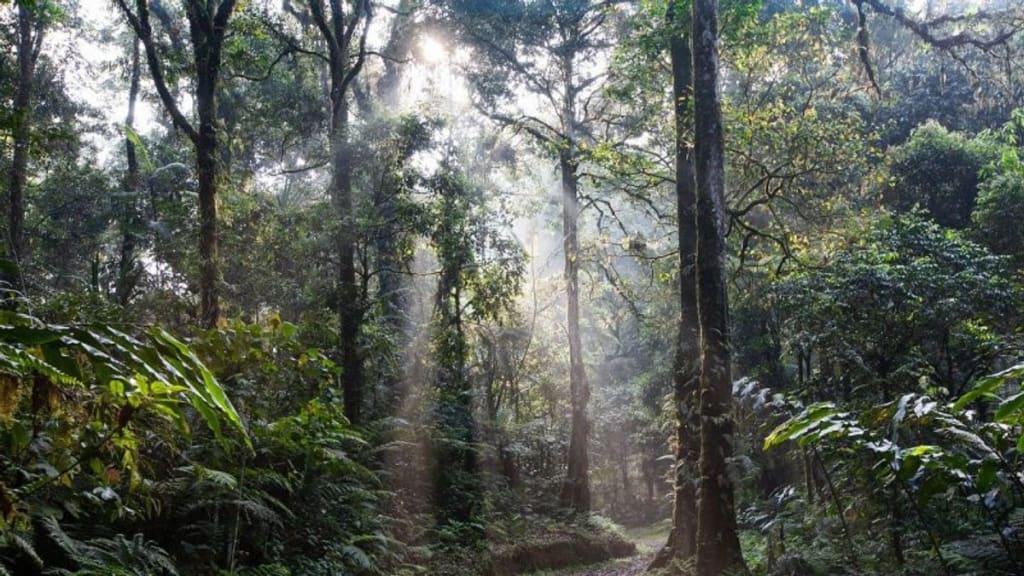
Forest management has entered a phase defined by competing pressures. Fire risk is rising. Biomass residues are accumulating. Carbon accounting expectations are tightening. Pyrolysis has emerged as a technical lever capable of addressing these constraints simultaneously. Its value lies not in abstract sustainability claims, but in its operational and ecological consequences when integrated into forestry systems.
Reducing Fuel Load and Wildfire Intensity
One of the most immediate benefits of pyrolysis in forest management is fuel load reduction. Thinning operations, deadwood removal, and post-harvest residues generate large volumes of low-grade biomass. When left unmanaged, this material increases wildfire probability and severity.
Traditional disposal options are limited. Open burning releases uncontrolled emissions. Landfilling is impractical and often prohibited. Pyrolysis of wood converts this excess biomass into stable solid carbon and usable energy carriers.
By diverting forest residues into controlled thermal conversion, managers reduce horizontal and vertical fuel continuity. Fire behavior changes. Flame length decreases. Crown fire risk is mitigated. This is a direct operational benefit rather than a downstream environmental abstraction.
Enabling Economically Viable Thinning Operations
Forest thinning is ecologically beneficial but economically challenging. Low market value of small-diameter wood discourages active management, especially in remote regions.
Pyrolysis alters this equation. It creates a monetization pathway for material previously classified as waste. Even modest revenue streams can offset harvesting and transportation costs.
This economic signal matters. When thinning becomes financially viable, forest managers are more likely to implement proactive interventions rather than reactive fire suppression. Pyrolysis thus functions as an enabling infrastructure rather than a standalone process.
Carbon Retention and Long-Term Storage
Forestry is central to climate mitigation, yet conventional biomass utilization often results in rapid carbon re-emission. Pyrolysis introduces a different carbon trajectory.
Thermal conversion stabilizes a fraction of biomass carbon into biochar. This material resists biological degradation for centuries. When applied to soil or stored in controlled environments, it functions as long-term carbon storage.
For forest management agencies facing increasing carbon accountability requirements, this permanence is significant. It transforms residue management from a carbon liability into a measurable asset.
The distinction is temporal. Pyrolysis does not eliminate emissions. It delays and attenuates them across meaningful time horizons.
Soil Rehabilitation and Productivity Enhancement
Biochar derived from forest biomass has agronomic and ecological applications. When applied to degraded forest soils, it improves structure, water retention, and nutrient availability.
This is particularly relevant in areas impacted by logging, fire, or erosion. Soil compaction and nutrient depletion reduce regeneration success. Biochar amendments partially reverse these effects.
Improved soil conditions enhance seedling survival and growth rates. Regeneration cycles shorten. Stand resilience increases. These outcomes directly support long-term forest productivity rather than short-term yield metrics.
Supporting Circular Forest Economies
Pyrolysis supports a circular material flow within forest landscapes. Residues generated during management activities are converted into products that feed back into the same system.
Energy recovered from pyrolysis gas can support on-site operations. Biochar can be returned to forest soils. Heat can be used for drying timber or operating nurseries. This internalization reduces dependency on external inputs. Transportation intensity declines.
Operational autonomy improves, particularly in off-grid or infrastructure-poor regions. Circularity here is practical, not rhetorical. It reduces logistical friction in forest operations.
Enhancing Pest and Disease Management
Forest health threats increasingly include pests and pathogens exacerbated by climate change. Infected or infested biomass presents disposal challenges. Pyrolysis offers a biosecure treatment pathway.
High-temperature processing destroys pathogens, insects, and spores. Unlike chipping or composting, it eliminates biological viability. This capability allows managers to remove and treat compromised material without spreading infestation.
It also prevents reintroduction through soil or mulch applications. In this context, pyrolysis functions as a sanitation tool embedded within forest health strategies.
Aligning With Regulatory and Policy Objectives
Forest management operates under expanding regulatory scrutiny. Air quality, waste handling, and carbon reporting requirements are tightening across jurisdictions. Pyrolysis aligns with these policy trajectories. Controlled thermal treatment is easier to permit than open burning. Emissions are measurable and manageable. Carbon outcomes are quantifiable. This alignment reduces regulatory friction. It also improves public perception of forest operations, which increasingly face social license challenges. Policy compatibility is not incidental. It is a material advantage in project approval and long-term planning.
Improving Operational Flexibility in Remote Areas
Many forested regions lack access to centralized waste processing or energy infrastructure. Transporting low-density biomass over long distances is inefficient. Decentralized or mobile pyrolysis systems address this constraint. They allow conversion at or near the source. Transport shifts from raw biomass to higher-density products. Operational flexibility increases. Management activities are no longer constrained by disposal bottlenecks. Seasonal windows can be used more effectively. This adaptability is critical in landscapes where access is limited by terrain or weather.
Mitigating Environmental Externalities of Traditional Practices
Conventional residue management methods impose environmental externalities. Open burning emits particulates and volatile compounds. Decomposition releases methane. Stockpiling increases pest habitat. Pyrolysis consolidates these externalities into a controlled system. Emissions are treated. Residues are stabilized. Environmental impact becomes predictable rather than diffuse. Predictability is a management asset. It simplifies planning, monitoring, and compliance.
Integrating Pyrolysis Into Long-Term Forest Strategy
The benefits of pyrolysis do not materialize in isolation. They depend on integration into broader forest management frameworks. Feedstock planning must align with silvicultural objectives. Biochar application must respect soil and ecosystem constraints. Energy recovery must match operational demand.
When treated as an ancillary technology, pyrolysis underperforms. When embedded as a strategic tool, it amplifies the effectiveness of existing management practices. Forest management increasingly requires systems thinking. Pyrolysis contributes by connecting fuel reduction, carbon management, soil health, and economic viability within a single operational logic. Its value is not theoretical. It is structural.
About the Creator
Keep reading
More stories from Wayne Shen and writers in Earth and other communities.
Chemical Recycling Pathways Enabled by Tire Pyrolysis
Chemical recycling of end-of-life tires has moved from experimental validation to industrial deployment. Unlike mechanical recycling, which is constrained by material degradation and limited end-use markets, tire pyrolysis enables molecular-level recovery. It converts complex elastomeric composites into reusable chemical fractions with measurable industrial value. This shift is reshaping how tire waste is positioned within circular economy frameworks.
By Wayne Shen2 months ago in Earth
A Dozen Hidden Giants: Scientists Discover Multiple Black Holes at the Heart of Our Galaxy
In one of the most fascinating discoveries in modern astronomy, scientists have identified about a dozen previously hidden black holes near the center of our galaxy, the Milky Way. This remarkable finding provides new insight into the mysterious and chaotic region surrounding the galaxy’s core and may help astronomers better understand how galaxies evolve over billions of years.
By Irshad Abbasi 6 days ago in Earth
Becca
"Everything is so... flat." Denille said stupidly as she looked around her new neighborhood. She looked around at the muted desert where even the smallest sign of life seemed to have given up. The plant life was shrubs that were half cooked by the heat and where there should have been a lawn, a mess of white rocks laid glistening in the sun. Even the sky looked stretched thin, like the sun had ironed it smooth. She’d moved from Riverside, where at least there were hills, but here in Barstow, everything felt baked and brittle.
By Sara Wilson7 days ago in Fiction



Comments
There are no comments for this story
Be the first to respond and start the conversation.