
Shrimp Tank Cloudy Water: Exact Reasons & Fixes for Beginners (2025 Guide)
Clear the Cloud: Simple Reasons Your Shrimp Tank Turns Milky And the Exact Fixes Beginners Always Miss

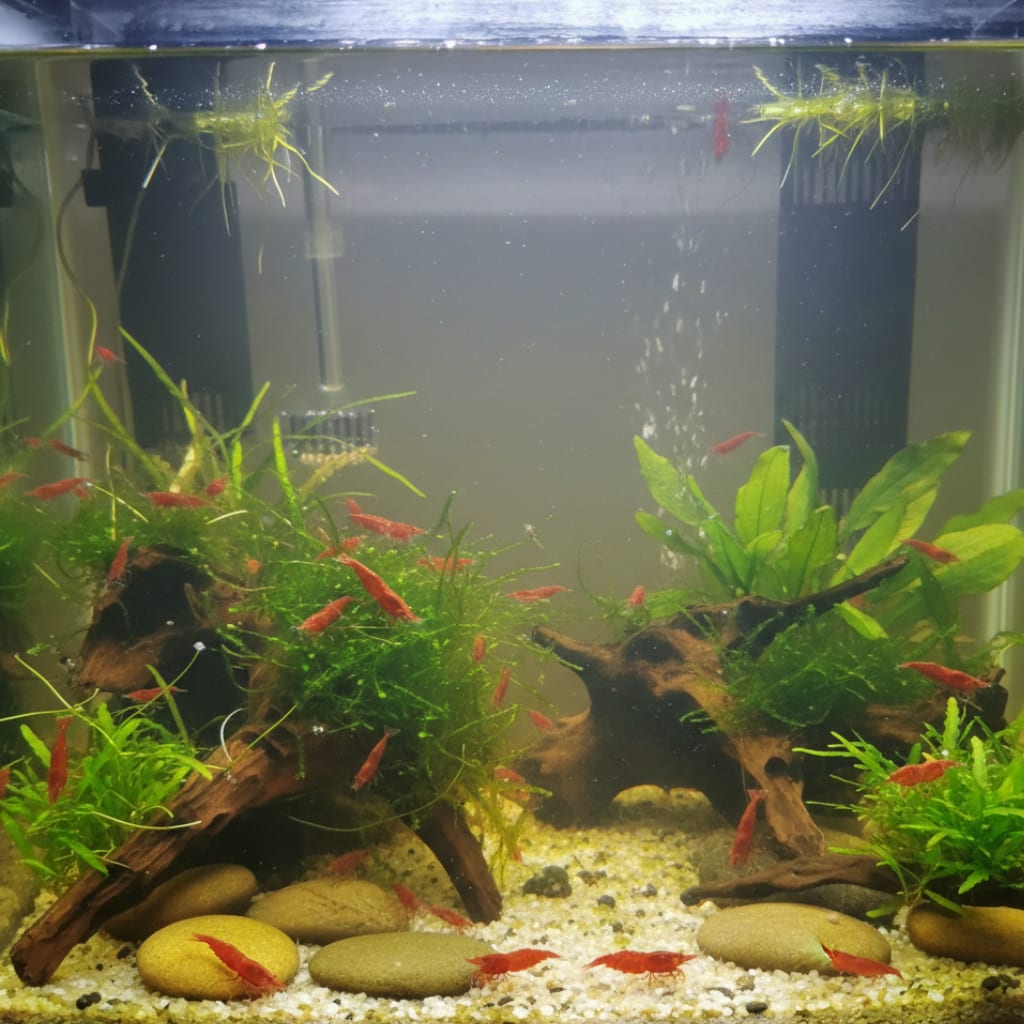
If you've noticed your shrimp tank cloudy water situation getting worse, you're not alone. Cloudiness is one of the most common issues beginners face when keeping freshwater shrimp. The good news? It's almost always fixable and rarely dangerous for your shrimp.
Here's the key: not all cloudy water is the same, and treating the wrong type can actually make things worse. Cloudy water happens for several specific reasons, and each type has its own cause. Some are related to beneficial bacteria, others to overfeeding or dirty substrate.
In this guide, you'll learn how to identify exactly what's causing your cloudy shrimp tank, why it's happening, and the exact steps to clear it up and prevent it from coming back.
Type Overview : Identify the Type of Cloudiness
Before you can fix cloudy water, you need to know what type you're dealing with. There are four main kinds.
White or milky cloudiness looks like someone poured a tiny bit of milk into your tank. It spreads throughout the water evenly.
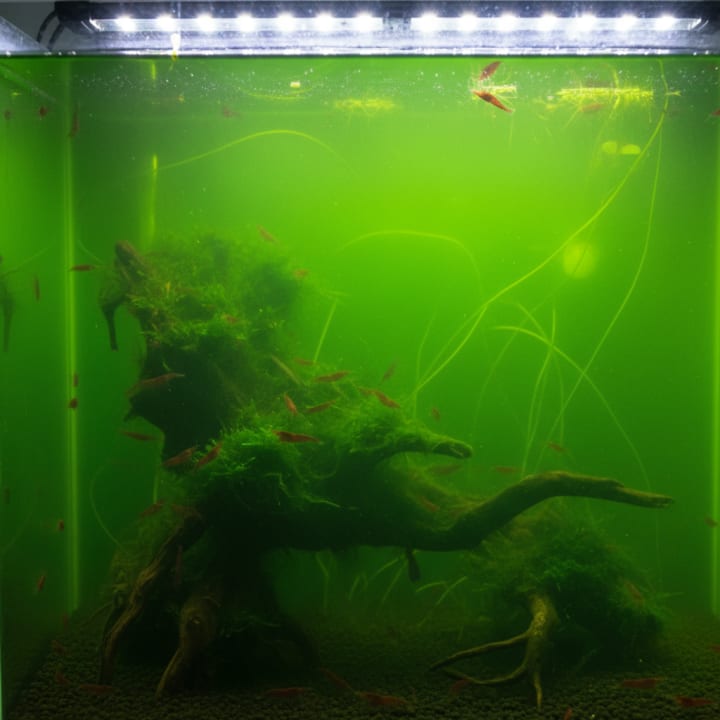
Green cloudiness makes your water look like pale green soup. It usually happens when the tank gets too much light.
Brown or murky cloudiness looks dirty, like dust floating in the water. It often happens after you stir up the substrate or clean the tank.
Gray cloudiness is rarer but can happen with filter issues or decaying organic matter.
Look closely at your tank. Which color matches what you see? Once you know, you can pinpoint the exact cause and fix it fast.

Cause 1 - Bacterial Bloom
White or milky cloudy water in a new shrimp tank is usually a bacterial bloom. This happens when beneficial bacteria rapidly multiply as your tank cycles.
When you first set up a tank, bacteria need to establish themselves to break down waste. During this growth phase, they float freely in the water column, making everything look cloudy. It's completely harmless to your shrimp.
Bacterial blooms can also happen in established tanks after big water changes, adding new substrate, or introducing a lot of new biofilm. The bacteria are simply adjusting to changes in available nutrients.

In new tanks, this is the #1 reason for white cloudiness. This type usually clears up on its own within 3-7 days as the bacteria settle onto surfaces.
Cause 2 - Overfeeding
Overfeeding is one of the most common reasons why is my shrimp tank cloudy in established setups. Shrimp eat very little compared to fish, and leftover food breaks down quickly.
When uneaten food decays, it releases nutrients into the water. This feeds bacteria, which multiply rapidly and create cloudiness. You might also notice a slight smell or see food sitting on the substrate after 2-3 hours.
Shrimp tanks are especially sensitive to overfeeding because they don't have high water flow or aggressive fish to clean up excess food.
For tanks older than 6 weeks, overfeeding causes 70% of cloudy water cases. If you're feeding daily or dropping in large portions, that's likely your problem. Shrimp can go days without supplemental feeding if your tank has biofilm and algae.

Micro-tip: Drop in one small pellet or blanched veggie piece. If it's still there after 3 hours, you're overfeeding.
Cause 3 - Dirty or Disturbed Substrate
Brown or murky cloudy water usually means you've stirred up debris from the substrate. This happens when you vacuum gravel, rearrange decorations, or add new plants.
Shrimp produce waste that settles into the substrate over time. When disturbed, this debris floats back into the water column and makes everything look dirty.
This is the most common cause right after tank maintenance. This type of cloudiness is mechanical, not bacterial. It will settle within a few hours if you leave the tank alone and let your filter work.

Using a sponge filter or low-flow filtration in shrimp tanks means debris takes longer to clear compared to stronger filters.
Cause 4 - Old or Clogged Filter Media
If your filter media is clogged or old, it can't remove particles effectively. This leads to cloudy shrimp water that won't clear up.
Sponge filters are common in shrimp tanks, and they trap a lot of debris. When the sponge gets too dirty, water flow slows down and filtration becomes weak.
You might notice reduced bubbles from an air-driven sponge filter or slower water movement. This is a sign your filter needs maintenance.
In tanks with persistent cloudiness, a clogged filter is often the hidden culprit. Regular filter cleaning keeps water clear, but it needs to be done carefully to avoid killing beneficial bacteria. Always rinse filter media in old tank water, never tap water.
Cause 5 - Excess Light / Green Water
Green cloudy water is caused by an algae bloom, specifically free-floating algae. This happens when your tank gets too much light or has excess nutrients.
Shrimp tanks often sit near windows or have lights on for 10+ hours a day. Combined with nutrients from feeding, this creates perfect conditions for algae to explode.
Green water isn't immediately harmful to shrimp, but it blocks light from reaching plants and looks unappealing. It can also lead to oxygen swings if the algae dies off suddenly.
Tanks near windows or with 10+ hour light schedules get green water 5x more often. The key cause is always too much light combined with available nutrients. Reducing light hours is the fastest fix.
Micro-tip: If your tank sits near a window, move it or block direct sunlight with a curtain. Even 1-2 hours of sun can trigger algae blooms.
Fix Section - Step-by-Step Fix for Cloudy Shrimp Tanks
Here's exactly how to clear up your cloudy shrimp tank, no matter the cause.
- Step 1: Stop feeding for 2–3 days. This reduces nutrients and gives bacteria time to stabilize.
- Step 2: Reduce lighting to 6–8 hours per day. Turn off the light completely for 2–3 days if you have green water.
- Step 3: Do a 10-15% water change with dechlorinated water matched to your tank's temperature. Don't do large water changes—this can make bacterial blooms worse.
- Step 4: Gently rinse your sponge filter in old tank water (not tap water). Squeeze out debris and put it back.
- Step 5: Add a small piece of cholla wood or an almond leaf. These release tannins that support beneficial bacteria and clarify water naturally.
- Step 6: Be patient. Most cloudiness clears in 3–7 days without chemicals. Shrimp-safe products exist, but natural methods work better long-term.
Prevention Section - How to Keep Shrimp Water Clear Long-Term
Preventing cloudy water is easier than fixing it. Follow these simple habits.
- Feed sparingly Give shrimp only what they can eat in 1-2 hours, and skip feeding 1-2 days per week. Shrimp graze on biofilm constantly - they don't need much food.
- Stick to a light schedule Keep your tank light on for 6-8 hours daily. Use a timer to stay consistent.
- Clean your filter monthly Rinse sponge filters in old tank water during water changes. Replace media only when it starts falling apart.
- Do small, regular water changes. Change 10-15% of the water weekly. Avoid large water changes unless ammonia or nitrite is high.
- Avoid overstocking More shrimp means more waste. Start with 10-15 shrimp per 10 gallons and expand slowly.
- You can read this : Why Your Mystery Snail Isn't Moving (Real Causes Ranked)
Frequently Asked Questions
How long does cloudy water last in a shrimp tank?
Bacterial blooms typically clear up in 3-7 days without intervention. Green water from algae may take 1-2 weeks if you reduce lighting and stop feeding. Brown cloudiness from disturbed substrate usually settles within 24 hours. The key is identifying the cause and giving your tank time to stabilize naturally without drastic changes.
Is cloudy water dangerous for my shrimp?
Most types of cloudy water are not harmful to shrimp. Bacterial blooms and substrate disturbances are harmless. Green water can cause oxygen swings but is rarely dangerous unless extreme. The real risk comes from the underlying cause like overfeeding leading to ammonia spikes. Monitor your shrimp's behavior. If they're active and eating, the cloudiness itself isn't hurting them.
Will doing water changes fix cloudy water?
Small water changes (10-15%) can help with cloudiness caused by overfeeding or debris. However, large water changes can make bacterial blooms worse by disrupting the bacteria trying to stabilize. For bacterial blooms, it's better to reduce feeding and wait. For green water, water changes won't help much-you need to reduce light. Always match temperature and use dechlorinated water.
Is bacterial bloom normal in new shrimp tanks?
Yes, bacterial bloom is completely normal during the first 2-4 weeks of a new tank. It's a sign your beneficial bacteria are growing and establishing. Don't try to "fix" it with chemicals or large water changes-this can extend the cycle. Simply reduce feeding, keep lights on a normal schedule, and let the bacteria settle naturally onto surfaces.
Can cloudy water kill baby shrimp?
Cloudy water itself usually won't kill baby shrimp, but the cause might. If cloudiness is from overfeeding, the decaying food can spike ammonia, which is deadly to shrimplets. Baby shrimp are more sensitive to poor water quality than adults. Test your water for ammonia and nitrite if you have baby shrimp and cloudy water. Keep feeding minimal.
Should I clean my filter when the water is cloudy?
It depends on the cause. If your filter is clogged and water flow is weak, then yes-gently rinse it in old tank water. But if you have a bacterial bloom in a new tank, cleaning the filter removes beneficial bacteria and can make things worse. Check your filter's flow rate first. Only clean if flow is noticeably reduced.
How can I tell if it's bacterial bloom or algae bloom?
Bacterial blooms look white or milky and spread evenly throughout the water. Algae blooms (green water) have a greenish tint and make your tank look like pea soup. Bacterial blooms happen in new tanks or after changes. Green water happens with excess light. Turn off your light for 24 hours- if the water stays green, it's algae.
What if my water stays cloudy for more than a week?
If cloudiness persists beyond 7-10 days, check these things: Are you overfeeding? Is your filter working properly? Is your tank getting direct sunlight? Test your water for ammonia and nitrite. Persistent cloudiness often means an ongoing problem like overfeeding or inadequate filtration. Address the root cause rather than treating symptoms.
When to Worry
Most cloudy water is harmless, but test your water immediately if your shrimp stop eating, swim erratically, or try to climb out of the tank. These are signs of ammonia or nitrite poisoning, not just cloudiness. If you detect ammonia above 0.25 ppm or nitrite above 0 ppm, do a 30% water change right away.
Conclusion
Cloudy water in shrimp tanks is a normal part of keeping these little creatures, especially for beginners. Whether it's a harmless bacterial bloom, a sign you're feeding too much, or just debris from cleaning, there's always a clear fix.
The key is identifying which type of cloudiness you have and addressing the root cause. Be patient, avoid overreacting with chemicals or huge water changes, and stick to a consistent care routine. Your shrimp tank will clear up naturally, and with good habits, it'll stay crystal clear.
About the Creator
Arjun
Aquarium hobbyist sharing simple, real-world fixes for snail, shrimp, and plant problems. Clear guides, no fluff just practical tips to keep your tank healthy and thriving.
A Green Solution to Urban Pollution
Air pollution has become one of the most serious environmental challenges facing modern cities. Rapid industrialization, increasing vehicle emissions, and expanding urban populations have significantly degraded air quality around the world. Polluted air not only harms ecosystems but also poses severe health risks to humans, contributing to respiratory diseases, heart conditions, and reduced life expectancy. Among the many strategies proposed to combat this problem, planting and preserving trees stands out as one of the most natural, cost-effective, and sustainable solutions.
By Irshad Abbasi about 15 hours ago in Earth


Comments
There are no comments for this story
Be the first to respond and start the conversation.