
Why Your Mystery Snail Isn't Moving (Real Causes Ranked)
Mystery Snail no more if isn't Moving


Watching your mystery snail suddenly stop moving can be worrying, especially if you're new to keeping these fascinating creatures. The good news is that snail inactivity doesn't always mean something is seriously wrong. Mystery snails naturally have periods where they stay still for hours, and sometimes they're just resting or adjusting to their environment.
However, some causes do require immediate attention. Water quality problems, sudden temperature changes, or chemical exposure can make your snail retreat into its shell and stop moving entirely. In this guide, we'll walk through the most common reasons your mystery snail isn't moving, ranked from most serious to completely normal. By the end, you'll know exactly what to check and when to worry.
Quick Diagnosis: How to Tell if Your Snail Is Actually Alive
Before assuming the worst, check these signs to confirm whether your mystery snail is not moving due to stress or something more serious.
1. The Smell Test (Most Reliable)
- A dead snail has a strong, rotten smell.
- → No smell = snail is alive (just stressed or inactive).
2. Operculum Position
- Operculum closed = snail is alive but hiding
- Slightly open and reacts = alive
- Hanging out of shell = bad sign
3. Reaction Test
Touch or gently move the snail:
- Pulls in → alive
- No reaction after 1–2 minutes → continue diagnosis

Cause 1 - Wrong Water Parameters
Water quality is the number one reason mystery snails stop moving. These snails are sensitive to their water conditions, and when things are off, they'll seal up and refuse to come out.
Let's break down what matters. pH measures how acidic or alkaline your water is mystery snails prefer water between 7.0 and 8.0 on the pH scale. GH and KH measure mineral content, which snails need to build strong shells. Temperature should stay between 68-82°F consistently. Ammonia and nitrite are toxic waste products that should always read zero on a test strip. Nitrate should stay below 20 ppm.

When any of these numbers are wrong, your snail will become sluggish or completely still. For example, if your tank water becomes too acidic (below 7.0), the snail's shell can start dissolving, causing it to retreat. Or if ammonia spikes even slightly, your snail might float at the surface or seal its opening completely and refuse to move for days.
Cause 2 - Temperature Shock From Water Changes
Mystery snails are extremely sensitive to sudden temperature shifts. When you add water that's much colder or warmer than the tank during a water change, it can send your snail into shock.
Temperature shock causes the snail to immediately retract and seal its operculum (the trap door on its shell). You might notice your snail floating or lying motionless on the substrate right after you finish the water change. Some snails will even fall off the glass mid-climb when the temperature shifts too quickly.

Most snails recover from mild temperature shock within 6 to 12 hours once the water stabilizes. If the shock was severe, it might take 24 hours or longer before your snail starts moving normally again. The key is always matching new water to your tank temperature before adding it.
Cause 3 - Chlorine or Chemical Exposure
Tap water contains chlorine and chloramine, which are added to make it safe for humans but are toxic to aquatic creatures. If you forget to add water conditioner during a water change, your mystery snail will react almost immediately.
Chlorine burns the snail's soft body tissue. Within minutes, you'll see your snail seal its operculum tightly and stop all movement. Some snails will try to escape by climbing to the waterline or floating. Others simply drop to the bottom and stay completely still.
Even small amounts of chlorine can cause this reaction. Other chemicals like hand soap, cleaning products, or aerosol sprays that drift into the tank can have the same effect. Always use a water conditioner that neutralizes chlorine and chloramines before adding water to your tank.
Cause 4 - Low Minerals / Calcium Deficiency
Mystery snails need calcium and other minerals to maintain their shells and stay healthy. Without enough minerals in the water, they become weak and stop moving as much.

You'll notice signs before the snail stops moving entirely. The shell might look thin, flaky, or develop small pits and holes. The snail's movements become slower and less frequent. Eventually, if the deficiency continues, the snail will barely move at all and might spend days in one spot.
This happens most often in soft water (low GH) or in tanks without calcium sources. Adding cuttlebone, crushed coral, or wonder shells to your tank provides the minerals your snail needs. You can also feed calcium-rich vegetables like blanched kale or use specialized snail supplements.
Cause 5 - Ammonia Spike From Overfeeding
Leftover food is one of the biggest causes of ammonia spikes in aquarium water. When uneaten food decays, it releases ammonia, which is extremely toxic to mystery snails.
Even a small ammonia spike will cause your snail to stop moving and seal up. You might see your snail floating at the surface with its body retracted, or lying motionless on the bottom. Some snails will hang partway out of their shells but remain completely still.
This often happens when beginners overfeed their tank or don't remove uneaten food within a few hours. Pellets, algae wafers, and vegetables left in the tank for more than 12 hours can cause dangerous ammonia levels. Testing your water immediately will show if ammonia is the problem.
Cause 6 - Normal Snail Sleeping Cycles
Mystery snails sleep frequently throughout the day and night, and this is completely normal. They don't follow human sleep schedules and might stay motionless for 12 to 15 hours at a time.
During sleep, your snail will be fully retracted with its operculum closed. It might be attached to glass, hiding in a plant, or sitting on the substrate. The difference between sleeping and stress is simple: a sleeping snail is in a stable position and will eventually wake up and start moving on its own. A stressed snail stays sealed for days and might smell bad when you gently sniff near the shell opening.
Don't panic if your snail hasn't moved all day. Just give it time and check again in a few hours.
Cause 7 - New Tank Acclimation Shock
When you first add a mystery snail to a new tank, it's normal for it to stay sealed and motionless for several hours or even up to two days. This is acclimation shock, and it's the snail's natural response to a major environment change.
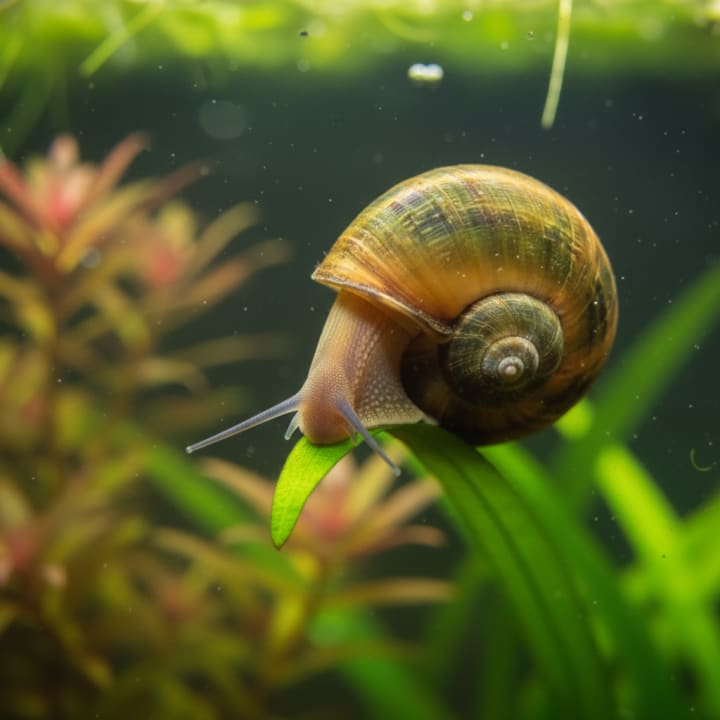
The new water chemistry, temperature, lighting, and surroundings are overwhelming. Your snail needs time to adjust and feel safe before it starts exploring. During this period, the snail will stay retracted with its operculum closed, not responding to touch or food.
Most snails begin moving within 12 to 24 hours once they realize the environment is safe. Just leave the snail alone, keep water conditions stable, and resist the urge to poke or flip it. Patience is key during acclimation.
Cause 8 - Old Age or Natural Weakness
Mystery snails typically live one to two years in home aquariums. As they age, they naturally become less active and move around much less than younger snails.
An older snail might spend most of its time resting in one spot, only moving occasionally to eat. This is normal aging, not illness. You'll notice the snail still responds to food and touch, just more slowly than before.
Eventually, older snails will stop moving entirely when they reach the end of their natural lifespan. If your snail is over a year old and moving less, this might simply be part of the aging process.
Quick Checklist: What to Check When Your Snail Isn't Moving
When you notice your mystery snail has stopped moving, run through this simple checklist:
- ✓ Test your water : Check ammonia, nitrite, nitrate, pH, and temperature immediately
- ✓ Check for smell : Gently sniff near the shell opening; a bad smell means the snail has died
- ✓ Look at the operculum : If it's tightly sealed, the snail is alive but stressed or sleeping
- ✓ Review recent changes : Did you do a water change, add new fish, or forget water conditioner?
- ✓ Wait 12-24 hours : Many snails recover on their own once water conditions stabilize
Frequently Asked Questions
How long can a mystery snail go without moving?
Healthy mystery snails can stay motionless for 12 to 15 hours during normal sleep cycles. If your snail hasn't moved for more than 24 hours, check your water parameters and look for signs of stress or illness.
How do I know if my mystery snail is dead or just sleeping?
A sleeping snail will have its operculum (trap door) closed and won't smell bad. A dead snail will either hang limply out of its shell or smell terrible when you sniff near the opening. If you're unsure, wait a few hours and check again.
Can I touch my snail to see if it's alive?
Gentle touching is okay, but don't flip or poke the snail repeatedly. If the snail is sleeping or stressed, it will stay sealed. Try placing a piece of food near the snail and checking back in a few hours to see if it's moved toward it.
Will my mystery snail move more at night?
Mystery snails are somewhat nocturnal and often become more active in the evening and overnight. If your snail seems inactive during the day but you notice it has moved positions by morning, this is completely normal behavior.
What should I do immediately if my snail stops moving after a water change?
Test your water temperature first make sure it matches what it was before the change. Then test for ammonia and chlorine. If you forgot water conditioner, do another 25% water change with properly treated water immediately.
Conclusion
Most of the time, a mystery snail that isn't moving is either resting, adjusting, or responding to a fixable water quality issue. Normal causes like sleeping or acclimation are nothing to worry about.
However, sudden stillness after water changes, chemical exposure, or ammonia spikes requires immediate action. Test your water, check your temperature, and make sure you're using water conditioner. With proper care and stable conditions, your mystery snail will be back to exploring in no time.
About the Creator
Arjun
Aquarium hobbyist sharing simple, real-world fixes for snail, shrimp, and plant problems. Clear guides, no fluff just practical tips to keep your tank healthy and thriving.
How Europe Will Try to Save Greenland from Trump
When you first hear about Greenland being in the middle of a global crisis, it might sound like something out of a political thriller. But in 2026, the idea that former U.S. President Donald Trump could try to take control of Greenland has Europe on high alert. Greenland isn’t just ice and snow—it’s a strategic Arctic powerhouse with untapped natural resources and a location that matters more than ever. And for Europe, the big question is: how do we stop the U.S. from interfering with a territory that belongs to Denmark and its people? A Red Line in the Arctic European leaders have been crystal clear: Greenland is not for sale. The European Council President, Antonio Costa, said it outright: “Greenland belongs to its people.” No outside power should decide its fate without consulting Denmark or Greenland. This message isn’t just words. France, Germany, and the UK have all voiced their support for Denmark, making it clear that borders cannot be changed by threats or force. And Denmark’s Prime Minister, Mette Frederiksen, didn’t mince words either—any U.S. military action against a NATO ally could mean the end of NATO itself. Diplomacy… With a Bite Europe’s first move has been diplomacy. Talks between Denmark, Greenland, and the U.S. are ongoing, including high-level discussions with U.S. officials to reaffirm defense cooperation—without giving up sovereignty. But European capitals aren’t stopping at conversations. Officials are hinting at potential consequences if Trump escalates, from diplomatic pushback to economic measures. Trade agreements or sanctions could be on the table if necessary. Europe wants to make it clear: words matter, but actions matter more. Investing in Greenland’s Future Europe isn’t just defending Greenland—it’s helping it thrive. The European Union is preparing strategic investments in infrastructure, education, healthcare, and natural resource management. This economic support strengthens Greenland’s ability to resist pressure from external powers. Why does this matter? Because the more resilient Greenland is economically and politically, the less likely it is to be swayed by threats—or tempted to negotiate away its sovereignty. Europe is also interested in Greenland’s minerals, especially rare earth elements crucial for green technology and defense. By investing now, Europe positions itself as Greenland’s partner, not just an observer. The Power of International Law Europe is also leveraging international law. Leaders are highlighting Greenland’s rights under the United Nations Charter, which protects sovereignty, self-determination, and territorial integrity. And they have public opinion on their side. Polls show that Greenland’s residents—and the majority of Danes—oppose any sale or annexation. Europe can now frame the issue not only as a legal matter but as a moral one too. A Test for Europe and NATO The Greenland situation is a test for Europe: can it stand up to the world’s most powerful nation to protect international norms? The continent is proving that diplomacy, legal principles, economic influence, and public opinion together create a powerful defense. Europe’s strategy is simple but strong: talk, invest, defend, and be ready to act. Greenland is more than just an island—it’s a symbol of whether the rules-based international order can hold. In the Arctic, where ice is melting and geopolitical tensions are rising, Greenland has become Europe’s frontline. And Europe seems determined not to let it fall. ✅ Key Takeaways for Readers: Greenland is strategically important and rich in natural resources. Europe is using diplomacy, law, economic investment, and potential sanctions to protect it. Public support in Denmark and Greenland strengthens the European stance. This situation could redefine NATO and transatlantic relations. If you want, I can also create the perfect Vocal Media-ready package next: including a community, tags, and SEO-friendly headline for publication.
By Muhammad Hassan3 days ago in Earth


Comments
There are no comments for this story
Be the first to respond and start the conversation.