
Sea-level rise
Sea-Level Rise: Causes, Consequences, and Solutions

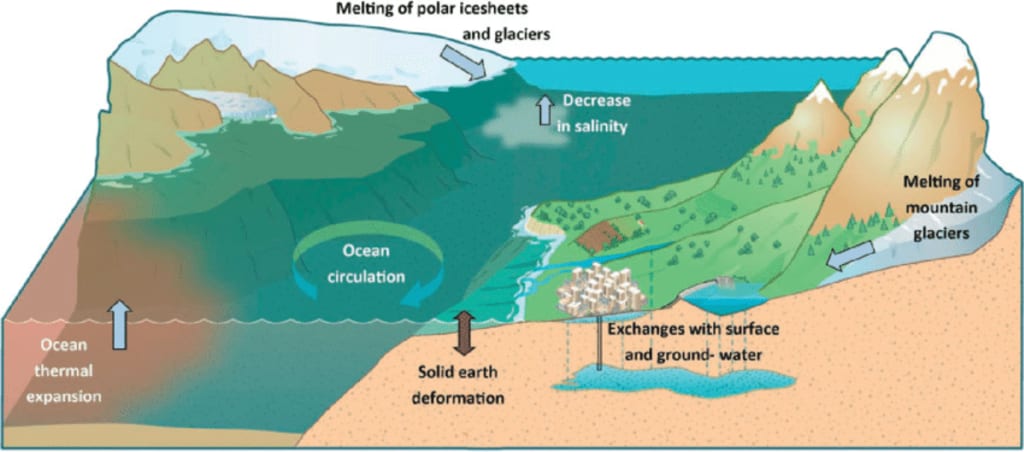
Sea-level rise is one of the most pressing environmental challenges of our time. It refers to the increasing height of the world’s oceans due to climate change and other environmental factors. This phenomenon has severe implications for coastal communities, ecosystems, and global economies. Understanding its causes, consequences, and potential solutions is crucial for mitigating its impact and preparing for the future.
(I)Causes of Sea-Level Rise
The primary driver of sea-level rise is climate change, which leads to global warming. This process is fueled by human activities, particularly the burning of fossil fuels, deforestation, and industrial emissions, all of which increase greenhouse gas concentrations in the atmosphere. The two main ways in which global warming contributes to rising sea levels are:
Thermal Expansion: As ocean temperatures rise, seawater expands, taking up more space. This thermal expansion is responsible for about half of the observed sea-level rise in recent decades.
Melting Ice Sheets and Glaciers: Large ice masses, such as those in Antarctica and Greenland, are melting at an accelerated rate, contributing vast amounts of water to the oceans. Mountain glaciers worldwide are also retreating, adding to the overall rise.
Other contributing factors include land subsidence, groundwater extraction, and natural climate variations. However, the predominant cause remains anthropogenic climate change.
(II)Consequences of Sea-Level Rise
The rising sea levels have widespread and devastating effects on both human populations and natural environments. Some of the most critical impacts include:
Coastal Flooding: As sea levels rise, low-lying coastal areas become increasingly vulnerable to flooding. Storm surges become more destructive, causing loss of life, property damage, and economic instability.
Erosion and Land Loss: Coastal erosion accelerates as the sea encroaches on land. Entire communities and ecosystems are at risk of being submerged, with some small island nations already experiencing significant land loss.
Saltwater Intrusion: The infiltration of seawater into freshwater systems affects agriculture, drinking water supplies, and natural habitats. This intrusion makes land less fertile and reduces available drinking water.
Displacement of Communities: Millions of people worldwide face the threat of becoming climate refugees as their homes become uninhabitable. Cities such as Miami, Jakarta, are particularly vulnerable.
Biodiversity Loss: Rising sea levels disrupt coastal ecosystems, endangering species that rely on stable shorelines and wetland habitats. Coral reefs, which support marine biodiversity, are also under threat due to increased water temperatures and acidification.
Mitigation and Adaptation Strategies
While sea-level rise poses a formidable challenge, proactive measures can help mitigate its effects and adapt to the changing environment. Some effective strategies include:
Reducing Greenhouse Gas Emissions: Cutting carbon emissions is crucial to slowing global warming. This can be achieved by transitioning to renewable energy sources, improving energy efficiency, and enforcing policies that limit industrial pollution.
Coastal Defense Mechanisms: Engineering solutions such as seawalls, levees, and flood barriers can protect vulnerable areas from flooding. Countries like the Netherlands have implemented extensive flood defense systems to safeguard against rising seas.
Sustainable Urban Planning: Designing resilient cities with elevated infrastructure, green spaces, and flood-resistant buildings can help mitigate damage from rising waters.
Ecosystem-Based Approaches: Protecting and restoring natural barriers such as mangroves, wetlands, and coral reefs can act as buffers against storm surges and erosion.
Community Relocation and Preparedness: Governments and organizations must plan for potential displacement, ensuring affected populations have access to safe housing, resources, and economic opportunities in new locations.
IN THE END
Sea-level rise is an undeniable consequence of climate change with profound implications for the planet. While it poses significant challenges, humanity has the capacity to address this issue through decisive action, sustainable policies, and innovative solutions. By reducing emissions, investing in resilient infrastructure, and prioritizing environmental conservation, we can mitigate the effects of rising seas and protect future generations from its worst consequences.
About the Creator
Badhan Sen
Myself Badhan, I am a professional writer.I like to share some stories with my friends.
Keep reading
More stories from Badhan Sen and writers in Earth and other communities.
Aquifers and water tables
While surface water from lakes, rivers, and reservoirs is vital, groundwater plays an equally crucial role in sustaining ecosystems and human activities. Groundwater exists in underground layers of permeable rock, sediment, or soil known as aquifers. The upper surface of the saturated zone within an aquifer is called the water table. Understanding aquifers and water tables is crucial for water conservation, sustainable development, and mitigating environmental challenges such as water scarcity and contamination.
By Badhan Senabout a year ago in Earth


Comments (1)
Nice work . Please check my stories out as well if you get a chance.