
Aquifers and water tables
Water is one of the most essential resources for life on Earth.

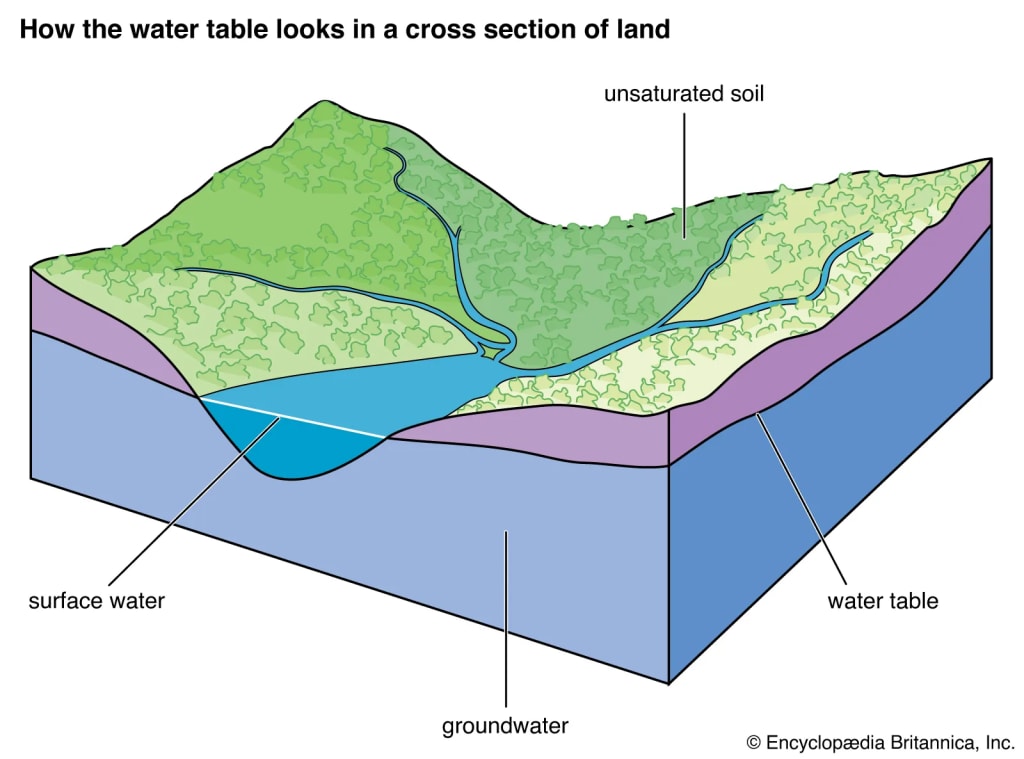
While surface water from lakes, rivers, and reservoirs is vital, groundwater plays an equally crucial role in sustaining ecosystems and human activities. Groundwater exists in underground layers of permeable rock, sediment, or soil known as aquifers. The upper surface of the saturated zone within an aquifer is called the water table. Understanding aquifers and water tables is crucial for water conservation, sustainable development, and mitigating environmental challenges such as water scarcity and contamination.
Aquifers: Definition and Types
An aquifer is a geological formation that contains and transmits groundwater. It consists of porous materials, such as sand, gravel, or fractured rock, that allow water to move through them. Aquifers can be classified into two main types:
Unconfined Aquifers:
These aquifers are directly connected to the Earth's surface, allowing water to flow freely between the ground and the aquifer.
The water table is the upper boundary of an unconfined aquifer.
Rainwater and surface water can recharge these aquifers easily, making them more susceptible to contamination from pollutants.
Confined Aquifers:
These are sandwiched between layers of impermeable rock or clay, which restrict water movement in and out of the aquifer.
The water in confined aquifers is often under pressure, sometimes leading to artesian, where water flows naturally to the surface without pumping.
These aquifers are generally deeper and less prone to contamination, but they recharge more slowly than unconfined aquifers.
Water Tables: Characteristics and Influences
The water table is the upper level of groundwater in an unconfined aquifer. It fluctuates due to various factors such as rainfall, usage, and geological formations. The water table separates the unsaturated zone (above), where soil and rock contain both air and water, from the saturated zone (below), where all spaces are filled with water.
Factors Affecting Water Table Levels
Precipitation: Heavy rainfall increases groundwater recharge, raising the water table, while droughts lead to its decline.
Extraction and Usage: Excessive pumping for irrigation, industry, and drinking water lowers the water table.
Geology: Permeability of rocks and soil determines how easily water infiltrates and moves through an aquifer.
Seasonal Changes: In many regions, water tables rise during wet seasons and fall during dry seasons.
Human Activities: Urbanization, deforestation, and poor water management can disrupt natural recharge and deplete groundwater levels.
Importance of Aquifers and Water Tables
Aquifers and water tables play a vital role in various ecological and human activities:
Drinking Water Supply: Nearly half of the world’s population depends on groundwater for drinking water.
Agriculture and Irrigation: Groundwater is a critical resource for farming, particularly in arid and semi-arid regions.
Ecosystems and Wetlands: Many rivers, lakes, and wetlands rely on groundwater discharge to sustain aquatic life.
Industry and Economic Activities: Manufacturing, mining, and energy production heavily depend on groundwater resources.
Groundwater Depletion and Contamination
Over-extraction and pollution pose severe threats to aquifers and water tables.
Groundwater Depletion
Excessive withdrawal of groundwater can lead to:
Lowering of Water Tables: Wells dry up, requiring deeper drilling, which increases costs.
Land Subsidence: The ground can sink due to reduced water pressure in an aquifer.
Reduced Surface Water Flow: Rivers and lakes that depend on groundwater may shrink or disappear.
Groundwater Contamination
Pollutants from various sources can infiltrate aquifers, making water unsafe for consumption:
Agricultural Runoff: Pesticides and fertilizers can leach into groundwater.
Industrial Waste: Factories may discharge hazardous chemicals that contaminate water sources.
Sewage and Waste Disposal: Poorly managed septic systems and landfills can introduce bacteria and toxins into aquifers.
Sustainable Groundwater Management
To ensure the longevity of aquifers and maintain stable water tables, sustainable practices must be adopted:
Artificial Recharge: Techniques like rainwater harvesting and managed aquifer recharge help replenish groundwater.
Regulated Extraction: Governments and local authorities should impose limits on groundwater withdrawal to prevent overuse.
Pollution Control: Industries, farmers, and communities must implement waste management and reduce the use of harmful chemicals.
Efficient Irrigation Methods: Techniques such as drip irrigation and water-efficient crops can reduce water wastage.
Public Awareness and Policy Making: Educating communities and enforcing groundwater protection laws can promote responsible water usage.
IN THE END
Aquifers and water tables are fundamental to sustaining life and economic activities. However, human activities and climate change are threatening these vital water sources. By understanding the dynamics of groundwater systems and implementing conservation measures, we can ensure that aquifers remain viable for future generations. Sustainable water management, pollution prevention, and responsible extraction practices are crucial to preserving this invaluable resource. With proactive efforts, we can maintain a balance between groundwater use and natural replenishment, securing water availability for all.
About the Creator
Badhan Sen
Myself Badhan, I am a professional writer.I like to share some stories with my friends.
Keep reading
More stories from Badhan Sen and writers in Earth and other communities.
Tsunamis and tidal waves
Tsunamis and tidal waves are both natural phenomena related to the movement of water, but they are quite distinct in terms of their causes, behavior, and effects. Despite common misconceptions, the two are different and have varying levels of intensity. Understanding their origins, characteristics, and impact can help in preparing for and mitigating their potentially devastating consequences.
By Badhan Senabout a year ago in Earth
Philippines Pharmaceutical Market 2026: Healthcare Access, Local Manufacturing & Treatment Demand
Philippines Pharmaceutical Market Overview The Philippines pharmaceutical market is experiencing steady growth as rising healthcare needs, expanding access to medicines and increasing public and private healthcare investment reshape the country’s medical landscape. Pharmaceuticals play a central role in treating acute and chronic conditions, supporting preventive care and improving overall quality of life. The Philippines pharmaceutical market growth reached USD 3.36 Billion in 2025. Looking forward, the market is expected to reach USD 3.91 Billion by 2034, exhibiting a growth rate (CAGR) of 1.71% during 2026-2034. This growth reflects population expansion, greater health awareness and gradual strengthening of domestic manufacturing capabilities.
By Manisha Dixit4 days ago in Earth
Rachel Reviews: Lunch Tales: Teagan by Lucille Guarino
Well, I did enjoy this! Sometimes, all you need is just great storytelling and this is what Lucille Guarino delivers here. There's no big message to this book; it's just about folks and families, living their lives and coping with everything that's being thrown at them and finding their way. But when it's done well, like it is here, then you have characters to whom you can relate, tension which leaves you rooting for a better outcome, attraction which has your heart racing and an urge, as a reader, to see the characters happy with the people with whom they belong.
By Rachel Deemingabout 21 hours ago in BookClub




Comments (1)
Nice work . Please check my stories out as well if you get a chance.