

These birds have razor-sharp talons, hooked beaks, and impeccable eyesight. There are more than 560 species across every continent except for Antarctica. Raptors play crucial roles in maintaining ecological balance.
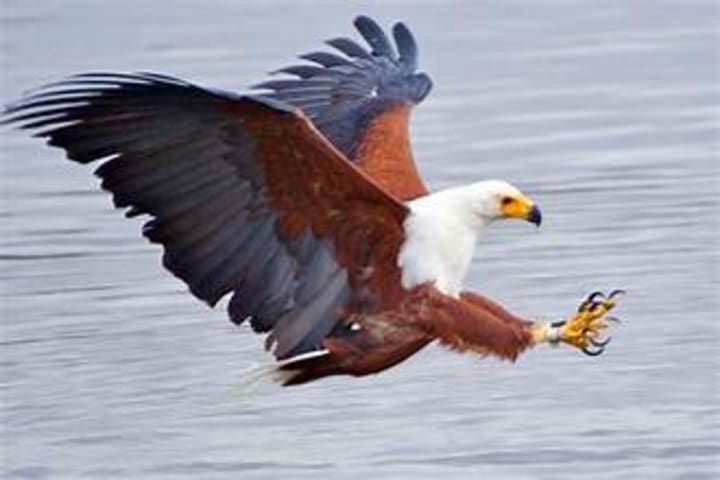
African fish eagles are large birds of prey that are native to sub-Saharan Africa. In Africa, these birds are the national birds of several countries. They feed mostly on fish, swooping down from the sky to grab their prey out of the water. Their clawed talons have sharp barbs, letting them hold on to prey that are slippery. African fish eagles have a long lineage and are descendants of ancient sea eagles.

Andean condors are giant vultures that are native to the Andes Mountains and the Pacific coast of South America. These birds are one of the largest flying species on Earth. Groups of condors create “pecking orders," with mature condors on top and young males at the bottom. Andean condors fly over 100 miles without flapping their wings. They typically consume the carcasses of animals such as deer, cows, and sheep. In coastal regions, they have been known to scavenge marine mammals and fish.
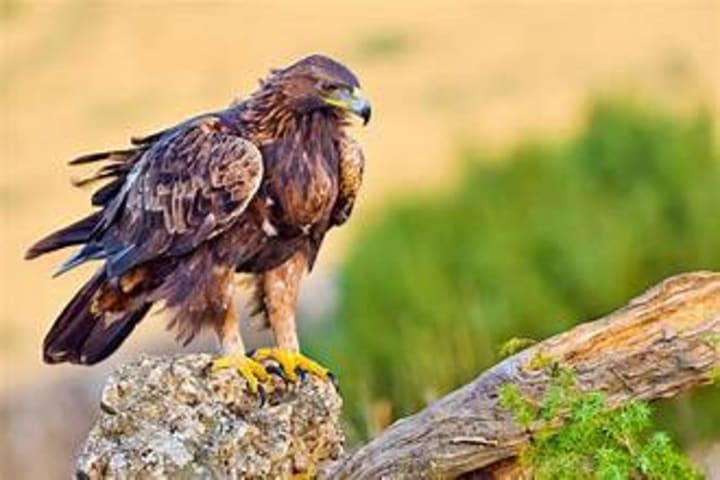
Golden eagles are fast and agile fliers. They inhabit regions in North America, Europe, and parts of North Africa, favoring open areas such as grasslands, mountains, and canyon lands. This species is highly regarded in ancient and tribal cultures and is among the most well-known birds in falconry. They are among the largest and fastest birds of prey in North America, reaching speeds of up to 150 mph. They are ferocious birds claiming prey such as deer, rams, and wolves. They are also resourceful hunters, flying up to 60 feet above the ground and dropping tortoises to break their shells.
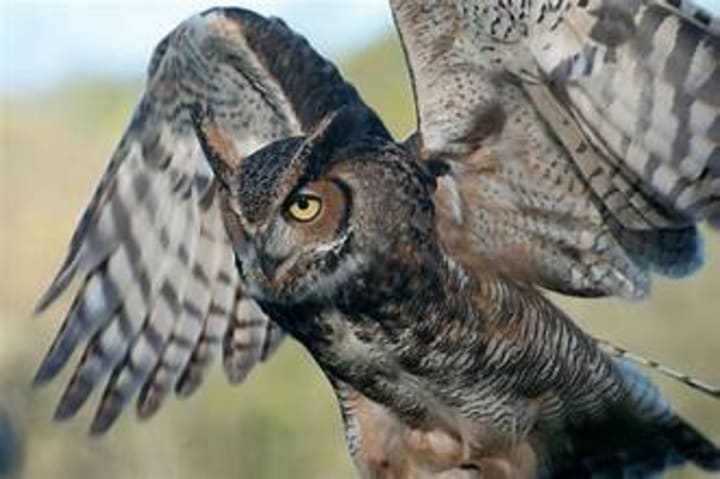
Great horned owls are a large bird species that is native to North and South America. They are known to give the great stare-down with their large bright yellow eyes and swivel necks. Their nighttime calls can be frightening. Great Horned Owls are highly adaptable and can be found in different habitats across North America. Rabbits, mice, and rats are staples of their diet due to their abundance. Squirrels and other small mammals are also frequently hunted. These owls can take down larger animals such as skunks, opossums, and even small dogs.
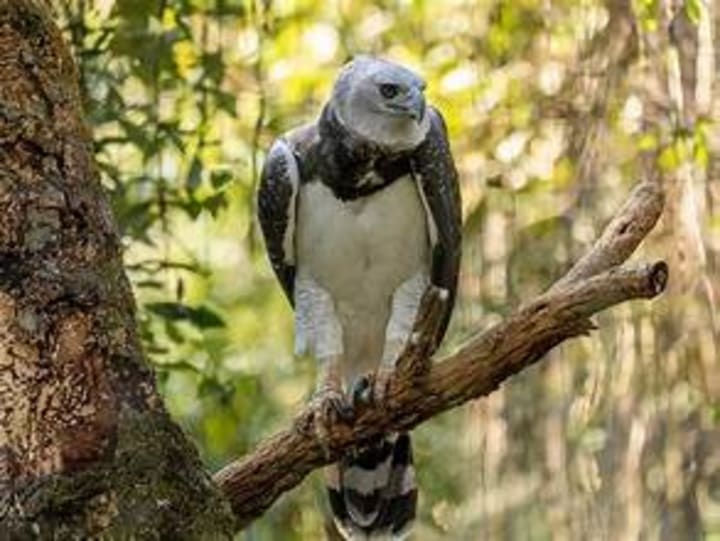
With their five-inch-long talons, harpy eagles will get their prey, and they can carry prey weighing up to 17 pounds. They are primarily found in tropical lowland forests across the Americas. Their range extends from southern Mexico, including states like Chiapas and Oaxaca, through Central America, and down to northern Argentina in South America. These birds have a distinctive double crest of feathers on their heads. Harpy eagles are considered to be true giants of the rainforest. They mostly hunt monkeys and sloths among the dense jungle canopy.

Raptors of the falcon genus, kestrels are known for their unique hunting behavior. They hover 65 feet in the air and then swoop down on their prey. These birds make use of the wind to keep them in the sky. Even though these are the smallest falcons in North America, they are fierce predators hunting in family groups. Kestrels thrive in semi-open areas such as meadows, parks, deserts, and farmlands. They can also adapt to some urban settings. They use ultraviolet light to track their prey, which includes small mammals, lizards, and large insects.
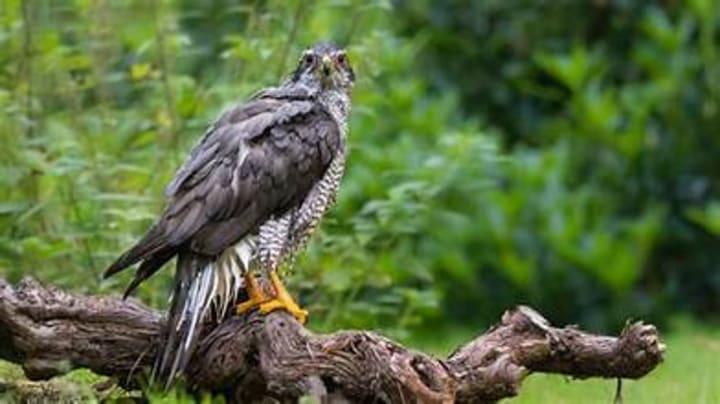
In size from medium to large, Northern goshawks are “true hawks." These raptors were revered during the Middle Ages when noble people used them for falconry. Their natural habitats included mixed forests and woodlands. They are found throughout North America, particularly in the northern regions, and they also inhabit parts of Asia and Europe. Northern goshawks can reach speeds of up to 40 mph. These birds are mostly solitary and highly territorial and aggressive, especially when defending their nests. Common prey includes grouse, woodpeckers, jays, and crows. They hunt small- to medium-sized mammals such as squirrels, hares, rabbits, and rodents. They may also consume fish, amphibians, reptiles, and insects when available.
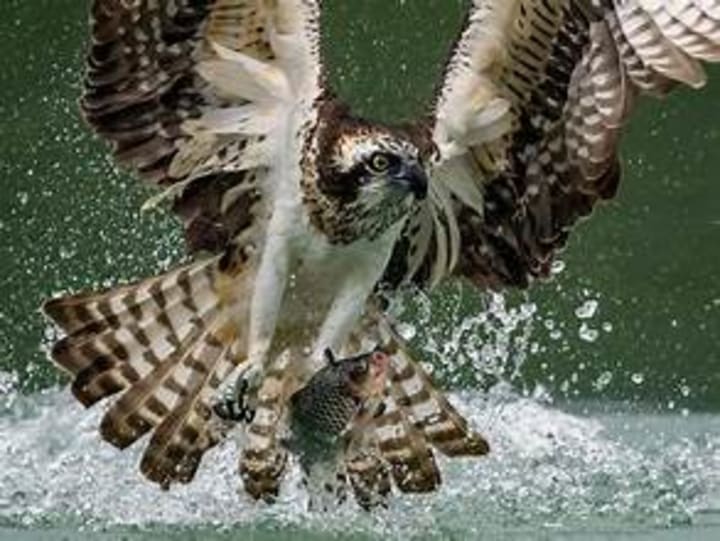
Ospreys are particularly prevalent in North America, where they breed and migrate to Central and South America for the winter. Their habitats include coastal estuaries, bays, and salt marshes, as well as large lakes, reservoirs, and major rivers. Fish make up almost all of the diet of ospreys. These birds have great vision so they can see their prey moving beneath the surface of the water. Ospreys hover first and then hit the water, completely submerging themselves. They have sharp spikes on their claws and reversible outer toes so they can hold onto slippery fish. Their nostrils close when underwater, and their plumage is dense and waterproof to keep them from getting waterlogged.
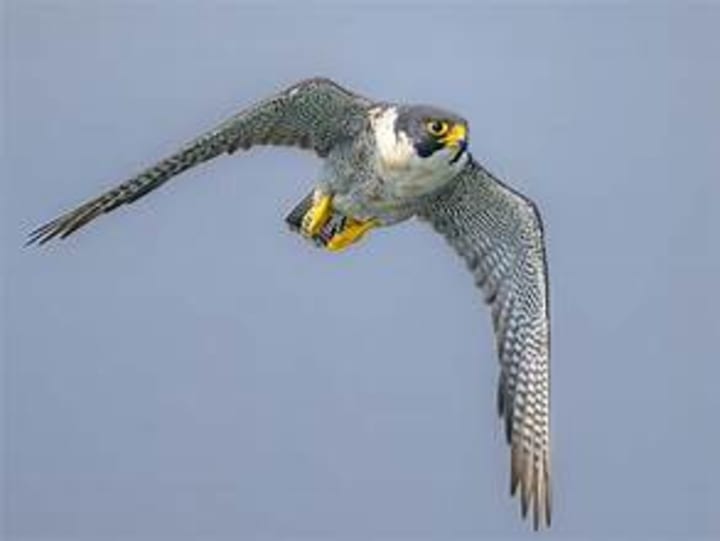
Peregrine falcons are the fastest animals on Earth. These birds are found nearly worldwide, except in extreme polar regions and most tropical rainforests. They inhabit different environments, including urban areas, cliffs, and coastal regions. The birds whiz along at more than 200 mph, diving to catch their prey. In midair, these birds strike their prey with a clenched foot to stun or kill them. Peregrine falcons have specialized nostril tubercles so they can manage high-speed airflow. Their eyes are protected by nictitating membranes during high-speed dives. Common prey includes pigeons, doves, starlings, and songbirds, making up most of their diet. They will also prey on small mammals and fish.
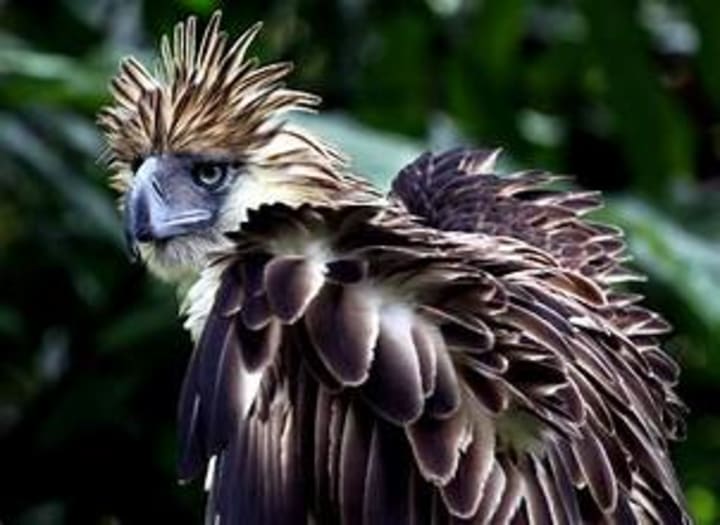
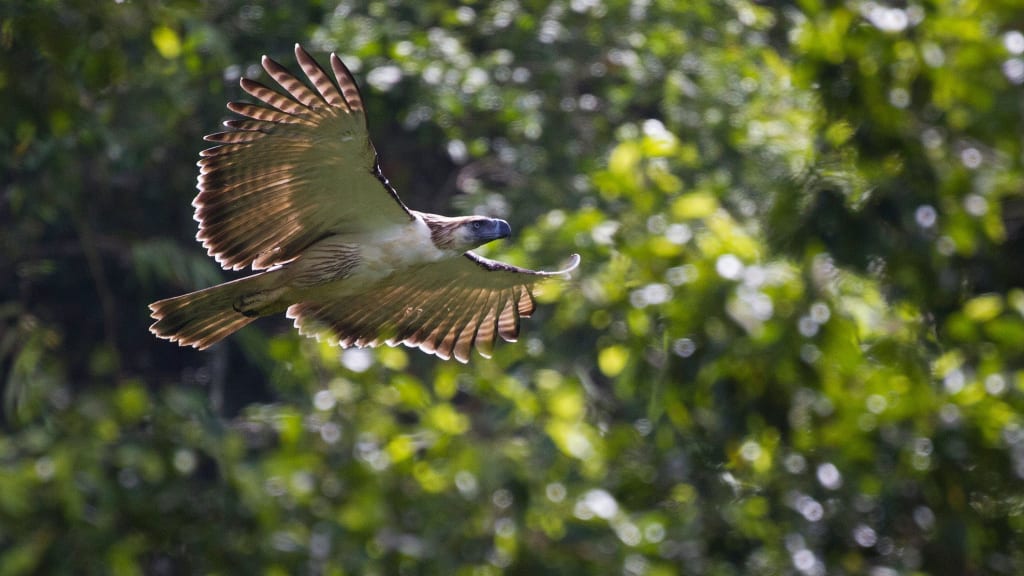
Philippine eagles, also known as monkey-eating eagles. (also pictured above) These birds are fierce, striking birds featuring a highlighted mane-like crest, dark facial features, and piercing blue eyes. These birds are known to feed on macaques native to the islands and are apex predators in their range. They are endemic to the Philippine forests, where they are endangered due to deforestation. And killing a Philippine eagle is punishable by up to one year in prison.
About the Creator
Rasma Raisters
My passions are writing and creating poetry. I write for several sites online and have four themed blogs on Wordpress. Please follow me on Twitter.
Keep reading
More stories from Rasma Raisters and writers in Earth and other communities.
The Most Unusual Animals
Beefalo are the result of domestic cattle crossed with bison. They are hardy animals that produce leaner, healthier meat. Beefalo have become resilient creatures able to thrive in harsh conditions where regular cattle would struggle. They require less water and feed and resist disease better.
By Rasma Raisters13 days ago in Earth
Venus and Jupiter Shine Together: A Stunning Planetary Display in Earth’s Sky
For skywatchers across the world, there are few sights more captivating than seeing bright planets glowing in the night sky. Among these celestial wonders, the close appearance of Venus and Jupiter from Earth is one of the most spectacular. When these two brilliant planets appear close together in the sky, they create a stunning astronomical event that fascinates both professional astronomers and casual stargazers alike.
By Irshad Abbasi 6 days ago in Earth




Comments
There are no comments for this story
Be the first to respond and start the conversation.