
Record-breaking July with a series of disasters
In July, the average temperature of the Earth reached a historic high, many disasters such as storms, forest fires, floods, also occurred.


In July, the average temperature of the Earth reached a historic high, many disasters such as storms, forest fires, floods, also occurred.

People cool off under a fountain at Madrid Rio park in Madrid, Spain, on July 23.
Human-caused climate change is to blame for the heatwaves, fueled by activities such as coal burning and deforestation, according to Climate Central’s analysis of global temperature extremes. The average temperature for July was 17.01 degrees Celsius (61.6 degrees Fahrenheit), the highest in 175 years of records kept by the US National Oceanic and Atmospheric Administration (NOAA), 1.21 degrees Celsius (2.6 degrees Fahrenheit) above the 20th-century average.
In the US, the average July temperature was 24.3 degrees Celsius, the 11th highest in the past 130 years. Las Vegas recorded an all-time high of 49 degrees Celsius on July 7. Meanwhile, in Washington DC, July 17 marked the fourth consecutive day with temperatures above 38 degrees Celsius, tying the city's previous record for consecutive days with such high temperatures.
The monthly report from NOAA also said that 2024 now has a 77% chance of being the hottest year on record and is definitely in the top five. Africa, Europe and Asia all recorded their hottest July on record, while North America had its second-warmest July.
NOAA's figures differ from those of the European Union's climate change monitoring agency Copernicus, which uses a different set of data and calculates that this year's average July temperature was the second-highest on record, slightly lower than July 2023. However, both agencies agree on the alarming trend of record heat.
According to NOAA, July ocean temperatures were the second warmest on record, tying with Copernicus. Last week, Copernicus scientists noted that air temperatures over the ocean remained unusually high in many areas despite the transition from the El Nino weather pattern (which contributes to global warming) to the opposite La Nina weather pattern (which has a cooling effect).

Tourists at Death Valley National Park - the hottest and driest place in the United States.
Rising temperatures also create conditions for storm systems to become more intense and frequent. Warmer weather means more water evaporates, fueling tropical systems that form and intensify in areas with warmer-than-average ocean surface temperatures. Higher temperatures also lead to worse droughts, which can fuel wildfires.
Climate change has fueled a rash of extreme weather events in recent weeks. In Cape Town, South Africa, thousands of people were evacuated due to heavy rains, strong winds, flooding and other disasters. On July 7, heavy rains triggered landslides on the Indonesian island of Sulawesi, killing more than 10 people. Japanese authorities said more than 120 people died during a record heat wave in Tokyo last month.
Hurricane Beryl set several meteorological records, primarily for its formation and intensity, such as being the strongest hurricane to develop in the Atlantic Main Development Region (MDR) before July and the earliest Category 5 hurricane to reach Saffir-Simpson scale status. Beryl caused catastrophic damage when it made landfall three times in one week, first on the island nation of Grenada on July 1, then on the Yucatan Peninsula, Mexico, on July 5, and finally on Texas, USA, on July 8.
In California, USA, more than 13,000 people were evacuated on July 2-3 due to a serious wildfire called the Thompson Fire. On July 24, the Park Fire broke out and became the fourth largest fire in the state's history, covering an area of more than 1,600 square kilometers.
In the US, from January to the end of July 2024, the number of weather and climate events costing over $1 billion was 19, second only to the period January - July 2023. This year alone, the US has had at least 149 deaths due to these events with total losses reaching more than $49.6 billion.
About the Creator
HK Decor
Telling stories my heart needs to tell <3 life is a journey, not a competition
If you like what you read, feel free to leave a tip,I would love some feedback
https://s.shopee.vn/7fFUMxnnBx?share_channel_code=8
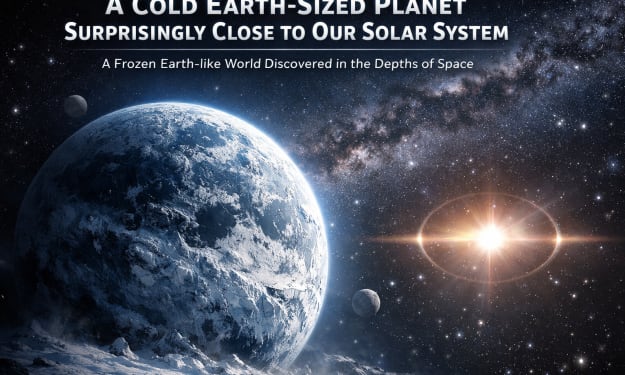
A Cold Earth-Sized Planet Surprisingly Close to Our Solar System
For decades, astronomers have searched the universe for planets that resemble Earth. While many discoveries have revealed massive gas giants or extremely hot rocky worlds, the discovery of a cold, Earth-sized planet near our cosmic neighborhood has sparked new excitement in the scientific community. This intriguing world demonstrates that small rocky planets like our own may be more common in the galaxy than once believed.
By Irshad Abbasi 5 days ago in Earth



Comments (1)
July was always like that. Terrible.