
Chemical Recycling Pathways Enabled by Tire Pyrolysis
Thermochemical Pathways for Circular Tire Recycling

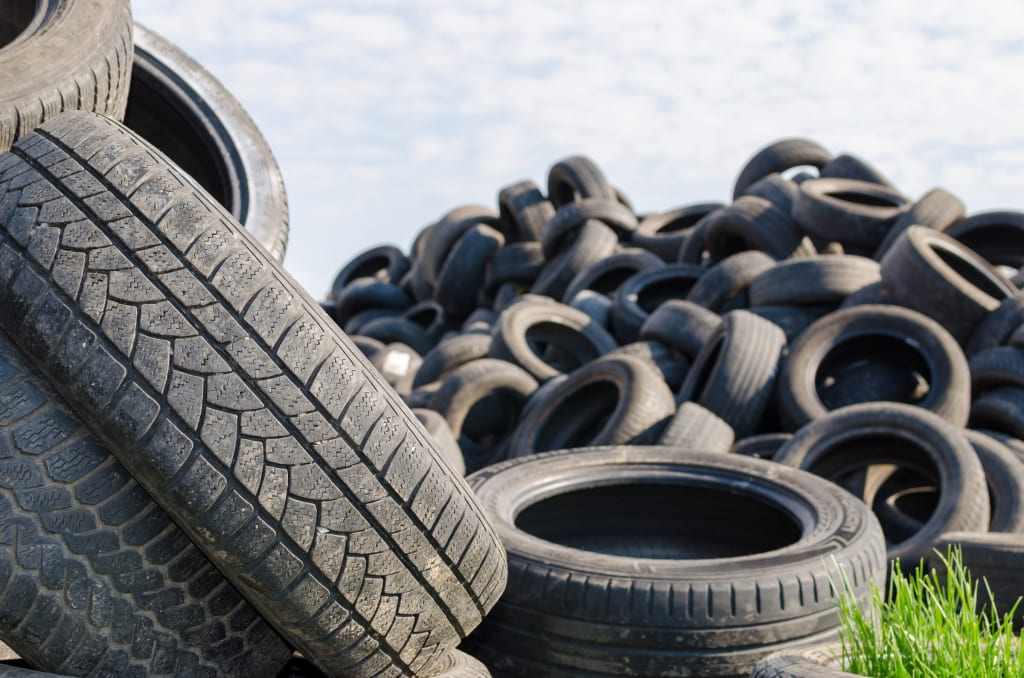
Chemical recycling of end-of-life tires has moved from experimental validation to industrial deployment. Unlike mechanical recycling, which is constrained by material degradation and limited end-use markets, tire pyrolysis enables molecular-level recovery. It converts complex elastomeric composites into reusable chemical fractions with measurable industrial value. This shift is reshaping how tire waste is positioned within circular economy frameworks.
Material Complexity of End-of-Life Tires
Modern tires are heterogeneous engineering products. Natural rubber, synthetic elastomers, carbon black, steel, textile fiber, sulfur-based crosslinkers, and a range of additives coexist in a tightly bound matrix. Mechanical separation fails to fully disentangle these components without quality loss.
Chemical recycling via pyrolysis bypasses this limitation. Through oxygen-free thermal decomposition, polymer chains are cleaved rather than shredded. This distinction is fundamental. The process recovers chemical building blocks rather than downgraded materials.
Thermochemical Conversion Mechanism
Controlled Depolymerization
Tire pyrolysis operates within a carefully managed thermal envelope, typically between 400°C and 600°C. At these temperatures, long-chain elastomers undergo random scission, yielding a spectrum of hydrocarbons. Volatile fractions exit as vapor, while solid carbonaceous residue remains. Reaction kinetics matter. Excessive temperature accelerates secondary cracking, reducing liquid yield and increasing non-condensable gas. Insufficient heat, by contrast, leaves unreacted polymer and elevates tar formation. A stable thermal profile is therefore non-negotiable in any commercial tire pyrolysis plant.
Product Phase Separation
The process generates three principal outputs: pyrolysis oil, recovered carbon black, and combustible gas. Each fraction follows a distinct valorization pathway within chemical recycling systems. The gas phase is commonly recycled for process heat, improving overall energy efficiency. The oil phase enters refining or upgrading streams. The solid fraction, rCB, represents a structurally altered but industrially relevant material.
Recovered Carbon Black as a Circular Material
Structural and Functional Properties
Recovered carbon black is not identical to virgin furnace carbon black. Thermal history alters surface area, porosity, and residual ash content. Nevertheless, rCB retains reinforcing characteristics suitable for rubber compounding, plastics, and certain pigment applications. Post-treatment is critical. Milling, pelletizing, and surface activation improve consistency and downstream performance. Without these steps, rCB remains a low-value filler. With them, it becomes a functional material within circular supply chains.
Market Acceptance Dynamics
Adoption of rCB depends on predictable quality metrics. Tire manufacturers and compounders demand batch-to-batch stability. This has driven tighter process control and advanced characterization protocols across the sector. As regulatory pressure increases on Scope 3 emissions, rCB is increasingly viewed as a decarbonization lever rather than a compromise material.
Pyrolysis Oil in Chemical Recycling
Feedstock for Refining and Steam Cracking
Tire-derived pyrolysis oil is rich in aromatics and olefins. After appropriate upgrading, it can serve as feedstock for refineries or petrochemical crackers. The objective is not fuel combustion, but reintegration into chemical value chains. Hydrotreatment removes sulfur and nitrogen compounds introduced during tire formulation. Once conditioned, the oil can displace fossil-derived naphtha in selected applications.
Certification and Traceability
Chemical recyclers increasingly rely on mass balance frameworks to validate circular content. ISCC certification plays a central role here. It enables traceability of recycled carbon through complex processing networks, ensuring that downstream products can credibly claim recycled origin. For pyrolysis projects, ISCC compliance is no longer optional. It is a prerequisite for accessing premium markets and long-term offtake agreements.
System Integration and Plant Design
Continuous vs. Batch Operation
Chemical recycling favors continuous systems. They deliver steady product quality, higher throughput, and improved thermal efficiency. Continuous reactors also integrate more effectively with gas recycling and secondary treatment units. Batch systems persist in niche contexts, but scalability constraints limit their role in industrial chemical recycling strategies.
Emissions and Process Control
A modern pyrolysis plant is defined as much by its auxiliary systems as by the reactor itself. Condensation trains, gas cleaning units, and solid handling systems determine environmental performance. Chemical recycling viability depends on maintaining closed-loop control. Fugitive emissions, uncontrolled condensation, or inconsistent heat recovery erode both regulatory acceptance and economic margins.
Regulatory and Strategic Context
Alignment with Circular Economy Policy
Many jurisdictions now differentiate chemical recycling from energy recovery. This distinction matters. It determines whether pyrolysis outputs are classified as recycled material or waste-derived fuel. Projects positioned explicitly around material recovery, rCB utilization, and certified oil upgrading align more closely with emerging regulatory frameworks.
Long-Term Competitiveness
Chemical recycling of tires is capital-intensive. Its durability rests on integration with downstream users, certification schemes, and stable feedstock logistics. Standalone operations struggle. Networked operations scale. As tire volumes grow and landfill options contract, pyrolysis-based chemical recycling is transitioning from alternative solution to infrastructure necessity. The technical pathway is established. Execution quality now defines success.
About the Creator
Keep reading
More stories from Wayne Shen and writers in Earth and other communities.
Management of Oily Waste Across the Petroleum Industry Chain
Oily waste is an unavoidable byproduct of the petroleum industry chain. From upstream exploration to downstream refining and storage, hydrocarbon-contaminated residues accumulate in diverse forms. Sludges, oily soils, spent catalysts, tank bottoms, and emulsified wastewater all present complex treatment challenges. Effective management is not optional. Regulatory pressure, environmental liability, and operational continuity demand technically robust and compliant disposal pathways. Among available solutions, thermal desorption has emerged as a critical tool for addressing high-hydrocarbon waste streams with precision.
By Wayne Shen2 months ago in Earth
Trump ‘Not Thrilled’ With Iran Talks Progress, Contemplates Military Action
Frustration Over Diplomatic Stalemate Former US President Donald Trump has expressed dissatisfaction with the pace and direction of talks involving Iran’s nuclear programme, stating he is “not thrilled” with the progress being made. His remarks, delivered during a public appearance and echoed by campaign representatives, suggest that patience with diplomatic efforts may be wearing thin.
By Aarif Lashari5 days ago in Earth
Lightning Never Strikes Twice
The distant rumble, the sudden deluge, the crescendo of sound, the flash of light, the explosive energy — it never gets old. I became an amateur storm chaser about two years ago. My wife, Cindy suggested it. Sort of. She said, "Alex, you know this cancer is killing me. I've come to terms with that, but you're smothering me. Go join a band, write a book, or become a storm chaser, for all I care. I love you, but you need a hobby."
By Julie Lacksonen4 days ago in Fiction




Comments
There are no comments for this story
Be the first to respond and start the conversation.