
Northern Lights May Be Visible in 10 States Jan. 20 as Earth’s Magnetic Field “Rings Like a Bell” After CME Impact
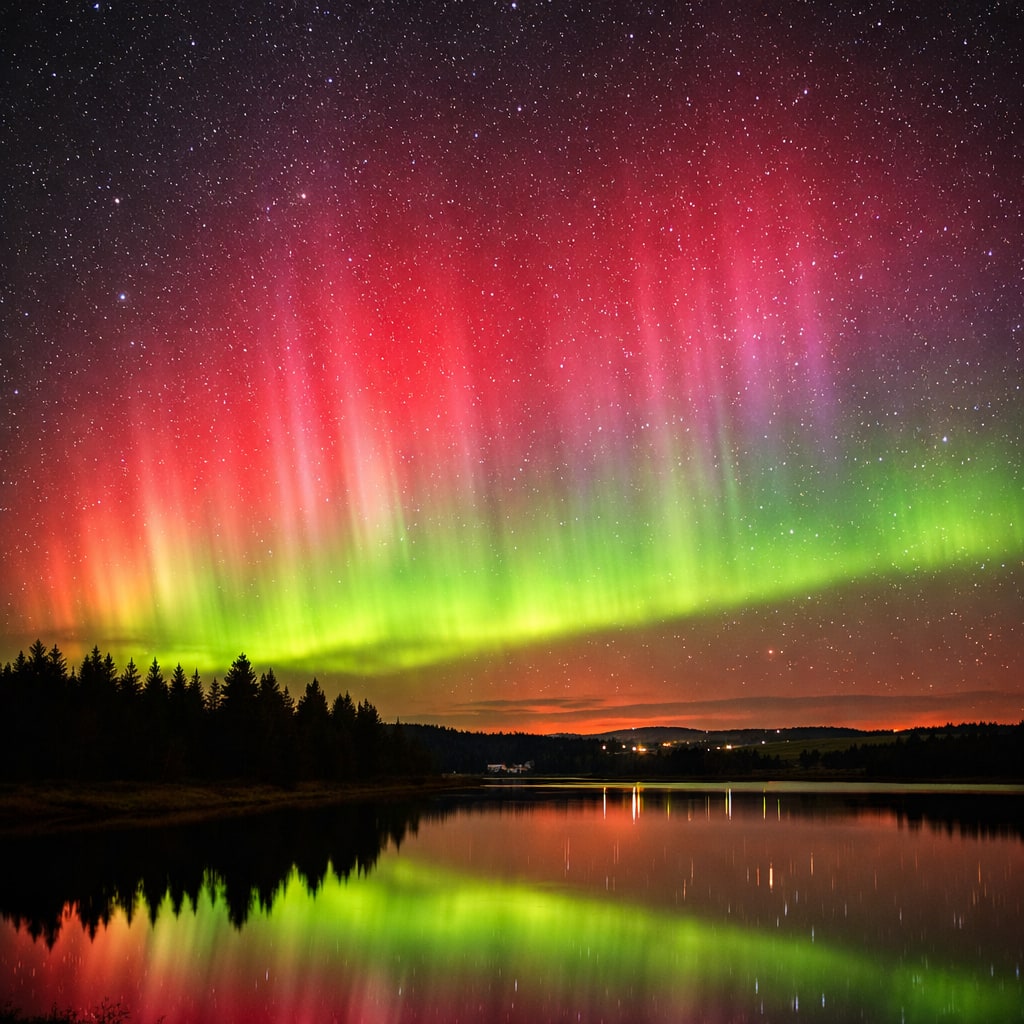
A rare and powerful space weather event in January 2026 is giving skywatchers across much of the United States a remarkable chance to see the aurora borealis — better known as the northern lights — far beyond their usual Arctic confines. Following the impact of a coronal mass ejection (CME) from the sun, Earth’s magnetic field has been significantly disturbed, creating conditions that could allow the colorful curtains of light to be seen in at least 10 states on the night of Tuesday, Jan. 20, 2026

What Happened: A Massive CME Hit Earth
On Jan. 19, 2026, a powerful CME associated with a major X1.9-class solar flare erupted from the sun and traveled the approximately 93 million miles to Earth in around 25 hours — much faster than most such events. When it reached Earth’s magnetic field at about 2:38 p.m. EST, it triggered a severe geomagnetic storm, classified as G4 on NOAA’s geomagnetic storm scale.
Geomagnetic storms occur when energetic, charged particles from the sun slam into Earth’s magnetosphere — the protective magnetic bubble surrounding our planet. Those particles excite atoms in the upper atmosphere, which then emit light and produce auroras. Under strong geomagnetic disturbance, the auroral oval expands farther toward the equator, meaning people much farther south than usual can see the lights.
Meteorologists and space weather forecasters have described Earth’s magnetic field as “ringing like a bell” after the CME impact — a colorful way of saying that the magnetosphere is oscillating and unsettled as it absorbs and redistributes the CME’s energy. These oscillations enhance auroral activity and can sustain visible displays for hours after the initial impact.
Why This Is Unusual
The northern lights are typically confined to high latitudes near the Arctic and Antarctic circles. But during strong geomagnetic storms, the auroral zone can widen dramatically, pushing colorful auroras into mid-latitude regions of the U.S. and even farther south. Under normal, quiet solar conditions, locations like Texas, Alabama, or much of the central U.S. would rarely — if ever — see auroras with the naked eye.
In this case, the strength and speed of the CME — and the severity of the geomagnetic storm it triggered — are key factors. Models show the storm reached G4 levels as the CME hit, and solar wind speeds exceeded 1,100 km/s at times, amplifying the disturbance of Earth’s magnetic field.
Where and When to Look
According to space weather forecasts and aurora alerts tied to this event, skywatchers could spot the northern lights in at least 10 U.S. states on the night of Jan. 20, particularly after dark and before dawn. While the specific list of states varies by forecast, potential visibility reaches into mid-latitude regions that don’t normally experience auroras.
Here’s how you can maximize your chances of seeing the lights:
Head to a dark, open area away from city lights — light pollution can wash out auroral displays.
Look northward after sunset through the early morning hours, especially around local midnight.
Check real-time aurora forecasts from NOAA’s Space Weather Prediction Center or aurora-tracking apps, which show live geomagnetic activity and visibility probabilities.
Be patient — auroras can appear as faint glows or strong colored ribbons, and they often change dramatically over minutes.
Beyond the U.S.: A Global Phenomenon
This geomagnetic storm hasn’t just been an American spectacle. Auroras have been seen at unusually low latitudes in parts of Europe, Asia, and even China, thanks to the same solar storm driving geomagnetic disturbance around the globe. Scientists and amateur photographers alike have captured vibrant greens, reds, and pinks stretching across night skies far from the Arctic.
Why It Matters
Events like this are more than just beautiful sky shows. They reflect the dynamic nature of the sun-Earth system and remind us that space weather can have real impacts on Earth-based and orbital technology — including satellites, GPS systems, and even power grids. Space weather specialists continue to monitor the aftermath of this storm to assess potential effects on infrastructure and to refine forecasting models.
Still, for many people, the most immediate and memorable outcome is simply the chance to look up and see light dancing in the sky — a rare and humbling display of the sun’s influence on our planet.
About the Creator
Hamd Ullah
Sharing real stories and positive message to inspire heart and mind.
Keep reading
More stories from Hamd Ullah and writers in Earth and other communities.
Get Ready for a Glorious Harvest Blood Moon on September 7.
The Corn Moon and Its Meaning September’s full moon is often called the Corn Moon, a name passed down through Native American and European farming traditions. It marked the season of harvesting late-summer crops, especially corn, before the chill of autumn arrived. While many associate September’s full moon with the Harvest Moon, that title officially goes to whichever full moon is closest to the autumn equinox. In 2025, the Harvest Moon falls in October, leaving September with the traditional Corn Moon.
By Hamd Ullah5 months ago in Earth
Old Red Cedar
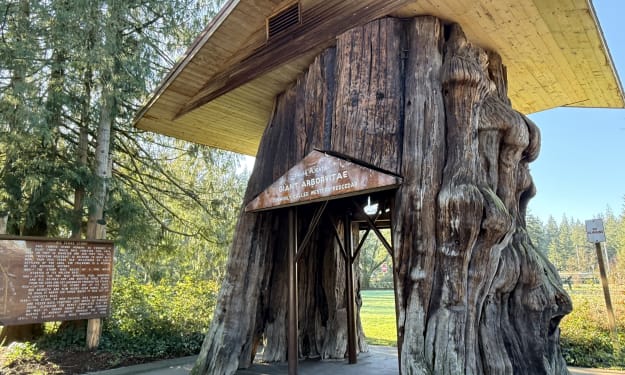
Western red cedar, over 1000 years old, you grew for 200 years and towered over others, silently observing sights in the forest that are no more, your secrets buried within your spirit. The bark covering your tree trunk, said to be about 23 feet around, was hollow when men discovered you. Inside the hollow trunk, a fire somehow began; you cannot tell us when, how, or why, and there is no record of it. The fire caused your death. Slowly, you died, from the inside out. Such a sad loss for an old soul of the forest, with centuries of knowledge in its cells. Houses, watercraft, shingles, bowls, bows and arrows, and paper that men used to write what they knew of your history could have been made from your body, branches, and bark. Truly, fire was a better death for you than a logger’s saw.
By Andrea Corwin about 18 hours ago in Earth
Severe Geomagnetic Storm Could Bring Northern Lights Across Much of the U.S.
On Monday evening, skywatchers from the Pacific Northwest to the Midwest got ready for something out of the ordinary: a celestial display that typically occurs at high northern latitudes. Americans who provide forecasts as a powerful cloud of charged particles from the sun accelerates toward the Earth's magnetic field, the National Oceanic and Atmospheric Administration (NOAA) has issued a "G4 (Severe) geomagnetic storm watch."
By Raviha Imran2 days ago in Earth



Comments
There are no comments for this story
Be the first to respond and start the conversation.