
Get Ready for a Glorious Harvest Blood Moon on September 7.
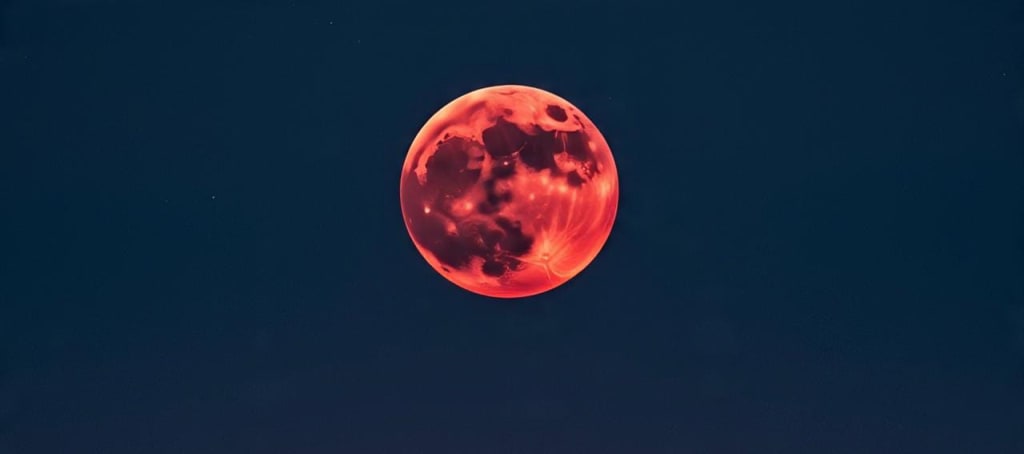
On the evening of September 7, 2025, skywatchers across much of the world will be treated to one of nature’s most spectacular sights: a total lunar eclipse that transforms the full Corn Moon into a glowing Blood Moon.

The Corn Moon and Its Meaning
September’s full moon is often called the Corn Moon, a name passed down through Native American and European farming traditions. It marked the season of harvesting late-summer crops, especially corn, before the chill of autumn arrived. While many associate September’s full moon with the Harvest Moon, that title officially goes to whichever full moon is closest to the autumn equinox. In 2025, the Harvest Moon falls in October, leaving September with the traditional Corn Moon.
Still, the Corn Moon is no less powerful in cultural meaning. Farmers once planned their work around its bright glow, which lingered longer in the sky than other full moons, giving them precious extra hours to gather crops. This year, the Corn Moon comes with a bonus—it will align perfectly with Earth’s shadow, setting the stage for a dramatic lunar eclipse.
Why the Moon Turns Red
A lunar eclipse occurs when the Earth passes directly between the Sun and the Moon. Instead of disappearing into darkness, the Moon takes on a haunting red or coppery hue. This happens because Earth’s atmosphere bends and filters sunlight, scattering away blue wavelengths while allowing the longer red wavelengths to pass through. That filtered light falls across the Moon, turning it into a so-called “Blood Moon.”
On September 7, this transformation will unfold in stages. The eclipse begins with the Moon entering Earth’s outer shadow, called the penumbra, before slipping into the darker umbra. At the height of the event, the entire Moon will be bathed in shades of crimson and orange. The exact color will depend on Earth’s atmospheric conditions—dust, clouds, and even volcanic particles can deepen or brighten the red tint.
Timings and Duration
This eclipse promises to be a long and rewarding show. According to astronomers, the totality will last about 82 minutes, giving stargazers plenty of time to enjoy the spectacle. The sequence begins with a subtle penumbral phase at 15:28 UTC, followed by a partial eclipse at 16:26 UTC. Totality kicks off at 17:30 UTC, reaches its deepest point at 18:11 UTC, and ends at 18:53 UTC. The final partial phases will continue until about 19:56 UTC.
Unlike solar eclipses, this lunar eclipse is completely safe to watch with the naked eye—no special glasses required. Binoculars or a telescope, however, can enhance the details, revealing the Moon’s cratered surface glowing in eerie shades of red.
Where to Watch
Visibility is one of the most exciting aspects of this event. Nearly 77% of the world’s population will be able to witness the eclipse in some form. The best views will be across Asia, Africa, Australia, and parts of Europe, where the eclipse will occur high in the sky. In the UK and western Europe, the Moon will rise already eclipsed, offering the stunning sight of a blood-red Moon climbing above the horizon.
Unfortunately, much of North and South America will miss the main show, as the Moon will have already set before the eclipse begins. However, those in eastern regions of South America may still catch the early stages.
A Celestial Bonus
During the eclipse, the Moon will appear in the constellation Aquarius, not far from Saturn. For keen stargazers, this provides an added treat: the chance to see the dimmed, red Moon framed by nearby planets and bright stars. Once the Moon darkens, the surrounding sky becomes more visible, making it easier to spot celestial neighbors like Fomalhaut, one of the brightest stars of Aquarius.
Why This Blood Moon Matters
This September event is especially important because it marks the second and final total lunar eclipse of 2025. After this, observers will need to wait until March 2026 for the next opportunity to see such a spectacle. Its long duration and wide visibility make it one of the most significant skywatching highlights of the year.
Culturally, blood moons have always fascinated people. Some ancient societies saw them as omens, while others viewed them as signs of renewal and change. Today, while we understand the science behind them, the sense of wonder remains. Whether you’re photographing it, watching with friends, or simply stepping outside to marvel at the heavens, this eclipse invites us to pause and connect with the rhythms of the cosmos.
Final Thoughts
The Harvest Blood Moon of September 7, 2025 is more than just an astronomical event—it is a reminder of the beauty and mystery above us. For more than an hour, the Moon will glow with an otherworldly red light, uniting people across continents under the same sky.
So mark your calendar, prepare your cameras, and find a clear spot away from city lights. This rare cosmic ballet promises to be a highlight of the year—a chance to witness the universe’s grandeur with your own eyes. Don’t miss it.
About the Creator
USA daily update
News, Politics, Technology Updates
Keep reading
More stories from USA daily update and writers in Earth and other communities.
Human Revenge: A Hidden Cause Behind the Decline of Snow Leopards
High in the rugged mountains of Central and South Asia lives one of the world’s most mysterious and beautiful big cats—the snow leopard. Known for its thick grey-white fur, long tail, and incredible ability to blend into rocky landscapes, this elusive predator has fascinated scientists and wildlife lovers for decades. Yet despite its beauty and ecological importance, the snow leopard faces a growing threat: human revenge.
By Irshad Abbasi 5 days ago in Earth



Comments
There are no comments for this story
Be the first to respond and start the conversation.