
Nature’s Oddballs: The Most Unusual Creatures on Earth
Exploring the planet’s strangest and most fascinating animals

The Aye-Aye — The Lemur With a Witch’s Finger
Deep in the rainforests of Madagascar lives a nocturnal creature that could easily be mistaken for a character in a fantasy novel. The Aye-Aye is a rare type of lemur, instantly recognisable by its large yellow eyes, bat-like ears, and, most bizarre of all, an extra-long, bony middle finger. This finger isn’t for pointing — it’s a specialised tool for finding food. The Aye-Aye taps on tree bark, listening for hollow sounds that indicate insect tunnels, then uses its eerie finger to fish out grubs. Though once feared as a bad omen, the Aye-Aye is now celebrated as one of nature’s most unusual problem-solvers.
The Yeti Crab — The Furry Claw Diver
At a depth where sunlight can’t reach and the water is near freezing, you wouldn’t expect to find a creature that looks like it’s wearing a white fur coat. The Yeti Crab, discovered near hydrothermal vents in the South Pacific, is covered in silky hairs — especially on its claws. These “hairy mittens” aren’t for warmth, but for farming bacteria, which the crab eats as a food source. Living in extreme environments, the Yeti Crab thrives where few others can survive, proving that life finds a way in even the harshest corners of our planet.
The Pink Fairy Armadillo — The Pocket-Sized Armoured Wonder
Imagine a creature so tiny it could fit in your hand, yet it’s wearing a delicate pink shell. The Pink Fairy Armadillo, found in Argentina, is the smallest armadillo in the world. Its soft, rose-hued armour protects it from predators, while its strong claws allow it to “swim” through sand like it’s water. Because it’s so elusive and rarely seen, it’s nicknamed “nature’s little ghost.” Despite its fragile size, this miniature armadillo is perfectly adapted to its underground desert life.
The Glass Frog — The Transparent Wonder of the Rainforest
High in the tropical forests of Central and South America, a tiny green frog hides on leaves, almost invisible to predators. The Glass Frog gets its name from its see-through skin — flip it over, and you can actually see its heart beating and organs working in real time. This transparency is a survival trick, blending perfectly with the rainforest canopy. Scientists believe its camouflage is one of the most effective in nature, allowing it to remain unnoticed while the jungle bustles around it.
The Axolotl — The Eternal Youth of the Animal Kingdom
Known as the “walking fish,” though it’s actually an amphibian, the Axolotl is native to lakes near Mexico City. What makes it truly strange is that it never grows up — literally. Unlike most amphibians, it stays in its larval stage for its entire life, keeping its feathery gills and wide, smiling face. Even more incredible, the Axolotl can regenerate lost limbs, parts of its spinal cord, and even parts of its brain. Scientists study it in hopes of unlocking the secrets of regeneration in humans.
The Leafy Sea Dragon — The Ocean’s Master of Disguise
Off the southern and western coasts of Australia swims a creature that could easily be mistaken for drifting seaweed. The Leafy Sea Dragon is a close relative of the seahorse, covered in delicate, leaf-like appendages that act as perfect camouflage among kelp forests. Moving slowly and gracefully, it drifts with the current, looking more like a plant than an animal. This disguise keeps it safe from predators while it hunts tiny crustaceans.
The Star-Nosed Mole — The Fastest Eater in the World
Beneath the wet soils of North America lives a small mole with a face you won’t forget — a star-shaped ring of 22 pink, fleshy tentacles where its nose should be. These tentacles are packed with over 25,000 sensory receptors, allowing the mole to “see” the world through touch. It can identify and eat its prey in as little as 120 milliseconds, making it the fastest eater on Earth. Though it looks like something out of a science fiction movie, it’s one of nature’s most efficient hunters.
Why These Oddballs Matter
While these creatures may look strange, each one is perfectly adapted to its environment. From the Aye-Aye’s insect-hunting finger to the Leafy Sea Dragon’s camouflage, these adaptations help them survive in ways that might seem bizarre to us but are genius in nature’s design. They remind us that our planet is full of wonders — some hidden deep in oceans, others high in rainforest canopies — and that there’s still so much to discover.
About the Creator
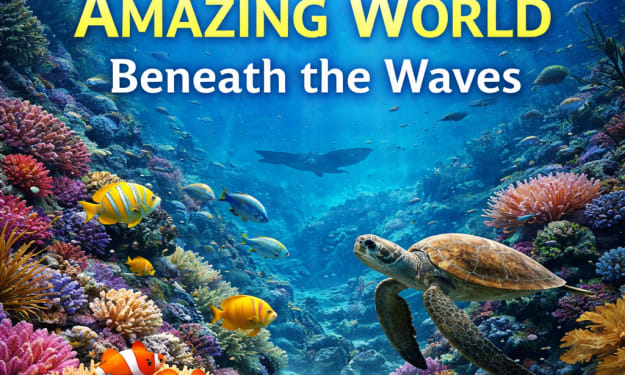
Exploring the Amazing World Beneath the Waves
Beneath the surface of the world’s oceans lies a vast and mysterious universe that few humans have truly experienced. Often described as Earth’s “final frontier,” the underwater world is filled with stunning landscapes, colorful creatures, and ecosystems that are both fragile and vital to life on our planet. From shallow coral reefs to the dark depths of the ocean floor, this hidden realm continues to amaze scientists, explorers, and nature lovers alike.
By Irshad Abbasi a day ago in Earth



Comments
There are no comments for this story
Be the first to respond and start the conversation.