
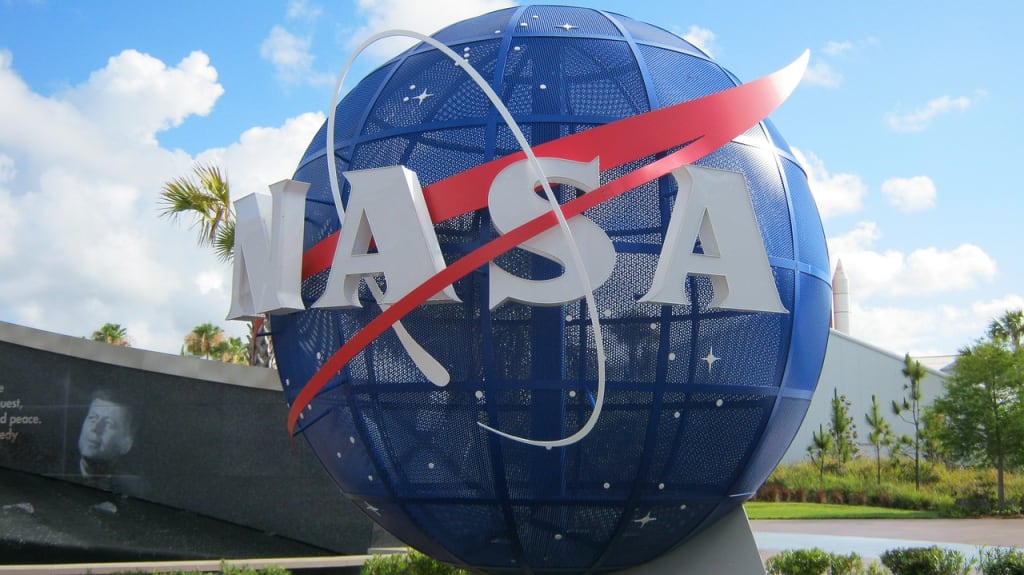
NASA: Exploring the Final Frontier
The National Aeronautics and Space Administration (NASA) stands as a symbol of human curiosity, scientific ambition, and technological innovation. Established on July 29, 1958, NASA emerged during the height of the Cold War in response to the Soviet Union’s launch of Sputnik, the world’s first artificial satellite. Over the decades, NASA has evolved from a space race participant to a leader in global space exploration, scientific discovery, and aeronautical research.

### The Birth of NASA
NASA was created by the National Aeronautics and Space Act, replacing its predecessor, the National Advisory Committee for Aeronautics (NACA). The agency was born out of the need for a coordinated and focused American space program. In the early years, NASA’s work was defined by the competition with the Soviet Union, culminating in one of humanity’s most iconic achievements: the Apollo 11 Moon landing in 1969, when Neil Armstrong became the first human to set foot on the lunar surface.
### Key Milestones in NASA History
NASA's accomplishments are vast, spanning manned missions, robotic space exploration, planetary science, Earth observation, and beyond.
- **Apollo Program (1961–1972):** Perhaps NASA’s most famous project, the Apollo program successfully landed 12 astronauts on the Moon. It demonstrated the potential of space travel and cemented America’s dominance in space exploration.
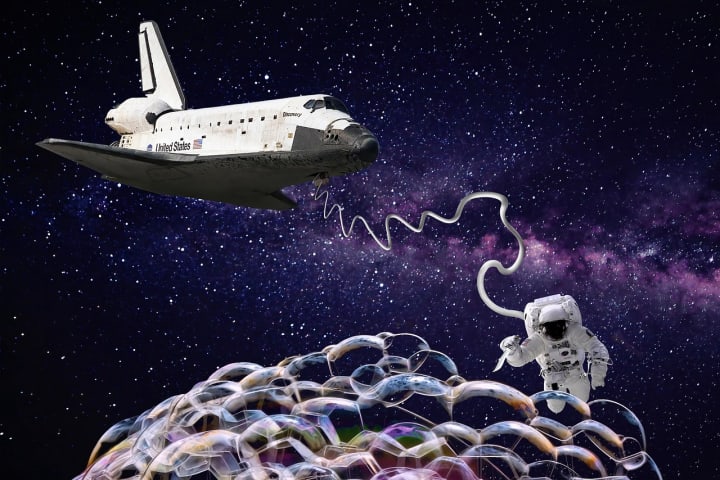
- **Space Shuttle Era (1981–2011):** The reusable Space Shuttle allowed for frequent missions to space, including satellite deployment, space station construction, and scientific experiments. Iconic missions like the launch of the Hubble Space Telescope and the assembly of the International Space Station (ISS) were made possible by the shuttle program.
- **International Space Station (1998–present):** NASA partnered with space agencies from Russia, Europe, Japan, and Canada to build the ISS. The station serves as a unique laboratory where astronauts conduct research in microgravity, advancing our understanding of science, medicine, and life support systems for long-term space travel.
- **Mars Exploration:** NASA has sent a series of successful robotic missions to Mars, including the Spirit and Opportunity rovers, Curiosity, and most recently, Perseverance. These missions have provided critical information about the Red Planet’s climate, geology, and potential for ancient life.
..### NASA Today: Innovation and Exploration
NASA continues to push the boundaries of space exploration and scientific discovery. The Artemis program, launched in partnership with international space agencies and commercial companies, aims to return humans to the Moon by the late 2020s, including the first woman and the first person of color. Artemis is not just about lunar exploration—it’s a stepping stone to human missions to Mars.
In the field of planetary science, NASA continues to explore the solar system with missions like the James Webb Space Telescope (JWST), launched in December 2021. JWST allows scientists to peer deeper into the universe than ever before, capturing images of galaxies formed shortly after the Big Bang and analyzing the atmospheres of exoplanets.
NASA is also at the forefront of climate research. Its fleet of Earth-observing satellites monitors global temperatures, ice cover, sea level, and greenhouse gas concentrations. This data is crucial for understanding and addressing climate change.
### The Role of Commercial Partnerships
In recent years, NASA has embraced partnerships with private space companies such as SpaceX, Blue Origin, and Boeing. These collaborations have revolutionized access to space. For instance, SpaceX’s Crew Dragon now regularly ferries astronauts to and from the ISS, reducing reliance on foreign launch systems and significantly cutting costs.
NASA’s Commercial Crew and Commercial Lunar Payload Services programs are part of a broader strategy to enable private industry to take on routine space operations, allowing NASA to focus on more ambitious exploration goals.

### Inspiring the Future
Beyond science and technology, NASA plays a crucial role in education and public inspiration. Its missions captivate audiences around the world, fostering interest in science, technology, engineering, and mathematics (STEM). NASA's educational outreach programs engage students of all ages, encouraging the next generation of explorers and innovators.
### Conclusion
NASA remains a beacon of exploration and discovery. From landing on the Moon to exploring distant planets and galaxies, the agency has continually expanded our understanding of the universe and our place within it. As it looks ahead to returning to the Moon and reaching Mars, NASA’s mission is more ambitious than ever. With international cooperation, commercial partnerships, and a renewed commitment to innovation, the next chapter of NASA’s journey promises to be its most exciting yet.
About the Creator
Keep reading
More stories from writers in Earth and other communities.
Laura Dern Names Adam Sandler as Her Favorite On-Screen Kissing Partner
In a recent interview that has fans buzzing, Oscar-winning actress Laura Dern revealed that her favorite on-screen kissing partner is none other than Adam Sandler. Known for her impressive body of work across drama and comedy, Dern’s revelation adds a playful, humanizing touch to the glitz of Hollywood life.
By Aarif Lasharia day ago in Earth
Southeast Asia on Alert After Nipah Virus Cases Detected in India
Authorities in Singapore, Thailand, and Malaysia have moved swiftly to implement precautionary measures after two confirmed cases of the Nipah virus were reported in India, raising concerns about the potential regional spread of one of the world’s deadliest zoonotic diseases. While health officials stress that there is currently no cause for panic, the response highlights lingering anxieties across Asia following the COVID-19 pandemic.
By Aarif Lashari4 days ago in Earth


Comments (1)
Outstanding!! What an article!!