
Most Dangerous Seas and Oceans
TOP 15 most dangerous seas and oceans

For millennia, humans have traversed the world's waters, facing challenges ranging from strong waves and ferocious storms to heated battles. Boats, integral to sea travel, often navigate through perilous situations, with the risk of capsizing always looming. While all oceans and seas present their own set of dangers, some areas are notably more treacherous than others. Join us today as we explore the 15 most hazardous oceans and seas globally.
15. Caribbean Sea:
The Caribbean, known for its beautiful islands, becomes a zone of peril from June 1st to November 30th when hurricanes batter its shores. The region's geographical position makes it prone to frequent and powerful storms. Hurricane Katrina in 2005 left a devastating mark on the Caribbean, causing widespread destruction and claiming numerous lives.
14. Dead Sea:
Situated between Jordan, Israel, and Palestine, the Dead Sea is famed for its extreme salinity, reaching 34%. While its salt content is beneficial for the skin, it renders the sea inhospitable to most life forms. Extended exposure to its waters can lead to discomfort, dehydration, and electrolyte imbalances.
13. Bering Sea:
Featured in shows like "Deadliest Catch" and "Bering Sea Gold," the Bering Sea, off Alaska's coast, poses challenges due to its frigid temperatures, strong winds, and shallow depths, causing intense and unpredictable waves. Extracting resources from this rich but hostile environment requires robust vessels and equipment.
12. Drake Passage:
Connecting the Atlantic and Pacific Oceans, the Drake Passage, despite not being a sea, earns a spot due to its turbulent conditions. Located between Chile and Antarctica, it witnesses powerful eddies caused by the collision of cold southern waters and warmer currents, earning it the nickname "Drake Shake."
11. Pacific Ocean:
Despite its peaceful name, the Pacific Ocean harbors dangers, especially in its western half. Venomous species, treacherous coral reefs, and the Ring of Fire's volcanic activity make this vast ocean a risky zone for swimmers and sailors alike.
10. Baltic Sea:
Though relatively safe in terms of storms and geopolitical location, the Baltic Sea faces environmental hazards. After World War II, chemical weapons dumped into its waters pose a threat, with the potential for hazardous leaks and pollution.
9. North Sea:
Rich in fish and oil, the North Sea's extreme waves, currents, and winds make it a perilous route. Prevailing westerly winds and atmospheric influences contribute to intense storms, challenging even experienced sailors.
8. South China Sea:
Marked by geopolitical tensions, the South China Sea is contested by multiple nations. China's militarization efforts and territorial claims, combined with treacherous geography like sunken reefs, create a volatile and hazardous environment.
7. Southern Ocean:
Circumpolar in nature, the Southern Ocean, south of the 60-degree latitude line, experiences constant storms due to its unobstructed flow around the globe. Scientists study its unique conditions, offering insights into global climate dynamics.
6. Sea of Marmara:
Found within Turkey's borders, the Sea of Marmara faces a growing threat from "sea snot." Overabundant phytoplankton, fueled by increased nutrients and warming waters, result in a gelatinous substance that can harm marine life and disrupt maritime activities.
5. Sea of Azov:
Amidst Russia-Ukraine tensions, the Sea of Azov has seen heightened conflict. Russia's control of major coastal cities allows them to manipulate the sea for strategic advantage, impacting regional stability.
4. Black Sea:
A critical route for trade and hydrocarbon deposits, the Black Sea is a focal point in the Russia-Ukraine war. Strategic control, military presence, and blockades create a dangerous environment for ships navigating these contested waters.
3. Arctic Ocean:
The world's smallest ocean, the Arctic Ocean poses challenges with freezing temperatures, icy conditions, and complex island navigation. Climate change's impact on Arctic sea ice raises geopolitical tensions over the Northwest Passage.
2. Mediterranean Sea:
Surprisingly hazardous due to its enclosed nature, the Mediterranean experiences shorter, steeper waves during storms. The Mistral wind in southern France and the region's geopolitical challenges, including a refugee crisis, make it a risky waterway.
1. Indian Ocean:
A vast expanse between India, Africa, and Southeast Asia, the Indian Ocean faces climatic threats like monsoons and tsunamis. The Gulf of Aden, a hotspot for geopolitical tensions and pirate attacks, adds to the region's perilous reputation.
While these oceans and seas offer breathtaking views and unique ecosystems, navigating their waters demands utmost caution and preparedness
About the Creator
Līva
World is interesting place. Scary, but worth living.
Nature is full of surprises and people are... well, people are something else.
Art is the best doctor.
Microbiota, microbiome or microflora: how to speak correctly and why it is for health.
You've probably heard the phrase, "We are what we eat." But modern science says more precisely: we are also those who live in us. Until 2016, it was believed that there are many times more bacteria in our body than our own cells. The latest calculations by mathematicians show that we divide the body with our microorganisms by about 50/50: about 30 trillion of our cells versus 38 trillion bacterial ones.
By Yaroslav Gorohov3 days ago in Earth
Chinese EVs Closing In on America After Canadian Tariffs Deal
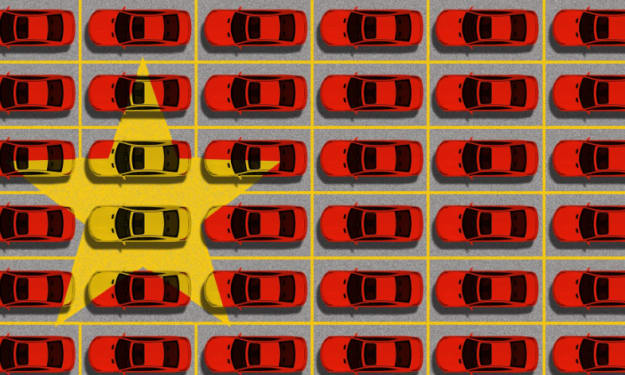
The electric vehicle race is no longer just about climate goals or consumer choice — it has become a geopolitical contest. And in early 2026, a subtle but powerful move by Canada may have tilted the board. By agreeing to sharply reduce tariffs on Chinese electric vehicles, Canada has opened a door that the United States has worked hard to keep shut. While Chinese EVs are still largely barred from the American market, they are now edging closer than ever — not by crossing the border directly, but by entering through Canada. This development raises a pressing question: Are Chinese EVs closing in on America, and what does that mean for the future of North American auto markets? The Deal That Changed the Game Canada’s new agreement with China allows up to 49,000 Chinese-made electric vehicles per year to enter the Canadian market at a tariff rate of just over 6%, a dramatic drop from the previous 100% tariff that effectively blocked them. On paper, the quota seems small. In reality, it carries enormous symbolic and strategic weight. For years, both Canada and the United States aligned closely on keeping Chinese EVs out, citing concerns over unfair subsidies, national security, and the protection of domestic auto industries. This new deal marks a clear shift — and a divergence from U.S. policy. Canada didn’t make the decision in isolation. The EV tariff reduction was part of a broader trade reset with China, tied to agricultural exports such as canola and efforts to stabilize a strained economic relationship. Why Chinese EVs Matter So Much China is the undisputed leader of the global electric vehicle industry. Its manufacturers produce EVs at scale, often at prices Western automakers struggle to match. Brands like BYD, Nio, and Xpeng have already expanded aggressively into Europe, Southeast Asia, and parts of the Middle East. North America has remained one of the final fortified markets — until now. Chinese EVs are appealing not just because they’re cheaper, but because they’ve rapidly improved in quality, range, and technology. For consumers priced out of North American and European EV models, Chinese vehicles offer something rare: affordability without sacrificing features. Canada’s decision gives Chinese automakers their first legitimate foothold in North America — and footholds tend to grow. Why the U.S. Is Nervous The United States still enforces a 100% tariff on Chinese EV imports, making them effectively unsellable in the American market. But Canada’s move has triggered concern in Washington. U.S. officials argue that Chinese EVs entering Canada could indirectly pressure American markets, influence supply chains, and weaken Washington’s leverage in future trade negotiations. There’s also a political dimension. Both major U.S. parties have framed Chinese dominance in EVs as a strategic threat — not just to auto jobs, but to technological leadership. Modern EVs collect vast amounts of data, and lawmakers have raised concerns about cybersecurity and foreign data access. While Chinese EVs aren’t rolling onto American roads yet, their presence just across the border changes the conversation. Canada’s Risk — and Opportunity Inside Canada, the reaction has been mixed. Automotive hubs like Ontario worry that opening the market could undermine domestic manufacturing and strain relations with the U.S., Canada’s largest trading partner. Some leaders have called the deal “lopsided,” warning it could cost jobs if American retaliation follows. Others see opportunity. A more competitive EV market could lower prices for Canadian consumers and accelerate EV adoption. It may also attract Chinese investment into Canada itself — including factories, battery plants, and supply chain partnerships. If Chinese automakers choose to build in Canada rather than simply export to it, the country could position itself as a bridge between Chinese EV innovation and North American demand. That balancing act — between economic opportunity and political risk — defines Canada’s strategy. Are Chinese EVs Really ‘Closing In’ on America? For now, the answer is: not directly — but strategically, yes. Chinese EVs sold in Canada won’t automatically flood the U.S. market. Regulations, trade rules, and tariffs still stand in the way. But proximity matters. Supply chains overlap. Consumer awareness spreads. Manufacturing footprints expand. There’s also the possibility of a workaround: Chinese companies could eventually build EVs in North America to bypass tariffs altogether. This idea has already been floated — but it faces fierce resistance from U.S. lawmakers and unions. Still, history shows that once a global industry leader gains regional access, momentum often follows. What This Means for Consumers For Canadian buyers, the impact could be immediate: more choice and lower prices in an EV market that has long been criticized for being expensive and limited. For American consumers, the effect will be indirect — at least at first. But increased competition could eventually pressure U.S. automakers to reduce prices, improve features, and accelerate innovation. The larger question is whether North America wants competition or insulation — and how long insulation can realistically last in a globalized EV economy. The Bigger Picture: A Global EV Power Shift Canada’s tariff deal reflects a broader reality: China’s dominance in electric vehicles is reshaping global trade, whether governments like it or not. Europe is already grappling with an influx of Chinese EVs. Emerging markets are embracing them. And now, North America has its first real crack in the wall. This isn’t just about cars. It’s about who controls the future of clean transportation, supply chains, and industrial policy. Final Thoughts Chinese EVs aren’t driving down American highways yet — but after Canada’s tariff deal, they’re closer than ever. This move doesn’t spell immediate disruption, but it does signal a shift. One country has decided that economic pragmatism outweighs political alignment. And in doing so, Canada may have opened the door to a new phase of EV competition in North America. Whether that door swings wider — or slams shut — will depend on how the U.S., automakers, and consumers respond. One thing is certain: the EV race just entered a new chapter.
By Muhammad Hassanabout 22 hours ago in Earth



Comments
There are no comments for this story
Be the first to respond and start the conversation.