
Monte Roraima: The Mysterious Oldest Place on Earth
Oldest Place

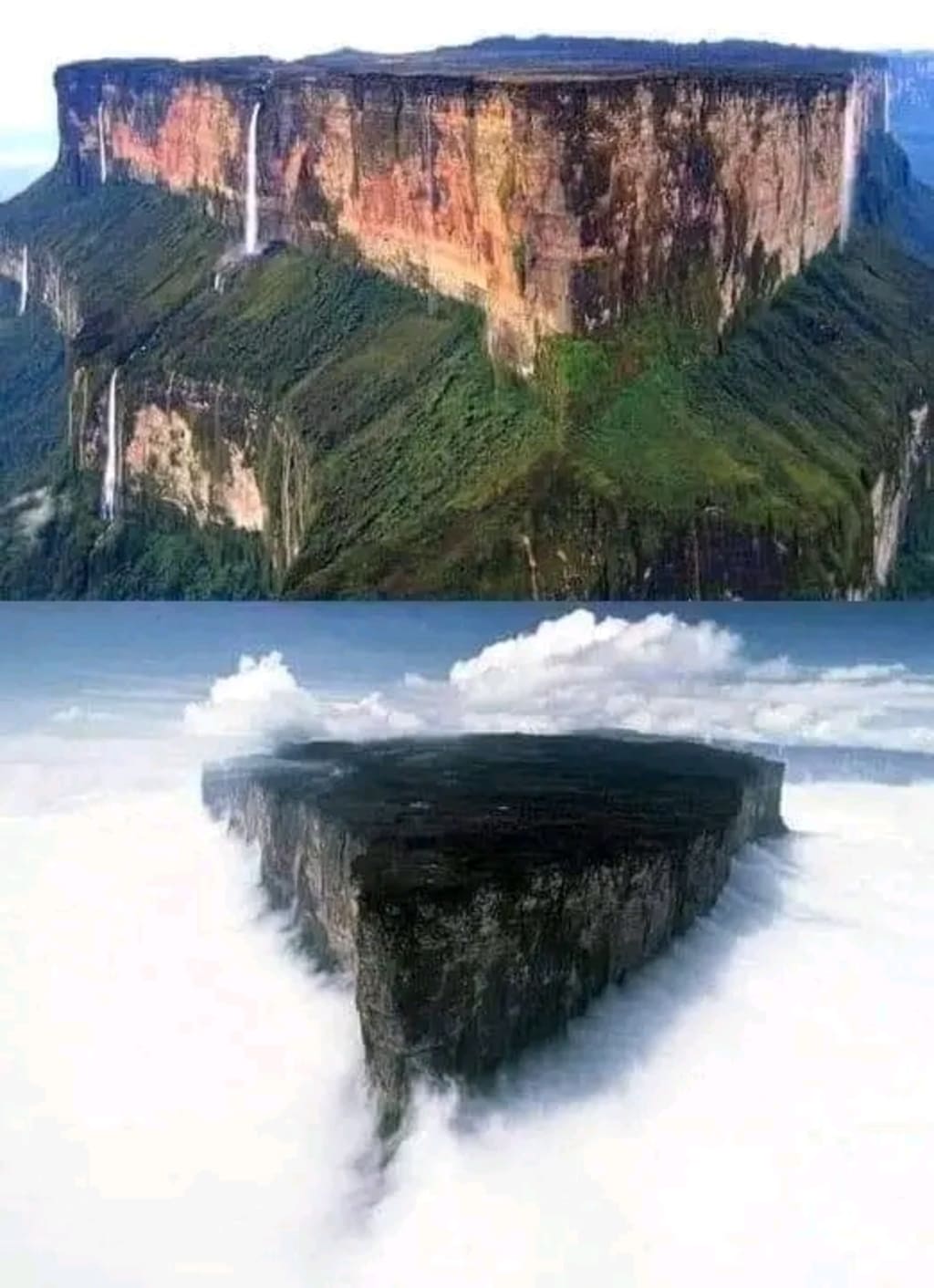
Rising majestically above the dense forests of Venezuela, Monte Roraima is one of the world’s most enigmatic natural wonders. This awe-inspiring table-top mountain, or "tepui," is not only renowned for its striking appearance but also for its status as one of the oldest geological formations on Earth. Its flat summit, sheer cliffs, and otherworldly features have captivated explorers, scientists, and adventurers for centuries. Despite being studied for more than 500 years, Monte Roraima continues to guard its secrets, leaving geologists and biologists alike in awe of its unique beauty and mysterious origins.
---
A Geological Marvel
Monte Roraima is part of the Pakaraima mountain range in South America and straddles the borders of Venezuela, Guyana, and Brazil. It stands at nearly 3,000 meters (9,219 feet) above sea level, making it one of the highest tepuis in the region. Its most defining feature is its massive, flat summit, which spans over 30 square kilometers. Surrounded by sheer cliffs that drop nearly 400 meters, the mountain appears almost otherworldly, as though it was carved with surgical precision.
Geologists believe Monte Roraima is composed of Precambrian quartzite and sandstone, dating back approximately 2 billion years. This makes it one of the oldest exposed rock formations on the planet. While many mountains owe their shapes to erosion, Monte Roraima’s peculiar flat-topped design defies conventional geological processes, adding to its intrigue. Some scientists speculate that it formed as a result of tectonic activity, possibly due to an ancient earthquake, though the precise cause remains unknown. Its unique morphology and incredible age set Monte Roraima apart as a geological anomaly.
---
A Lost World
Monte Roraima’s remote location and isolated nature have created a “lost world” ecosystem at its summit. This plateau is home to a stunning variety of plant and animal species, many of which are found nowhere else on Earth. Carnivorous plants, rare orchids, and mosses thrive in its unique environment, while animals like the Roraima black frog (Oreophrynella quelchii) and tiny lizards have adapted to the extreme conditions.
The summit is often shrouded in mist, creating a humid and ethereal atmosphere that supports these endemic species. Some biologists believe that there are still undiscovered species hiding within the unexplored crevices and caves of the mountain. This biodiversity has made Monte Roraima a focal point for researchers studying evolution and adaptation in isolated ecosystems.
---
Legends and Mysteries
Monte Roraima has long been a source of fascination and wonder, not just for scientists but also for indigenous peoples and explorers. To the Pemon and Kapon tribes, the mountain is a sacred site, often referred to as the "House of the Gods." According to local legends, the mountain was once the trunk of a giant tree that contained all the fruits and vegetables of the world. The tree was cut down by a mythical hero, and its remnants formed the flat-topped mountains that dot the region, with Monte Roraima as the most prominent.
These legends add an air of mysticism to the mountain, blending science with folklore in a way that captures the imagination. Monte Roraima’s mysterious aura was even immortalized in literature. Sir Arthur Conan Doyle’s 1912 novel The Lost World was inspired by its uncharted summit, envisioning it as a land where dinosaurs and prehistoric creatures still roamed.
---
Exploration and Adventure
Despite its challenging terrain, Monte Roraima has become a popular destination for adventurers and nature enthusiasts. The most common route to the summit begins on the Venezuelan side, with a trek that typically takes several days. Hikers traverse lush rainforests, cross rivers, and climb steep inclines before reaching the plateau, where breathtaking views and surreal landscapes await.
The summit itself is a treasure trove of natural wonders. Its surface is dotted with unusual rock formations, some of which resemble sculptures shaped by time and wind. There are also deep sinkholes, crystal-clear pools, and waterfalls that plunge dramatically off the edge of the cliffs. One of the most famous waterfalls, the Roraima Falls, cascades into the dense forest below, creating a scene of unparalleled beauty.
---
The Scientific Puzzle
Despite centuries of study, Monte Roraima continues to puzzle geologists. While tectonic activity is believed to have played a role in its formation, no other geological features in the region share its distinct flat-topped structure. This has led some scientists to theorize that Monte Roraima’s origin might involve processes that are not yet fully understood.
The mountain’s immense age also raises intriguing questions about the history of Earth itself. If Monte Roraima truly is the oldest exposed rock formation on the planet, it provides a unique window into the Precambrian era, a time when life was just beginning to emerge. Studying its rocks and fossils could reveal invaluable insights into the evolution of Earth’s crust and the forces that shaped our planet.
---
Conclusion
Monte Roraima is more than just a mountain—it is a natural wonder that embodies the mysteries of our planet’s ancient past. From its flat summit and sheer cliffs to its rich biodiversity and enigmatic origins, it stands as a testament to the power and beauty of nature.
For scientists, it offers endless opportunities to explore and uncover new knowledge. For adventurers, it is a challenging yet rewarding journey into one of the world’s most stunning landscapes. And for all who encounter it, Monte Roraima is a reminder of the enduring wonder of Earth, a place where myths, science, and natural beauty converge in a timeless dance.
About the Creator
Keep reading
More stories from Deji Akomolafe and writers in Earth and other communities.
Capturing Nature’s Fury: William Nicholson Jennings and the First Photograph of Lightning
In 1882, an extraordinary moment in both photography and meteorology unfolded. American photographer William Nicholson Jennings achieved what was once thought impossible: he captured a lightning strike on camera. This groundbreaking image was more than just a testament to Jennings' technical skill and perseverance; it was a scientific revelation that transformed humanity’s understanding of lightning and paved the way for future advancements in both fields.
By Deji Akomolafeabout a year ago in Earth
Industrial Deployment of Biochar in Modern Metal Smelting Systems
Biochar is increasingly examined as a functional carbonaceous material in high-temperature metallurgical operations. Traditionally dominated by fossil-derived coke and coal, metal smelting processes are under pressure to decarbonize while maintaining reductive efficiency and structural reliability. Biochar, when properly engineered, presents a technically viable supplementary reductant in the production of steel, silicon, and ferroalloy. Its application, however, requires stringent control of physicochemical properties and integration within existing furnace infrastructure.
By Wayne Shen7 days ago in Earth



Comments
There are no comments for this story
Be the first to respond and start the conversation.