
Capturing Nature’s Fury: William Nicholson Jennings and the First Photograph of Lightning
Lightening Capturing

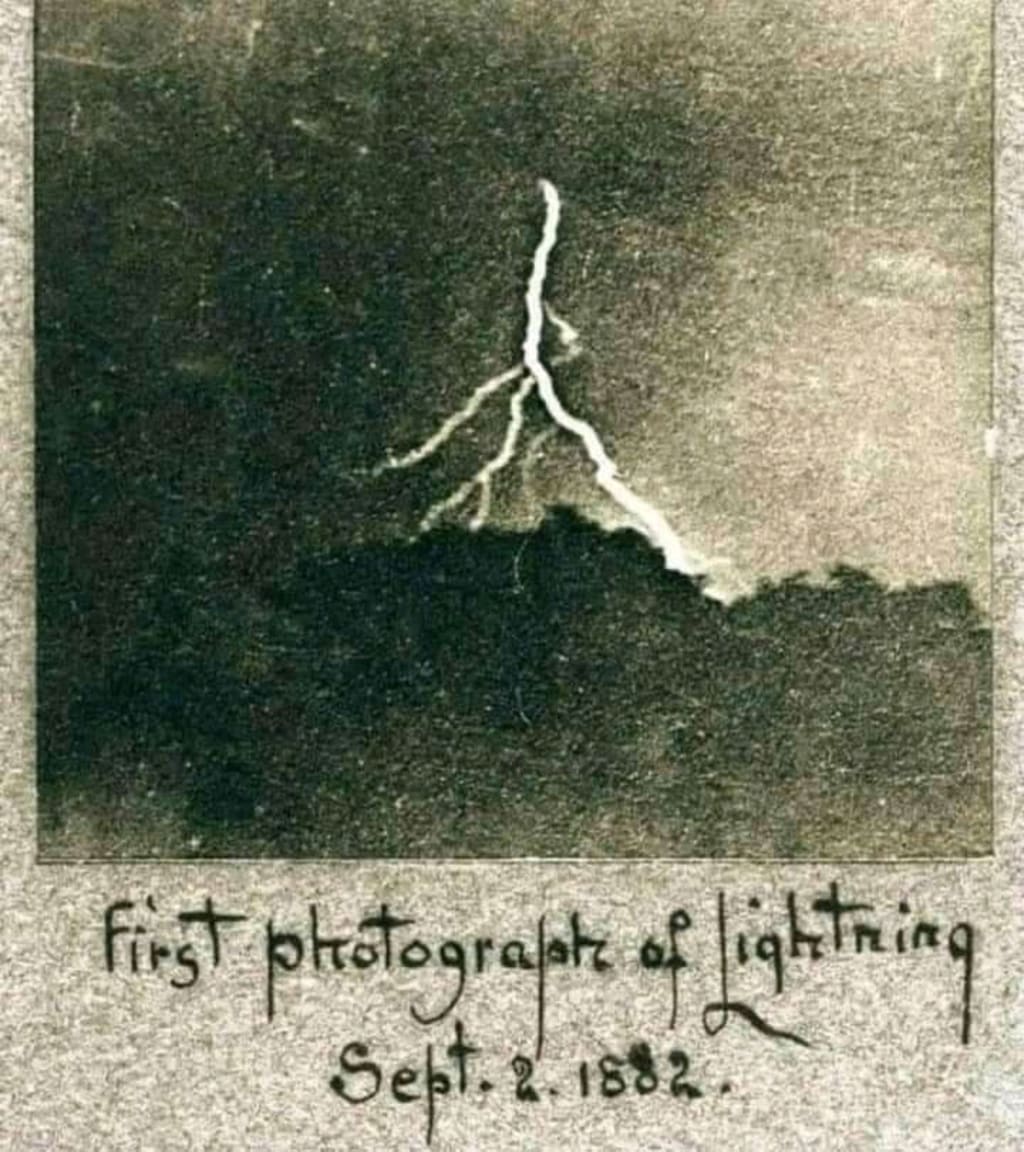
In 1882, an extraordinary moment in both photography and meteorology unfolded. American photographer William Nicholson Jennings achieved what was once thought impossible: he captured a lightning strike on camera. This groundbreaking image was more than just a testament to Jennings' technical skill and perseverance; it was a scientific revelation that transformed humanity’s understanding of lightning and paved the way for future advancements in both fields.
---
The Challenge of Photographing Lightning
Lightning is one of nature’s most dramatic displays, but its fleeting and unpredictable nature makes it a challenging subject for any photographer. In the late 19th century, photography was a meticulous and slow process. Cameras relied on glass plate negatives, and exposures required precise timing and patience—luxuries that the erratic nature of lightning rarely allowed.
Undeterred by these challenges, William Nicholson Jennings embarked on a mission to photograph lightning, driven by a fascination with its raw power. Jennings was already an established photographer known for his skill with landscape photography, but capturing lightning presented an entirely new level of difficulty.
Unlike today’s high-speed digital cameras, Jennings worked with equipment that required careful manual adjustments. He needed to anticipate when and where lightning would strike, set up his camera accordingly, and expose the glass plate at precisely the right moment. Success relied not only on technical expertise but also on a significant amount of luck.
---
The Groundbreaking Photograph
In 1882, after countless attempts, Jennings finally succeeded. He captured an image of a lightning strike that revealed its true complexity and form—a feat never before accomplished.
Before Jennings’ photograph, lightning was often depicted in art and literature as a simple zigzag or forked shape. This artistic representation, while visually striking, failed to capture the intricate structure of real lightning. Jennings' photograph, however, showed a different story. It revealed a jagged, branching network of channels that illuminated the sky with stunning detail.
This photograph was not merely a work of art; it was a scientific milestone. For the first time, researchers could study lightning’s form and behavior from a visual record, rather than relying on anecdotal descriptions or artistic interpretations.
---
The Impact on Meteorology
Jennings’ photograph was a revelation for meteorologists. It offered a new way to study the structure and dynamics of lightning, enabling scientists to better understand its electrical discharge and branching patterns. The image also provided insight into how lightning connects clouds to the ground, advancing theories about the phenomenon's physical properties.
This groundbreaking work laid the foundation for further research into lightning. Over time, scientists used high-speed photography and other technologies to build upon Jennings’ discovery, analyzing lightning’s speed, temperature, and effects on the environment. Jennings’ photograph marked the beginning of a new era in meteorology, where visual data became an essential tool for understanding natural phenomena.
---
A Turning Point in Photography
From a photographic perspective, Jennings’ work was equally transformative. His achievement highlighted the potential of photography as a tool for capturing fleeting moments and documenting the natural world in ways that the human eye could not.
The challenges Jennings overcame inspired other photographers to push the boundaries of what was possible with the medium. His work demonstrated that photography could bridge the gap between art and science, serving as a means to explore and understand the unseen.
Jennings’ lightning photograph was also a precursor to the field of high-speed photography, which would emerge in the 20th century. His ability to freeze a moment of immense power and speed hinted at the future possibilities of the medium, from studying wildlife to analyzing motion in industrial processes.
---
Jennings’ Legacy
William Nicholson Jennings’ name may not be as widely recognized today as other pioneers of photography, but his contributions are no less significant. His lightning photograph remains a symbol of innovation and curiosity, capturing the imagination of both scientists and artists alike.
Jennings’ dedication to his craft also serves as a reminder of the power of persistence. Photographing lightning in the 19th century required not only technical skill but also an extraordinary level of patience and determination. Jennings’ success was a testament to his unwavering commitment to capturing the beauty and complexity of the natural world.
---
Lightning Photography Today
Modern photographers and meteorologists owe much to Jennings’ pioneering work. Advances in camera technology have made it easier to capture lightning in stunning detail, with high-speed cameras capable of recording thousands of frames per second. Drones and satellites now provide additional perspectives, offering new insights into lightning’s behavior and impact on the atmosphere.
Despite these advancements, Jennings’ photograph remains a touchstone in the history of photography and science. It serves as a reminder of a time when capturing a single image of lightning was a monumental achievement, requiring equal parts innovation and determination.
---
Conclusion
William Nicholson Jennings’ 1882 photograph of a lightning strike is more than a historic image—it’s a story of perseverance, creativity, and scientific discovery. By capturing a moment that had eluded humanity for centuries, Jennings bridged the gap between art and science, offering a new way to understand one of nature’s most awe-inspiring phenomena.
Nearly 150 years later, his work continues to inspire photographers, scientists, and anyone with a passion for exploring the natural world. Jennings’ lightning photograph is a testament to the power of curiosity and the enduring human desire to unravel the mysteries of nature.
About the Creator
Keep reading
More stories from Deji Akomolafe and writers in Earth and other communities.
Discovering Elephant Island: A Frozen Gem in the Southern Ocean
Elephant Island, an isolated and desolate piece of land in the Southern Ocean, sits at a critical crossroads in Antarctic geography. Located about 200 km northwest of the Antarctic Peninsula and approximately 900 km south of the Falkland Islands, this island is a testament to the harsh and unforgiving environment of Earth’s southernmost regions. With an area of 558 km², it is entirely covered by ice, making it a fascinating yet inhospitable location. Despite its remote and extreme nature, Elephant Island holds a significant place in history due to its role in one of the most remarkable survival stories of the 20th century.
By Deji Akomolafeabout a year ago in Earth
China Cracks Down on Ships Using Starlink
A New Front in China’s Technology Control China has intensified its crackdown on ships using Starlink, the satellite internet service operated by Elon Musk’s SpaceX, signaling a sharp escalation in Beijing’s efforts to control information flows and foreign technology. Authorities have warned commercial vessels, fishing boats, and private operators against using unapproved satellite communication systems, citing national security and data sovereignty concerns.
By Aarif Lashari5 days ago in Earth
Elon Musk Says Retirement Savings “Won’t Matter” in 20 Years—Here’s What Experts Think
Recently, Elon Musk sparked a heated debate on social media with a bold claim: in 20 years, traditional retirement savings “won’t matter.” The Tesla and SpaceX CEO suggested that the way people think about money and retirement today might be completely obsolete in a couple of decades. As usual, Musk’s statements are equal parts provocative and visionary, leaving many wondering whether they should rethink their financial plans entirely. To get clarity, we reached out to seven personal finance and AI experts to hear their thoughts on Musk’s prediction. Their insights provide a mix of caution, optimism, and futuristic thinking. 1. The Case for Obsolescence: AI and Automation AI strategist Dr. Karen Liu believes Musk isn’t exaggerating when he talks about the diminishing importance of retirement savings. “If AI and automation continue at the current pace, many traditional jobs could disappear,” she explains. “By 2046, people might earn income from AI-driven ventures, digital assets, or royalties rather than a 9-to-5 paycheck. In that case, the way we save for retirement could indeed look very different.” She emphasizes that new financial models might emerge, such as universal basic income (UBI) or AI-managed wealth portfolios, making conventional retirement accounts less critical. “People might no longer need 401(k)s or IRAs in the same way we do now,” she adds. 2. The Human Factor: Some Things Don’t Change Personal finance advisor Marcus Bell takes a more conservative view. “Even if the economy changes drastically, money management skills won’t be irrelevant,” he says. “Musk may be right that retirement savings as we know them may evolve, but having a financial cushion will always matter. Emergencies, healthcare costs, and life changes won’t disappear.” Bell suggests a hybrid approach: continue contributing to traditional retirement accounts while exploring alternative investments like digital currencies, AI-managed funds, or entrepreneurial ventures. 3. Cryptocurrency and the Digital Asset Revolution Crypto expert Priya Desai sees Musk’s comment as a nod toward the rise of digital assets. “By 2046, much of personal wealth may reside in cryptocurrencies, tokenized real estate, and NFTs rather than bank accounts or pensions,” she says. Desai believes that blockchain technology could redefine ownership and wealth accumulation, making traditional retirement savings less central. However, she cautions: “Digital assets are highly volatile. While they may replace some retirement vehicles, they aren’t a guaranteed substitute. Diversification will remain crucial.” 4. AI-Powered Wealth Management AI entrepreneur Rohan Kapoor points out that AI itself could make traditional retirement planning almost obsolete. “Imagine AI systems that continuously optimize your investments, taxes, and spending in real-time,” he says. “If AI handles wealth accumulation more efficiently than humans, you may not need to manually save and plan decades in advance.” Kapoor predicts that by 2046, AI advisors could create personalized financial lifelines that automatically adjust for inflation, market changes, and lifestyle goals. In this scenario, traditional 401(k)s might feel outdated. 5. The Social Safety Net Factor Economist Dr. Elise Morgan reminds us that social and political structures will also play a role. “Even if technology changes how wealth is accumulated, government programs like Social Security, healthcare, or UBI will shape retirement,” she explains. “Musk’s statement assumes a high-tech, highly automated economy, which is just one possible scenario.” Morgan urges caution: relying solely on futuristic predictions could be risky. Traditional savings may still act as a fallback if economic or technological disruptions fail to deliver as Musk anticipates. 6. Mindset and Wealth Beyond Money Financial psychologist Sandra Liu emphasizes that wealth isn’t only monetary. “Even if retirement accounts lose their traditional meaning, financial literacy, resourcefulness, and the ability to leverage technology will remain critical skills,” she says. “Musk’s prediction is more about mindset than accounts. People who can adapt, innovate, and use technology to generate income will thrive regardless of conventional savings.” 7. Preparing for the Future, Not Panicking Finally, futurist Jared Thompson encourages a pragmatic approach: “Don’t panic or abandon your retirement plan just because Elon Musk said so. Think of it as a signal to diversify—invest in tech, learn AI skills, and explore new income streams.” Thompson suggests a “layered strategy”: keep some traditional retirement savings while experimenting with AI-driven investment platforms, cryptocurrencies, and entrepreneurial projects. What Does This Mean for You? Musk’s prediction may sound extreme, but the expert opinions reveal a spectrum of possibilities. Here’s a practical takeaway: Keep saving, but diversify: Don’t abandon retirement accounts, but explore AI-driven investments, crypto, or digital assets. Invest in skills: AI, coding, and tech literacy may be as valuable as cash reserves in 20 years. Embrace flexibility: Financial plans should be adaptable to rapid technological and societal changes. Mind the basics: Emergency funds, debt management, and smart spending remain essential regardless of tech trends. In short, Musk’s warning isn’t necessarily a call to abandon traditional retirement planning—it’s a reminder that the future of money is changing rapidly. Those who combine conventional strategies with an eye on emerging technologies may be the ones who truly thrive in 2046. Conclusion: Elon Musk’s claim that retirement savings “won’t matter” in 20 years is provocative, but it opens an important conversation about the intersection of finance, technology, and the future of work. While some experts see it as a harbinger of radical change, others stress prudence and flexibility. Either way, the message is clear: the next two decades will demand both financial savvy and tech literacy. The question isn’t whether retirement savings will disappear—it’s whether you’ll adapt to the evolving financial landscape.
By Muhammad Hassan4 days ago in Earth




Comments
There are no comments for this story
Be the first to respond and start the conversation.