
Mollusks: A Comprehensive Guide to the Diversity and Adaptations of these Fascinating Invertebrates
Exploring the Fascinating World of Mollusks: From Morphology to Classification and Beyond
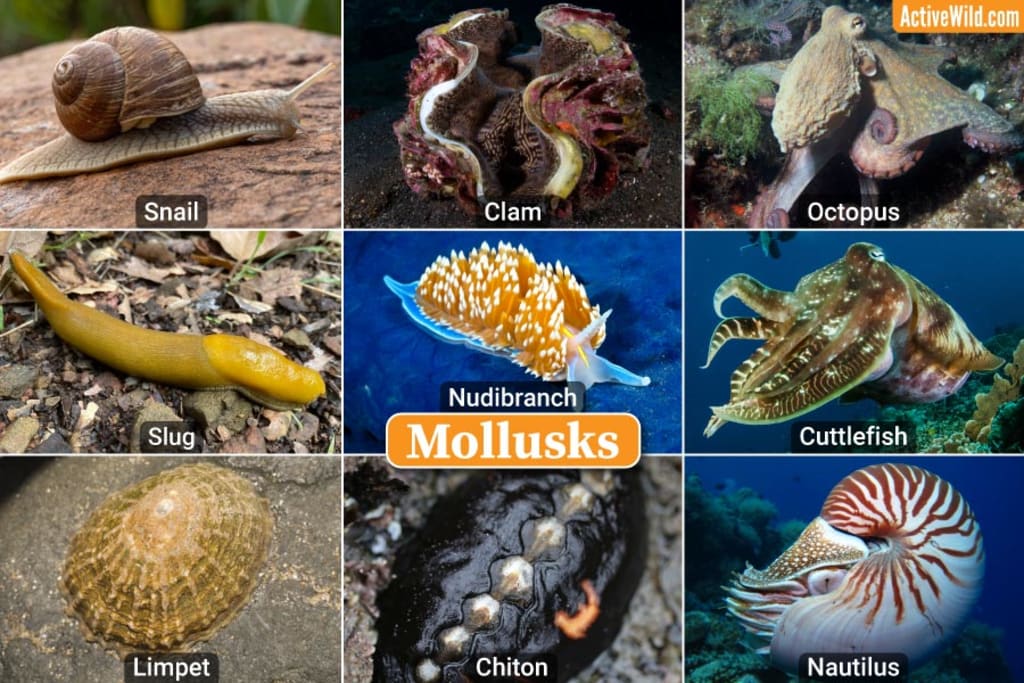
Mollusks are a diverse group of invertebrates with over 100,000 known species. They are found in almost every aquatic environment, from freshwater streams to deep-sea trenches, and on land, from deserts to rainforests. They range in size from microscopic to over 18 meters in length (as in the case of the giant squid). Mollusks are a significant component of many marine and freshwater ecosystems and are also commercially important, with many species being harvested for food, shells, and other products.
Morphology
Mollusks are characterized by a soft body that is usually enclosed in a hard, protective shell made of calcium carbonate. The body of a mollusk is divided into three main regions: the head, the visceral mass, and the foot. The head contains the sensory organs, including the eyes, tentacles, and mouth. The visceral mass contains the internal organs, including the heart, stomach, and reproductive organs. The foot is used for locomotion and can take on many different shapes and functions depending on the species.
The shell of a mollusk is formed by the mantle, a specialized tissue that secretes calcium carbonate. The mantle covers the visceral mass and forms a cavity called the mantle cavity. This cavity contains the gills, which are used for respiration and filter feeding. Some mollusks have a modified mantle cavity that is used for jet propulsion, allowing them to move quickly through the water.
Classification
Mollusks are classified into eight main groups or classes: Aplacophora, Polyplacophora, Monoplacophora, Gastropoda, Bivalvia, Scaphopoda, Cephalopoda, and Solenogastres. Each class has its unique characteristics and adaptations.
Aplacophora
Aplacophorans are a small group of worm-like mollusks that lack a shell or have a reduced, internal shell. They are found in deep-sea environments and are thought to be the most primitive of all living mollusks.
Polyplacophora
Polyplacophorans, commonly known as chitons, are marine mollusks that have a flattened, elongated body with a shell composed of eight separate plates. Chitons are found in intertidal zones and on rocky shores worldwide.
Monoplacophora
Monoplacophorans are deep-sea mollusks that were thought to be extinct until the discovery of a living specimen in 1952. They have a single, cap-shaped shell and a foot that is used for crawling along the ocean floor.
Gastropoda
Gastropods are the largest and most diverse class of mollusks, with over 60,000 known species. They are characterized by a single, spiral shell and a muscular foot that is used for crawling. Gastropods are found in marine, freshwater, and terrestrial habitats worldwide and include snails, slugs, and sea butterflies.
Bivalvia
Bivalves, also known as pelecypods, are mollusks that have a two-part shell hinged at the top. Bivalves are found in both marine and freshwater environments and include clams, oysters, mussels, and scallops. They are filter feeders, using their gills to extract food particles from the water.
Scaphopoda
Scaphopoda, also known as tusk shells, are a small class of marine mollusks characterized by a slender, elongated shell that is open at both ends. They are found in deep-sea environments worldwide and are thought to be the most primitive of all living mollusks. Scaphopods burrow in the sand or mud using their muscular foot and feed on microscopic organisms using their tentacles. The shell of scaphopods is often used in jewelry and other decorative items. While they are not a commercially important species, scaphopods play an important ecological role in deep-sea environments as a food source for other marine organisms.
Cephalopoda
Cephalopoda is a class of mollusks that includes some of the most intelligent and complex invertebrates, such as octopuses, squid, and cuttlefish. They have a well-developed brain and eyes, tentacles or arms, and a specialized ink sac or jet propulsion system for movement. They are found in marine environments worldwide and play important ecological roles.
About the Creator
Keep reading
More stories from Kamal Mourya and writers in Earth and other communities.
Crustaceans: Anatomy, Behavior, Habitat, and Commercial Importance
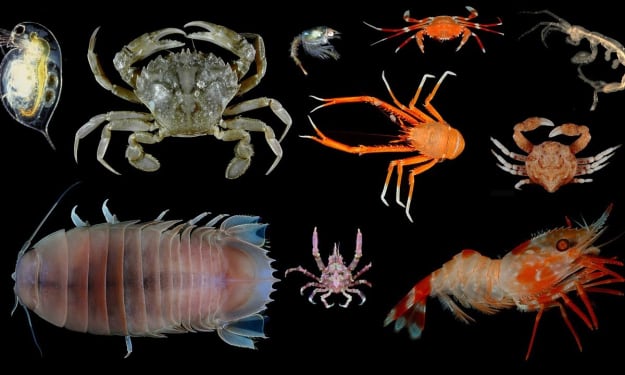
Crustaceans are a diverse group of arthropods that belong to the subphylum Crustacea. These animals are found in virtually all aquatic habitats, including freshwater, saltwater, and brackish water. They are characterized by their hard exoskeleton, which protects their soft bodies, and their jointed appendages, which are used for locomotion, feeding, and defense. Crustaceans play an important role in aquatic ecosystems as both predators and prey, and they are also important in the commercial fishing industry.
By Kamal Mourya3 years ago in Earth
Harnessing Pyrolysis for Forest Fire Mitigation
Forest ecosystems face increasing wildfire risks due to climate change, prolonged drought, and human activity. Traditional fire prevention methods, including controlled burns and mechanical thinning, have proven partially effective but carry limitations in scalability and environmental impact. Integrating pyrolysis-based strategies presents an innovative pathway to reduce combustible biomass while generating valuable by-products, aligning ecological stewardship with economic utility.
By Wayne Shen6 days ago in Earth
Pentagon Contractor Indicted Over Alleged Leak Tied to Raided Washington Post Reporter
A Pentagon contractor has been indicted in connection with an alleged leak tied to a Washington Post reporter, marking a significant escalation in the U.S. government’s scrutiny of leaks involving national security information. The case has raised questions about press freedom, government overreach, and the balance between security and transparency, stirring debates in political, legal, and journalistic circles. Background of the Case According to court documents, the Pentagon contractor is accused of disclosing classified or sensitive information to a Washington Post journalist, whose office was previously raided by federal authorities as part of a leak investigation. The allegations include: Transmitting sensitive information without authorization. Coordinating with journalists who may have used the material in published reports. Potentially compromising national security operations or personnel. Federal prosecutors allege that the contractor knowingly violated U.S. law by disclosing information protected under federal statutes governing classified material. The Washington Post Connection This case is closely linked to a prior federal raid on a Washington Post reporter, an unprecedented action that drew widespread criticism from journalists and press freedom advocates. The raid reportedly aimed to identify the source of leaks regarding sensitive military or defense operations. The indictment of the Pentagon contractor underscores the government’s ongoing efforts to identify and prosecute sources of classified leaks, even when they involve interactions with journalists. Critics argue that such investigations risk chilling investigative reporting and undermining the First Amendment. Legal Details of the Indictment While some details remain sealed due to the sensitive nature of the information, the indictment reportedly charges the contractor with: Unauthorized disclosure of national defense information. Conspiracy to leak classified material. Violation of federal secrecy and security laws. The contractor now faces potential penalties including prison time, fines, and the permanent loss of security clearance. The case will be closely watched by legal experts, media organizations, and policy analysts, as it could set important precedents for how leaks are investigated and prosecuted. Implications for Press Freedom Journalists and press freedom organizations have raised concerns over the broader implications of this case. Key issues include: Chilling effect on investigative journalism: If government employees fear prosecution for speaking to reporters, crucial stories may go unpublished. Source protection: Confidential sources are vital for reporting on matters of public interest, particularly regarding government and military operations. Transparency vs. security: Balancing the public’s right to know with national security interests remains a complex challenge. The Washington Post and other news outlets have emphasized that government actions should respect constitutional protections for press freedom, even when investigating leaks. Government’s Perspective From the government’s standpoint, the case highlights the risks posed by unauthorized disclosures of sensitive information. Officials argue that leaks can: Compromise ongoing military operations. Endanger personnel and intelligence assets. Undermine national security and international relations. Prosecutors assert that the Pentagon contractor acted knowingly and illegally, justifying the indictment as necessary to protect national interests. Previous Leak Cases and Context This indictment comes amid a series of high-profile leak investigations involving U.S. government employees, contractors, and journalists: Previous cases have involved classified defense documents, intelligence reports, and diplomatic cables. Some investigations resulted in prosecutions, while others sparked controversy over press freedom and government overreach. These cases often raise complex legal questions about the definition of classified information and the rights of journalists to report on public interest issues. Legal experts say this Pentagon contractor case may be one of the most significant yet, given its direct tie to a mainstream news outlet. Public and Media Reaction The indictment has elicited strong reactions from multiple sectors: Journalists: Press freedom advocates express concern that prosecuting sources of leaks could intimidate whistleblowers and reporters. Legal analysts: Experts are closely watching how the courts interpret laws governing classified material and the limits of government authority. Policy makers: Some lawmakers have emphasized the need for clearer guidelines on leaks and protections for investigative reporting. Civil liberties organizations have warned that aggressive leak investigations may inhibit government accountability, especially on issues involving national defense and public interest. Potential Outcomes and Next Steps The Pentagon contractor now faces trial proceedings, which may include: Pre-trial motions challenging the scope of evidence and the legality of the indictment. Examination of whether journalists’ communications can be implicated in legal proceedings. Decisions on sentencing if convicted, including potential prison time and fines. Observers predict that the case may also influence future government policies on leak investigations and employee handling of sensitive information. Why This Matters This case illustrates the delicate balance between national security and press freedom. Key takeaways include: Government employees and contractors must exercise caution when handling classified material. Journalists rely on confidential sources to report on matters of public interest. Legal and ethical frameworks must address both the risks of leaks and the protection of free speech. The outcome of this case could set legal precedents affecting not just defense contractors, but journalists, whistleblowers, and government transparency efforts. Final Thoughts The indictment of a Pentagon contractor over an alleged leak linked to a raided Washington Post reporter underscores the complex intersection of national security, law, and press freedom. While the government seeks to protect sensitive information, the case also raises questions about constitutional rights, transparency, and accountability. As proceedings unfold, this case will likely continue to be a touchstone in discussions about how the U.S. balances security concerns with the democratic imperative of a free press, and how future leak investigations are conducted
By Muhammad Hassana day ago in Earth


Comments
There are no comments for this story
Be the first to respond and start the conversation.