
Lunar Eclipse Tonight🌑: Best Viewing Times & Visibility in the U.S.
Everything You Need to Know About Tonight’s Lunar Eclipse – Timing, Visibility, and How to Watch in the U.S.

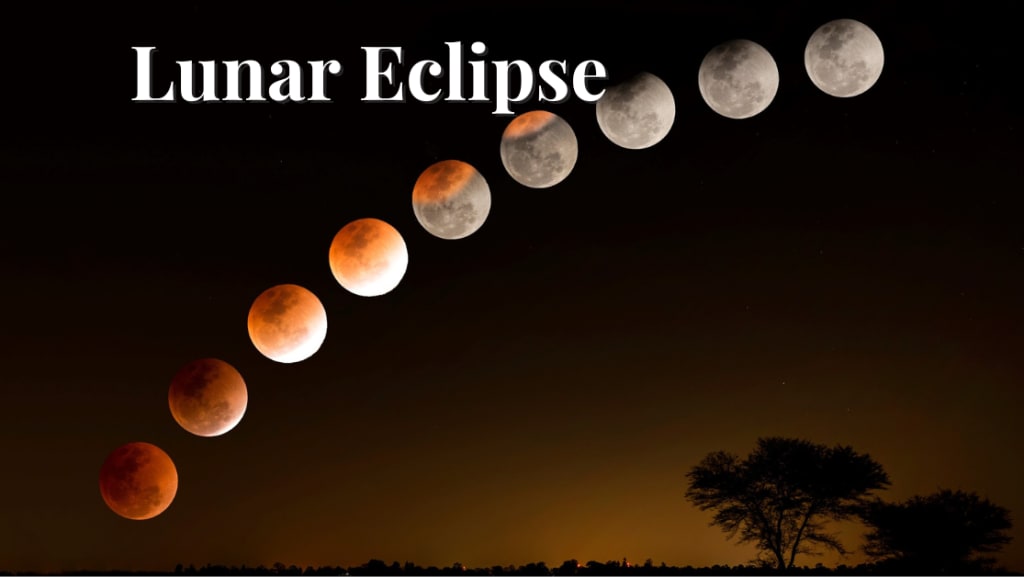
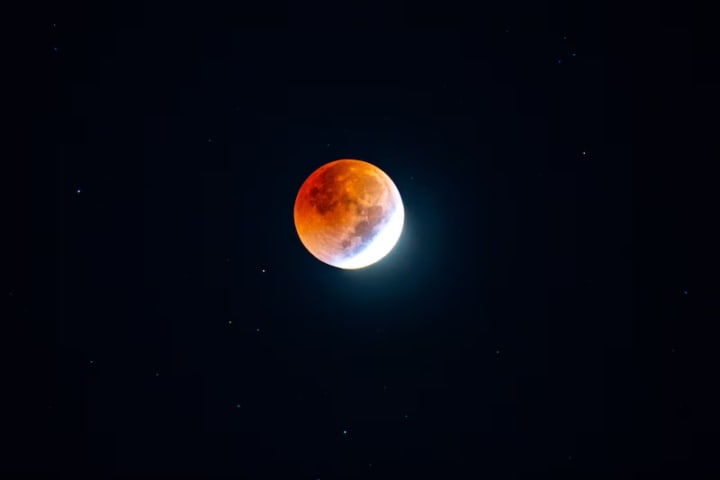
If you're a fan of celestial events, you’re in for a treat tonight! A stunning lunar eclipse will grace the skies, with the moon turning a deep, reddish hue—also known as the Blood Moon. Whether you're an astronomy enthusiast or just love witnessing nature’s wonders, this guide will help you find the best time and place to watch it in the U.S.
What Is a Lunar Eclipse?
A lunar eclipse happens when the Earth moves between the sun and the moon, blocking sunlight and casting a shadow on the moon. This particular event is a total lunar eclipse, meaning the moon will be completely covered by Earth’s shadow for a period of time.
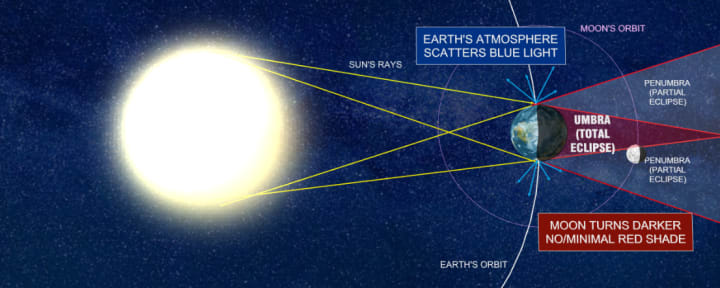
The reddish colour of the Blood Moon occurs because of Rayleigh scattering the same phenomenon that makes sunsets red. As sunlight passes through Earth's atmosphere, shorter wavelengths (blue light) scatter, while longer wavelengths (red light) bend towards the moon, giving it that eerie glow.
When Is the Lunar Eclipse Happening?
The total lunar eclipse will take place tonight, March 13, 2025. The exact timing varies by location, so here’s a breakdown of the key moments:
- Penumbral Eclipse Begins: 9:12 PM EST
- Partial Eclipse Begins: 10:07 PM EST
- Total Eclipse Begins (Blood Moon): 11:22 PM EST
- Maximum Eclipse: 12:13 AM EST (March 14)
- Total Eclipse Ends: 1:03 AM EST
- Partial Eclipse Ends: 2:18 AM EST
- Penumbral Eclipse Ends: 3:11 AM EST
For those in Pacific Time (PST), the total eclipse will begin at 8:22 PM and peak at 9:13 PM.
Where Is the Lunar Eclipse Visible?
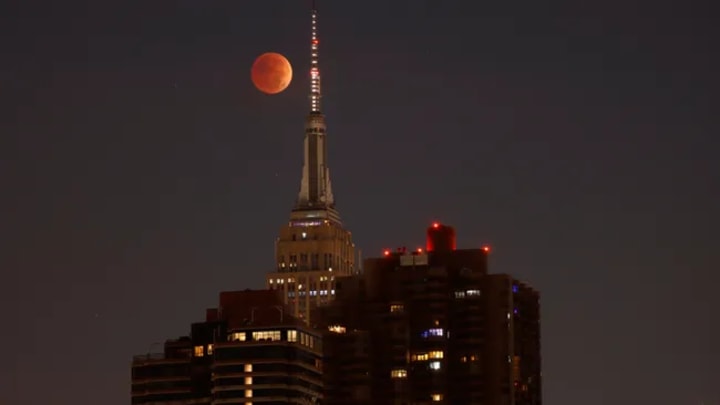
The entire United States will have a great view of this lunar eclipse, but visibility depends on weather conditions. Here’s how different regions can expect to see it:
- Best Viewing Locations: The eclipse will be most visible in areas with clear skies, such as the southwestern U.S. (Arizona, Nevada, California, Texas).
- Cloudy or Partial Views: The Northeast and Midwest may have some cloud cover, so checking your local forecast is crucial.
- Time Zones Matter: The further west you are, the earlier the eclipse will begin in your local time zone.
How to Watch the Lunar Eclipse
1. Find a Dark Spot
Head away from city lights to get a clearer and more dramatic view of the moon. State parks, beaches, and countryside locations are ideal for stargazing.
2. Check the Weather
Nothing ruins a good eclipse like cloudy skies. Use weather apps like AccuWeather or NOAA to check real-time cloud coverage.
3. No Telescope? No Problem!
Unlike a solar eclipse, a lunar eclipse is safe to watch with the naked eye. If you have binoculars or a telescope, you’ll get an even more detailed look at the moon’s surface.
4. Capture the Moment
Want to photograph the Blood Moon? Here’s how:
- Use a tripod to avoid shaky images.
- Adjust your camera’s exposure to capture the moon’s glow.
- If using a smartphone, switch to manual mode or use night mode.
The Next Lunar Eclipse: When Will It Happen Again?
If you miss this one, don’t worry! The next total lunar eclipse visible in the U.S. will occur on March 3, 2026. However, a partial lunar eclipse will take place later this year on September 7, 2025.
Final Thoughts: Don’t Miss This Spectacular Event!
Lunar eclipses are rare and breath taking events that connect us to the vast universe. Whether you’re watching from your backyard, a mountain top, or through a live stream, this Blood Moon will be an unforgettable sight.
So, grab a warm drink, step outside, and enjoy nature’s celestial show tonight!
FAQs About the March 2025 Lunar Eclipse
Q: Can I watch the lunar eclipse from my city?
A: Yes! The eclipse will be visible across all 50 U.S. states, but make sure to check for clear skies.
Q: Do I need protective glasses to view the lunar eclipse?
A: No, unlike a solar eclipse, a lunar eclipse is safe to watch with the naked eye.
Q: Will the Blood Moon affect my zodiac sign?
A: According to astrologers, lunar eclipses bring big changes especially for Virgo, Pisces, Gemini, and Sagittarius signs.
Q: What if I miss it?
A: You can watch live streams from observatories like Griffith Observatory or NASA’s official YouTube channel.
Share Your Lunar Eclipse Experience!
Did you catch the Blood Moon? Share your photos and experiences in the comments below! 🌌🌑
About the Creator
Keep reading
More stories from Bevy Osuos and writers in Earth and other communities.
Canada Goose vs. Bald Eagle Fight: Battle Caught on Camera
Nature is full of surprises, and a recent encounter between a Canada goose and a bald eagle has left wildlife enthusiasts and casual observers stunned. The dramatic fight, caught on camera in Burlington, Ontario, in late February 2025, showcased a fierce battle between two birds that are often seen as national symbols: the bald eagle representing the United States and the Canada goose symbolizing Canada.
By Bevy Osuosabout a year ago in Earth
Planning a Vegetable Garden Layout: Sun, Space, and Succession
You've decided to grow your own food. You've cleared a space, bought seeds, and imagined baskets overflowing with tomatoes and zucchini. Then reality intervenes. The tomatoes shade the basil. The zucchini engulfs the carrots. By midsummer, you have more lettuce than you can eat, followed by a gap of nothing until frost.
By Emma Wallace3 days ago in Earth
The BAFTA Awards
By now, in a stunning departure from recent years, most of the world is aware of what happened at the BAFTA film awards. Social Media Headlines will tell you the bare bones: that John Davidson, a Tourette's Syndrome advocate, shouted a racial slur at two Actors of Colour, Michael B Jordan and Delroy Lindo.
By Natasja Rose5 days ago in Psyche




Comments (1)
Good to know! I’ll watch for sure!