
Living in the Amazon River Basin
Creatures of the Amazon

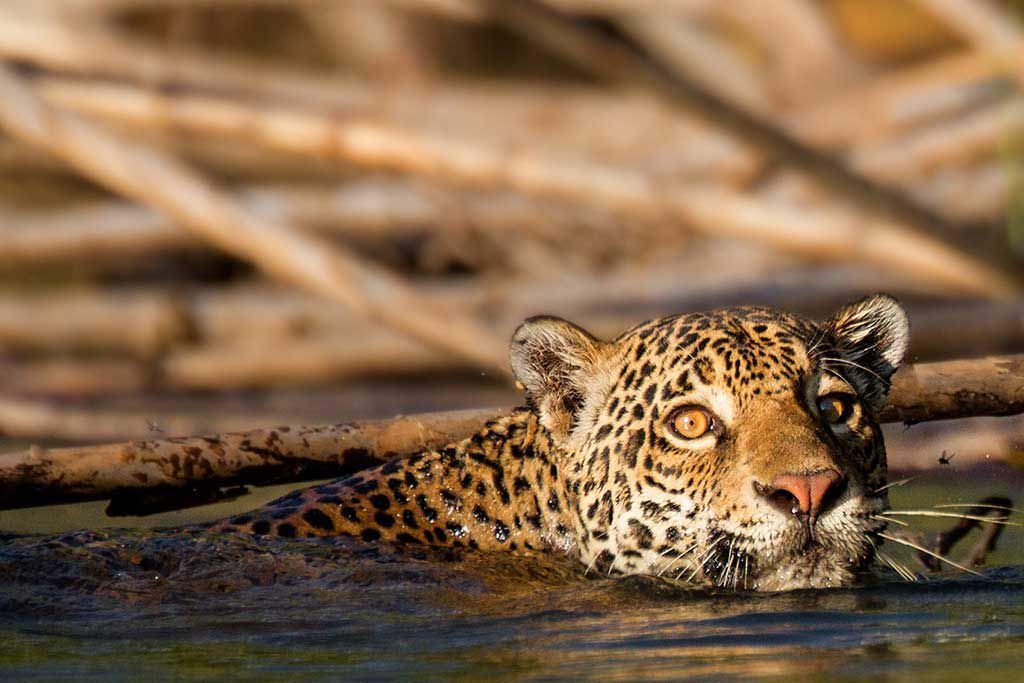
The Amazon River Basin includes the Amazon Rainforest. It includes an amazing variety of wildlife.
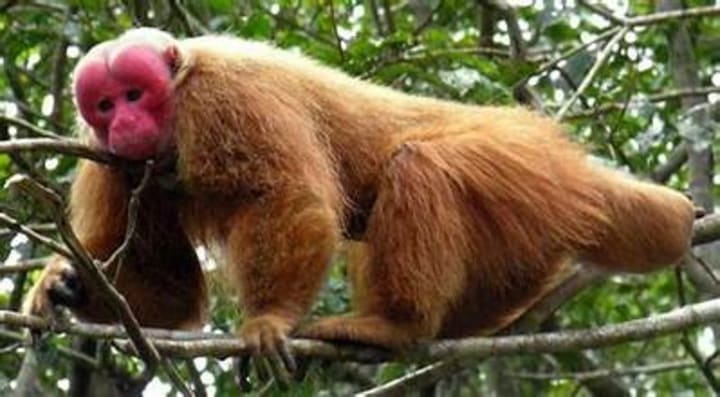
Bald uakaris are small New World monkeys that primarily live in the trees along the lakes. These monkeys have bald heads and flat, hairless red faces. They mostly dwell in areas with aguaje palm trees. Bald uakaris are omnivores; their primary diet is mainly based on fruits and seeds.
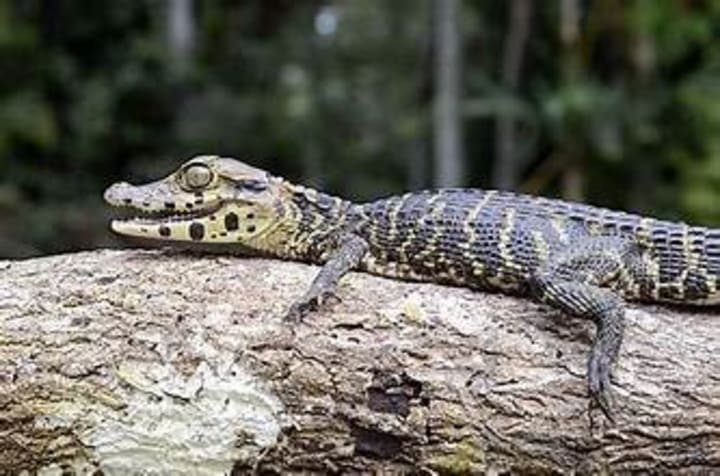
Black caimans are the largest and most dangerous reptiles of the Amazon River basin. These large creatures will eat anything that moves, from mammals to birds to their fellow reptiles.
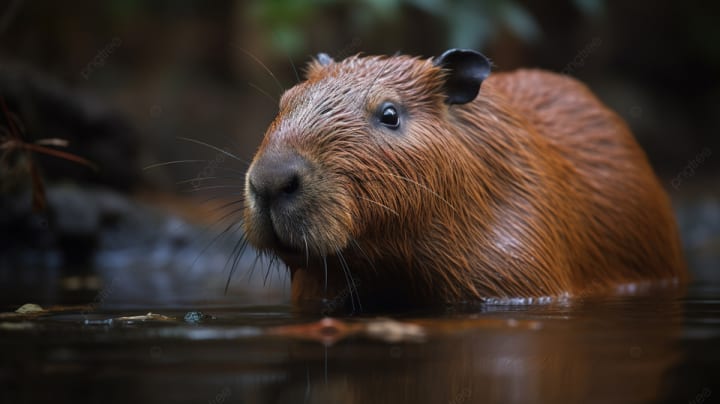
Capybaras are the largest rodents on Earth. They are widely distributed all over South America but prefer the warm, humid environment of the Amazon River basin. They feed on vegetation such as fruit, tree bark, and aquatic plants. Capybaras are known to congregate in herds of up to 100.
Jaguars are the third-largest big cats after lions and tigers. (pictured above) These big cats have learned that it is harder to hunt them in the dense Amazon River basin than out in the open pampas.
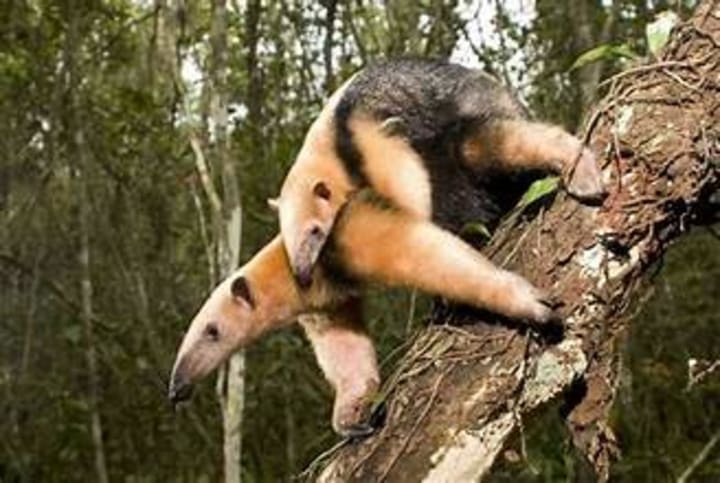
Giant anteaters are interesting animals with long snouts. They use their snouts to poke into narrow insect burrows. Their coat hairs are long, especially on the tail, which makes the tail look larger than it actually is.They find protection in the swampy Amazon River basin. They are insectivorous mammals. They usually sleep in abandoned burrows, hollows in the ground, or areas with dense vegetation.Giant anteaters feed mostly on termites and ants. However, they can also consume soft-bodied grubs, eggs as well as fruit.
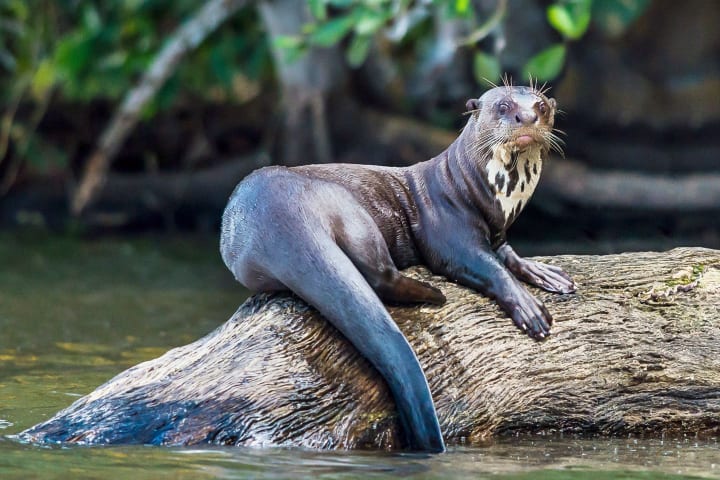
Giant otters are also referred to as water jaguars or river wolves. They are the largest members of the mustelid family, closely related to weasels. They live in extended social groups of about half a dozen. They have highly sensitive whiskers that allow the animals to track changes in water pressure and currents, which aids in detecting prey. Their legs are short and stubby and end in large webbed feet tipped with sharp claws. Giant otters are suited for aquatic life, they can close their ears and noses while underwater. They are carnivores and enjoy fish and can also eat crabs, snakes, and small caimans.
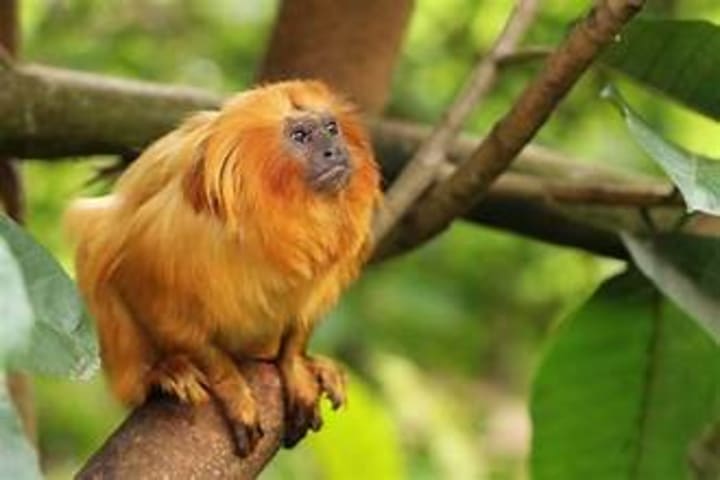
Golden lion tamarins are also referred to as golden marmosets. They have bushy manes of reddish-brown hair surrounding flat, dark-eyed faces. These arboreal animals are social within a core group of up to eight relatives. Like other monkeys, they groom each other, and the young ones play together. The mating pair in each family group is typically monogamous for life. These tree-dwelling primates are omnivores and will eat anything from vegetable matter to spiders or small lizards. They also enjoy flower nectar, fruit, and flower petals.
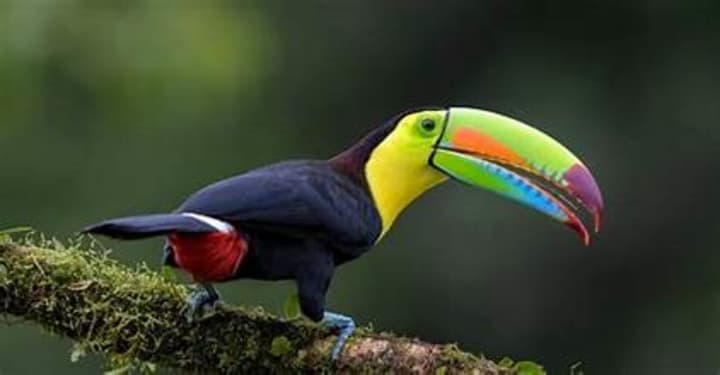
Keel-billed toucans have enormous, multi-colored bills. These birds hop from tree branch to tree branch in small flocks of up to 12. They are small, social, playful birds mainly found in Central and South America and are the smallest of all the toucans. Their bodies are covered with black feathers; the chests are light green, and the tip of their tails is red. These toucans are omnivores and primarily feed on different kinds of fruit and berries.
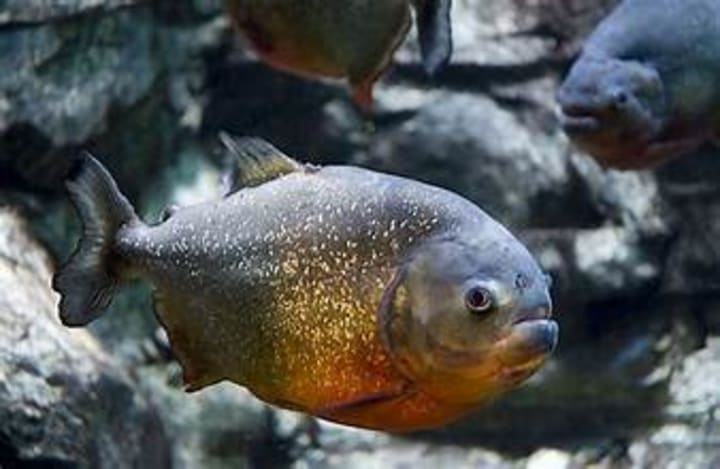
Piranhas have very sharp teeth and powerful jaws. There are more than 60 species of these carnivorous fish in the rivers and lakes of South America. Most species, however, are scavengers or feed on plant material. These common fishes have deep bodies, saw-edged bellies, and large, generally blunt heads with strong jaws bearing sharp, triangular teeth.
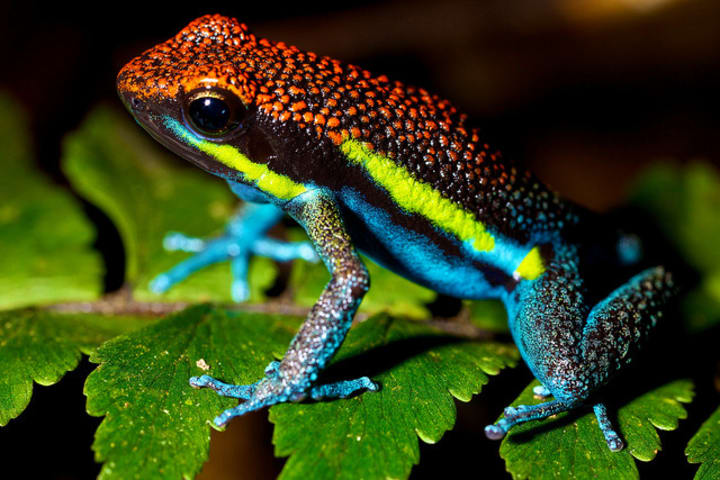
Poison dart frogs are brightly colored frogs with powerful venom. They can be green or bright orange. They collect venom from ants, mites, and other insects. The "dart" part of this amphibian's name derives from the fact that indigenous tribes across South America dip their hunting darts in its venom.
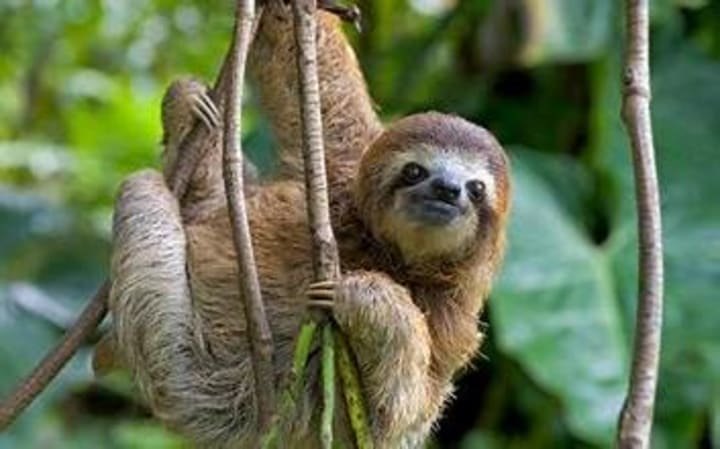
Three-toed sloths and the most common sloths living in the Amazon River basin. They are able swimmers. They can be found high in the forest canopy sunning, resting, or feeding on leaves.
About the Creator
Rasma Raisters
My passions are writing and creating poetry. I write for several sites online and have four themed blogs on Wordpress. Please follow me on Twitter.
Keep reading
More stories from Rasma Raisters and writers in Earth and other communities.
Tiny Lion Cubs Struggle To Keep Up With Mom
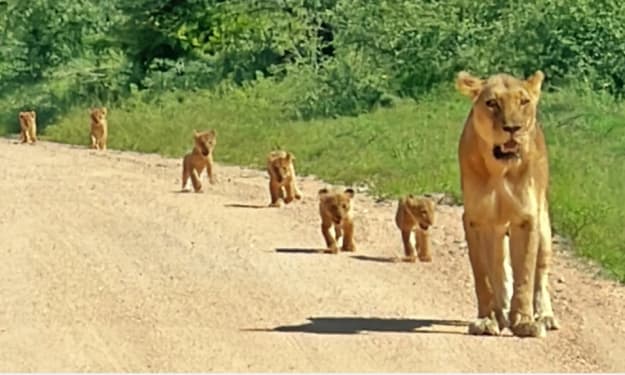
In the heart of the African savannah, life is a constant lesson for young animals. Few scenes are as endearing — or as heartwarming — as tiny lion cubs trying to keep pace with their mother. These little bundles of fur face a world full of challenges, from learning to hunt to avoiding dangers, all while depending on the guidance and protection of their experienced mom. Watching cubs wobble and tumble as they attempt to keep up with their mother reminds us that growing up, even in the wild, is a journey full of struggle, determination, and adorable missteps. The Early Days of Lion Cubs Lion cubs are born blind and helpless, usually in litters of two to six. For the first few weeks, they rely entirely on their mother for warmth, food, and safety. Even after opening their eyes and beginning to explore, the cubs are far from independent. The first months are crucial. Cubs learn social cues, hunting basics, and survival skills simply by watching their mother and the pride. But as anyone who has observed them knows, there’s often a huge gap between observation and action. Tiny cubs often struggle to match their mother’s pace, especially when she moves through long stretches of savannah or leads the family on patrols. A Mother’s Role in the Wild For a lioness, raising cubs is a full-time commitment. She hunts, defends her territory, and teaches her young, all while staying alert to predators such as hyenas, leopards, and even rival lions. The cubs, meanwhile, attempt to mimic her every move — often with clumsy yet charming results. A mother lion’s patience is remarkable; she frequently slows down, nudges them along, or stops to ensure no cub is left behind. These moments, while stressful for the tiny cubs, are vital learning opportunities. Struggling to Keep Up: Why It’s So Hard There are several reasons why tiny lion cubs have trouble keeping pace with their mother: Short Legs, Big Steps: Lion cubs’ legs are tiny and their coordination is limited, making it difficult to cover the same distance as an adult lioness. Curiosity: Cubs are naturally curious. A single butterfly or rustling bush can distract them, leaving mom to pause repeatedly. Energy Levels: Young lions tire quickly. Even with frequent naps, the cubs’ stamina is far lower than their mother’s. Learning Through Play: Play is not just fun; it teaches hunting, balance, and social skills. Running off to pounce on a sibling or chase an insect is all part of their education. Despite these challenges, the cubs’ determination to keep up demonstrates their resilience and growing understanding of the wild world. Lessons in Teamwork and Survival Every cub struggling to keep up is also learning crucial survival skills. The journey across the savannah is more than a test of speed — it’s a lesson in: Coordination: Cubs learn how to move efficiently across different terrains. Patience: They begin to understand the rhythms of adult life and the pace required for survival. Social Skills: Staying with the group teaches cubs how to interact with siblings and the pride, which is essential for their future roles. Observation: By following their mother, cubs study hunting techniques, territorial behavior, and predator awareness. Even the moments when cubs stumble or lag behind are essential for their development. These experiences prepare them for independence, which comes sooner than many might expect. The Cutest Moments in the Wild Anyone who has watched tiny lion cubs knows that their struggles are often irresistibly cute. Video clips from wildlife reserves frequently show cubs toddling along, tumbling over each other, or getting distracted mid-step. Observers often comment that these little stumbles reveal personality, determination, and playfulness, making them one of nature’s most heartwarming spectacles. While their mother is serious and focused, the cubs inject a sense of humor and lightness into life on the savannah. Why This Matters The struggles of lion cubs aren’t just adorable — they’re vital for understanding wildlife behavior. Conservationists and animal behaviorists use these moments to study growth patterns, social structures, and survival strategies in lion populations. These observations also highlight the importance of preserving natural habitats. Cubs must learn in a safe environment to survive; habitat loss, poaching, and climate change make these early struggles even more dangerous. Protecting the African savannah ensures that future generations of lions can experience the same lessons and playful tumbles. The Road to Independence Within a year, these tiny cubs will be more agile, faster, and more confident. By the time they reach two to three years old, males may begin to leave the pride, while females often stay and become caretakers themselves. Every misstep, tumble, and lagging moment is part of the journey toward strength, coordination, and independence. Watching them now gives us a glimpse of the challenges they will overcome, and the survival skills they will carry for life. A Celebration of Motherhood Ultimately, these scenes remind us of the incredible bond between mother and cubs. Her patience, vigilance, and teaching are the foundations of their future. The cubs’ struggles highlight the trials of growing up, while their determination showcases the resilience and beauty of wildlife. For those observing, it’s a powerful lesson in care, guidance, and perseverance, not just in lions but in the natural world as a whole. Final Thoughts Watching tiny lion cubs try to keep up with their mother is both entertaining and enlightening. It’s a story of growth, struggle, and resilience — a reminder that even the fiercest creatures start small, learning step by step. These little lions capture hearts while teaching life lessons: patience, determination, teamwork, and the importance of guidance. As they tumble and waddle across the savannah, they show us that growth is a process, one adorable misstep at a time. For wildlife enthusiasts, animal lovers, and anyone enchanted by nature, these tiny cubs are proof that even in the wild, love, care, and persistence are universal truths.
By Aarif Lashari2 days ago in Earth
Microbiota, microbiome or microflora: how to speak correctly and why it is for health.
You've probably heard the phrase, "We are what we eat." But modern science says more precisely: we are also those who live in us. Until 2016, it was believed that there are many times more bacteria in our body than our own cells. The latest calculations by mathematicians show that we divide the body with our microorganisms by about 50/50: about 30 trillion of our cells versus 38 trillion bacterial ones.
By Yaroslav Gorohov6 days ago in Earth



Comments
There are no comments for this story
Be the first to respond and start the conversation.