
Living in a Shell
Animals with heavy and large shells


Animals with shells have them as a kind of armor that protects, supports, and are a survival advantage to many different species.
Three main types of big and heavy shells:
Biomineralization when the animals outer tissues secrete layers of calcium carbonate and form a hard protective shell that continues to grow over time. These are seen in mollusks such as clams, snails and oysters, as well as corals and some crustaceans.
Keratin and bone shells where the shell is part of the animal's skeleton with bone underneath and keratin, a protein that protects the outer plates. This kind are seen with reptiles such as tortoises and turles, as well as armadillos.
Chitin-based Exoskeletons - Chitin, a polysaccharide, combines with proteins and calcium salts to form a rigid, protective exoskeleton. It gives the animal protection and support but the animal must molt it in order to grow larger. This type is seen with arthropods like crabs, shrimp, lobsters and insects.
Aldabra Giant Tortoises
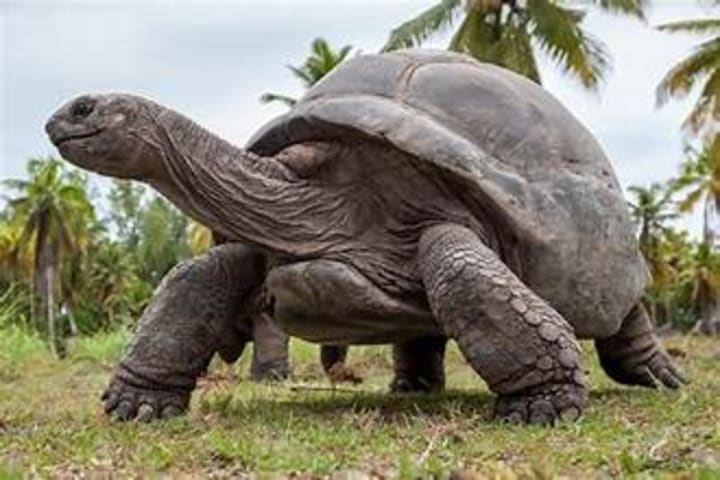
These giant tortoises are among the largest tortoise species in the world. They're native to the Aldabra Atoll in the Seychelles. These tortoises feed on grasses, leaves, and fruit, often shaping their ecosystem by trimming vegetation and dispersing seeds.
Aldabra giant tortoises can grow up to 4 feet in length and weigh over 550 pounds. They have doomed shells made of fused plates of bone covered by keratin to provide protection against predators and insulation from the harsh island environment. They can live over 100 years. They play a crucial role in their ecosystem as keystone species, maintaining balance within their habitat.
Alligator Snapping Turtles
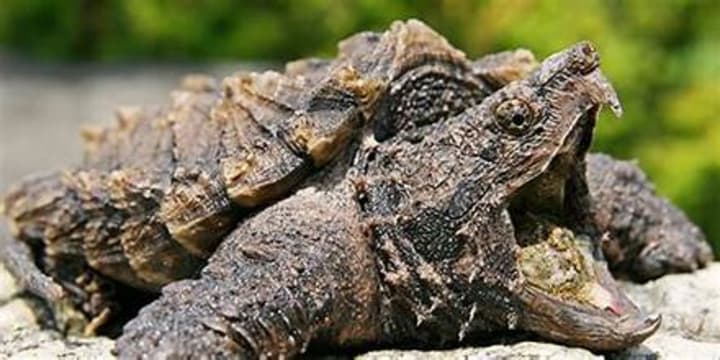
These turtles are among the largest freshwater species in the world. They are massive freshwater turtles that are native to rivers, lakes, and swamps in the southeastern US especially in the Mississippi River Basin. They are carnivores and feed on fish, amphibians, mollusks, and even carrion, often using its worm-like tongue as a lure to attract prey.
Alligator snapping turtles grow up to 2.5 feet in shell length and weigh in between 100 and 200 pounds. Some individual might exceed 250 pounds. They have rugged, spiked shells that are made of bone and keratin. This gives them great camouflage and protections, resemblign the texture of tree bark.
Chambered Nautiluses

Chambered nautiluses are unusual looking marine mollusks. They can be found in the deep waters of the Indo-Pacific, including areas near the Philippines and Australia. These animals are carnivores feeding on crustaceans and carrion. They use their numerous tenticles to grasp prey.
These molluks are known for their iconic coiled hells. They can grow up to 10 inches in diameter. Their shells are composed of calcium carbonate. The shells feature a series of gas-filled chambers that let the nautiluses regulate thei buoyancy which enables them to float effortlessly at different depths. The exterior of the shell is smooth and patterned with white and brown stripes, providing excellent camouflage in its deep-sea environment.
Coconut Crabs

Coconut crabs are the largest terrestrial arthropods in the world. They make their homes on tropical islands across the Indian and Pacific Oceans. They are land-dwelling crabs that feed on fruit, nuts, seeds, and coconuts. They have powerful claws with which to crack open the coconuts.
These crabs can grow up to 3 feet in length with their legs full extended and weigh up to 9 pounds. They have traditional shells. Adult coconut crabs develop a hard exoskeleton consisting of chitin to provide protection and structure. They are known for their strength, climbing ability, and unique ecological role in island habitats.
Giant African Land Snails
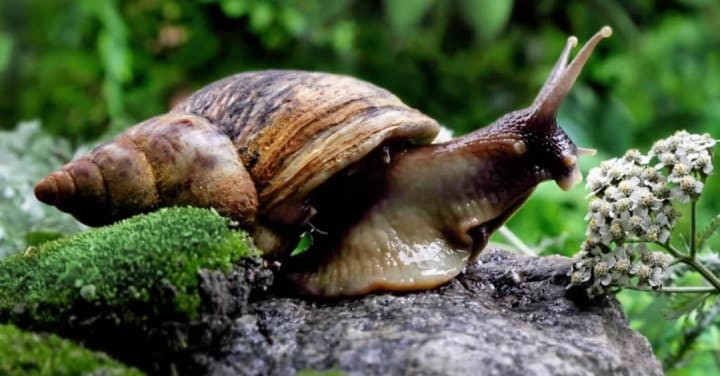
These snails are among the largest terrestrial snail species. They're native to East Africa but have been introduced to other tropical and subtropical regions around the world. Giant African land snails reproduce quickly but this makes them an invasive species and in places can be a threat to crops and native ecosystems.
They are herbivores and feed on a wide variety of plants, fruits, vegetables, and even decaying organic matter. They can grow up to 8 inches in length and weigh over a pound. They have shells made of calcium carbonate which ae conical and brown with distinctive spiral markings. The shells provide protection from predators and environmental stress. However, they still rely on moisture to survive.
Giant Armadillos

Giant armadillos are the largest armadillo species and are native to South America. They live in tropical rainforests, grasslands, and savannas. These are nocturnal animals that feed on ants, termites, and other small invertebrates. At times they might also eat fruit and carrion.
These armadillos can grow up to 5 feet in length, including their tails. They weigh in between 40 and 80 pounds. There are individuals that can reachp up to 100 pounds. They have protective shell covers over their bodies made of bony plates covered with tough skin.
Giant armadillos rely on their strong claws to dig burrows for shelter and safety. They play an improtant ecological role by creating burrows that provide shelter for other species.
Giant Clams
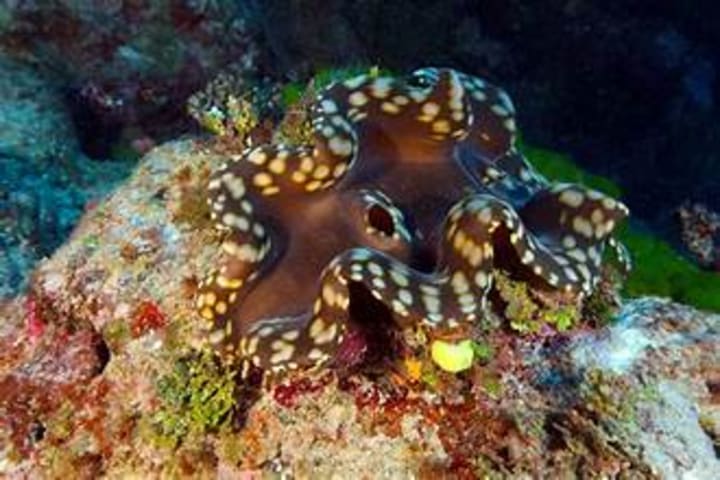
Giant clams are the largest bivalve mollusks in the world. They can be found in the warm, shallow waters of coral reefs in the Indo-Pacific region. These clams are filter feeders as the draw in water to extract plankton.They also have a symbiotic relationship with algae living in their tissues, which provide additional nutrients through photosynthesis.
These clams can grow up to 4 feet in lenght and weigh more than 500 pounds. They have thick calcium carbonate shells which account for a great deal of their weight. The shells are characterized by their heavy ridges. As immobile reef inhabitants, giant clams play an important ecological role, contributing to reef structure and biodiversity.
Giant Galapagos Tortoises (Pictured on top)
These tortoises are among the largest and longest-living tortoise species on Earth. They're native to the Galapagos Islands, an isolated island chain in the Pacific Ocean. Their habitats include lush highlands and lowlands.
Galapagos tortoises are herbivores and eat grasses, leaves, fruits, and cacti. They have slow metabolism and can go for long periods without food or water. Due to their giant shells they grow up to 5 feet in length and weigh in between 250-500 pounds.
Their shells are made of bone and keratin providing protection and also indicating their subspecies and habitat. Tortoises in humid highlands have doomed shells and those in arid lowlands have saddle-shaped shells, letting them extend their necks to reach vegetation. These tortoises can live more then 100 years.
Giant Horse Conches AKA Florida Horse Conches

Horse conches are large main snails native to the shallow coastal waters of the southeastern US, particularly in the Gulf of Mexico. They're carnivorous gastropids feeding on other mollusks like bivalves and smaller snails. In 1969, the state of Florida named the horse conches their official state seashell and it is sough-after by shell collectors, mainly due to its large size.
Giant horse conches can grow up to 2 feet in length, making them the largest snail species in North America. They have heavy, spiral shells made of calcium carbonate and feature a rough, reddish-brown exterior that provides excellent camouflage in sandy or rocky environments. In contrast, the soft part of their body is a bright orange-red.
Green Sea Turtles

Green sea turtles are large marine turtles that live in tropical and subtropical oceans all over the world. They inhabit seagrass beds and coral reefs. These turtles are herbivores, adult green sea turtles primarily feed on seagrasses and algae. They can grow up to 5 feet in length and weigh between 300 and 700 pounds.
The turtles have hard, streamlined shells that consist of bone plates covered by a layer of keratin, with smooth scutes ranging in color from brown to olive, patterned with radiating designs. These shells help protect them from predators and provide hydrodynamic efficiency for long migrations, which can span thousands of miles.
Leatherback Sea Turtles

Leatherback sea turtles are the largest sea turtle species and among the most migratory. They are found in oceans all over the world, from tropical to subpolar waters. These turtles has flexible, leathery shells that are composed of connective tissue and tiny bone plates. This allows them to withstand deep dives of up to 4,000 feet. They make the deep dives to find food or enjoy cooler waters.
Leatherback sea turtles feed mostly on jellyfish, playing a critical role in controlling jellyfish populations. They can grow up to 7 feet in length and weigh between 600 and 1,500 pounds. Their shells are dense and heavy. They have powerful front flippers that let them travel thousands of miles during migration.
Triton's Trumpets
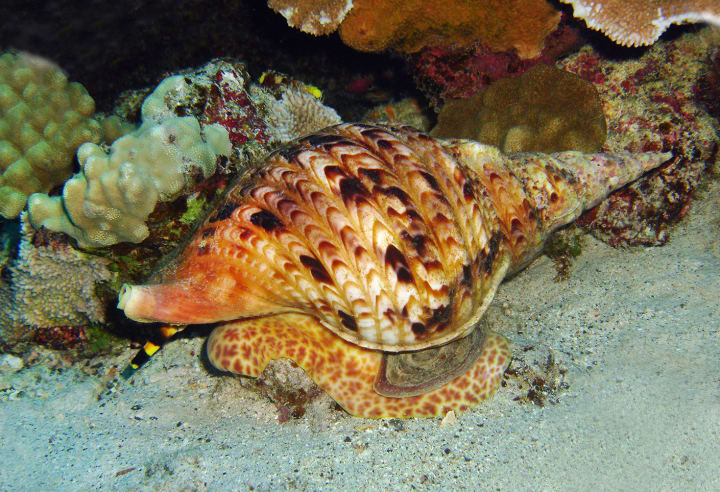
Triton's trumpets are large marine snails found in tropical and subtropical oceans especially in the coral reef ecosystems of the Indo-Pacific region. They have been named for Triton, a sea god in Greek mythology who was often depicted blowing a large conch shell as a trumpet to calm or stir the seas.
These mollusks are carnivores and feed on sea stars and sea urchins, including the destructive crown-of-thorns starfish thereby making them an important predator for maintaining coral reel health. They can grow up to 2 feet in lenth and weigh several pounds.
Their spiral-shaped shells consist of calcium carbonate, features a beautifully patterned surface with brown and cream tones. The shell provides protection against predators and is often sought after by collectors, which has led to localized population decline.
About the Creator
Rasma Raisters
My passions are writing and creating poetry. I write for several sites online and have four themed blogs on Wordpress. Please follow me on Twitter.
Keep reading
More stories from Rasma Raisters and writers in Earth and other communities.
Having a Leaping Good Time
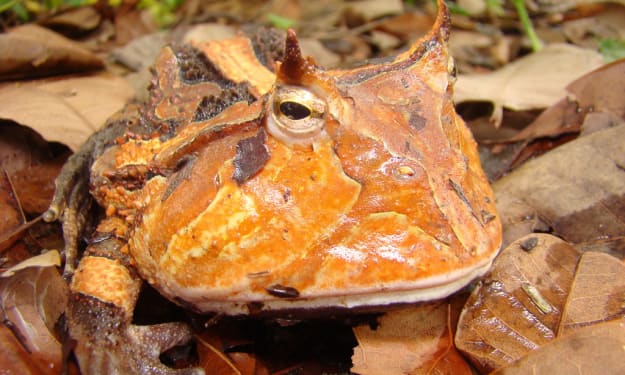
In this world there are more than 5,000 species of frogs and toads. Frogs and toads are amphibians and belong to the Anura order. Anura from ancient Greek translates to "without tail". Frogs and toads evovle and adapt to the kinds of conditions in which they live. This can result to them having weird shapes and colorations resulting in unique appearances and odd behaviors.
By Rasma Raisters10 months ago in Earth
Live Updates: Trump Promotes Gaza Plan and Meets With Zelensky at Davos
Former U.S. President Donald Trump is making headlines at the annual World Economic Forum in Davos, Switzerland, by promoting his latest plan for Gaza and holding a high-profile meeting with Ukrainian President Volodymyr Zelensky. The developments have captured global attention, highlighting Trump’s continued influence on international diplomacy and Middle East affairs.
By Muhammad Hassan5 days ago in Earth
Queen Elizabeth II Memorial Statue to Stand Tall
The announcement of a memorial statue honoring Queen Elizabeth II has stirred deep emotions across the United Kingdom and beyond. More than a tribute to Britain’s longest-reigning monarch, the statue is intended to stand as a powerful symbol of continuity, national identity, and collective memory in a country navigating change at home and uncertainty abroad. For many, Queen Elizabeth II represented stability in a rapidly evolving world. Her image was woven into daily life — from coins and stamps to historic speeches during moments of crisis. As plans for her memorial statue move forward, the project reflects not just remembrance, but a broader conversation about what the monarchy has meant, and continues to mean, to modern Britain. Remembering a Monarch Who Defined an Era Queen Elizabeth II ascended the throne in 1952, inheriting a post-war nation still rebuilding from devastation. Over the next seven decades, she witnessed profound transformations: the end of empire, the Cold War, the digital revolution, and dramatic political shifts both within the UK and across the Commonwealth. Unlike many public figures, her influence was subtle rather than outspoken. She reigned, but did not rule — offering a constant presence while governments, prime ministers, and global alliances rose and fell. That quiet endurance is precisely what many supporters hope the memorial statue will capture. The statue is envisioned as a dignified and timeless representation, emphasizing service over spectacle. Organizers say the aim is not grandeur for its own sake, but respect rooted in restraint, echoing the Queen’s own approach to public life. A Memorial Beyond Stone and Bronze Public memorials often say as much about the present as they do about the past. In this case, the Queen Elizabeth II memorial statue is arriving at a moment when questions of identity, unity, and tradition are being actively debated across British society. Supporters argue that the statue will serve as a shared national reference point, offering a space for reflection that transcends politics. In a fragmented media environment and polarized public sphere, symbols that bring people together are increasingly rare. The memorial is also expected to attract visitors from around the world. As a figure recognized globally, Queen Elizabeth II remains one of the most familiar faces of the 20th and early 21st centuries. For tourists and citizens alike, the statue may become a focal point for understanding Britain’s constitutional monarchy and its evolving role. Design, Location, and Symbolism While final design details are still under consideration, early proposals suggest a statue that emphasizes calm authority rather than dramatic posture. Sculptors and planners involved in the project have spoken about portraying the Queen during a defining period of her reign, reflecting dignity, duty, and composure. The location of the statue is equally significant. Placing it within a historic or civic space would embed the memorial into the everyday rhythm of national life. Rather than isolating it as a distant monument, planners aim for accessibility — a place where people can pause, gather, and reflect. Symbolism will play a crucial role. From the Queen’s attire to her stance, every detail will communicate values she embodied: service, continuity, and responsibility. Even subtle elements — such as surrounding landscaping or inscriptions — are expected to reinforce themes of unity and legacy. Public Opinion and Debate As with any national memorial, the project has sparked discussion. While many welcome the statue as a fitting tribute, others question how the monarchy should be represented in the 21st century. Critics argue that Britain must balance respect for tradition with an honest reflection on history, including the complexities of empire and colonialism. These debates are not unique to this memorial. Across the world, societies are reassessing monuments and public symbols, weighing historical significance against contemporary values. In that context, the Queen Elizabeth II statue becomes part of a wider cultural conversation about remembrance and representation. Supporters counter that acknowledging complexity does not negate the importance of honoring service. They point out that Queen Elizabeth II herself navigated these evolving conversations with caution and sensitivity, often adapting royal traditions to changing expectations. A Legacy Passed to the Future Perhaps the most powerful aspect of the memorial lies in its long-term purpose. For future generations who never witnessed Queen Elizabeth II’s reign firsthand, the statue will serve as an entry point into history. Children growing up decades from now may learn about her not through headlines or broadcasts, but through school trips, family visits, and moments of quiet curiosity. In that sense, the memorial is not only about looking back — it is about preserving memory forward. As Britain continues to redefine its place in the world, symbols of continuity take on renewed importance. The Queen Elizabeth II memorial statue is expected to stand as a reminder that institutions endure not through power alone, but through trust, service, and shared values. Conclusion The planned Queen Elizabeth II memorial statue is more than a physical structure. It is a statement about remembrance, respect, and national identity at a pivotal moment in British history. By honoring a monarch whose reign spanned generations, the memorial seeks to bridge past and present, tradition and change. Whether viewed as a tribute, a tourist landmark, or a place of reflection, the statue will stand tall as a reminder of a life devoted to service — and of a nation’s ongoing relationship with its history.
By Muhammad Hassan5 days ago in Earth



Comments
There are no comments for this story
Be the first to respond and start the conversation.