
Having a Leaping Good Time
Strangest frogs and toads

In this world there are more than 5,000 species of frogs and toads. Frogs and toads are amphibians and belong to the Anura order. Anura from ancient Greek translates to "without tail". Frogs and toads evovle and adapt to the kinds of conditions in which they live. This can result to them having weird shapes and colorations resulting in unique appearances and odd behaviors.
Amazon Horned Frogs
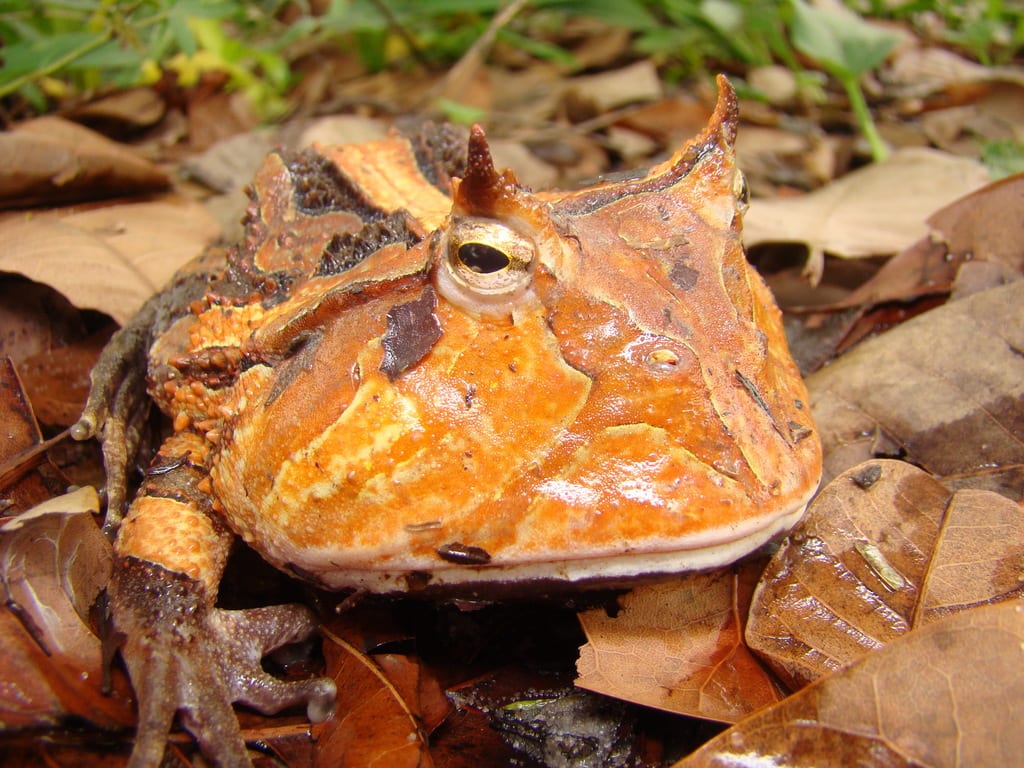
Amazon horned frogs are also known as Surinam horned frogs. They live in freshwater marshes and pools all over the Amazon Basin from Columbia to Brazil. These frogs are most bizarre with over-sized mouths and stumpy legs. They have horn-like extension above their eyes. The frogs have the coloration of dead leaves and most are several shades of brown with some green coloration.
These frogs are carnivores and dine on other frogs, snails, lizards, and at times, mice.
Darwin's Frogs

These frogs appear to look-like fallen leaves and range in colors from bright green to brown and at times gray. They have elongated snouts.
These frogs are known for their strange reproduction habits. The male frogs ingest the eggs into their mouths and are stored in the vocal sacs. When the eggs hatch the tadpoles remain in the father's vocal sac through metamorphoses. Once developed into little frogs they hop out of dad's mouth.
Darwin’s frogs are carnivorous animals. They feed on insects, worms, spiders, snails, and other invertebrates.
Desert Rain Frogs

Desert rain frogs are found in Namibia and South Africa. These are rather cute frogs. The strangest thing is that they cannot hop. They squeal loudly when threatened. Another odd thing is that the baby frogs develop fully within layed eggs and bypass the tadpole stage.
The Desert Rain Frogs diet primarily consists of small insects, beetles, and their larvae.
Glass Frogs

These frogs get their name from their transparent skins on their abdominal regions. The skin is see-through so looking at them one can see their hearts, intestinal tract, liver, and veins. They live in Central and South America.
Being small frogs they dine on eat small invertebrates including crickets, ants, moths, termites, and caterpillars.
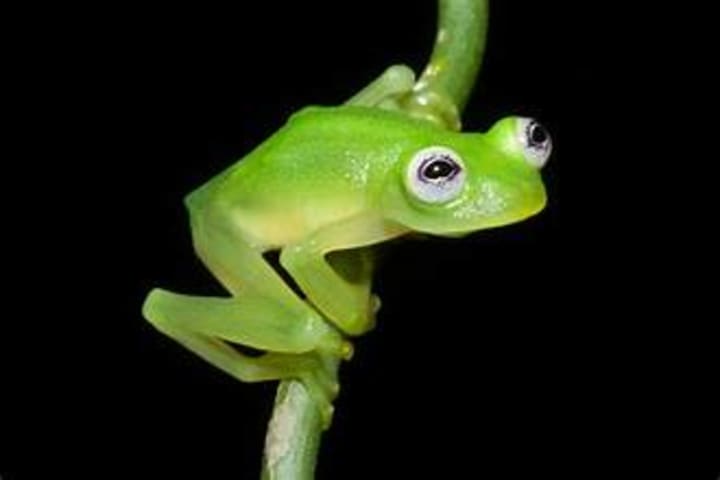
A new species of glass frogs was discovered and given the name Kermit Frog because of their similarity to the popular Muppet Kermit the From. They're lime-green with large, white eyes. They were discovered in 2015 on the foothills of Costa Rica.
Goliath Frogs

This species has a relatively small habitat range in Cameroon and Equatorial Guinea. Goliath frogs are massive in size and can weigh over 7 lbs when mature. They live near rivers and streams and feed on a variety of insects, small snakes, lizards, and crabs.
Gordon's Warty Frogs

These frogs have bumpy skin giving them great camouflage. They are the color of moss. The frogs live in Vietnam in evergreen forests along rocky, limestone cliffs, surrounded by water and dense vegetation. Due to their appearance when threatened they roll over and play dead.
Hairy Frogs or "Horror Frogs"

Hairy frogs are odd not only due to unusual hair but also because they can break their own bones to produce claws. These frogs are native to the warm, humid forests of Cameroon and some of the surrounding African countries.
The "hairs" these frogs have are not real hairs but dermal papillae. The male frogs have them temporarily during the breeding sesaon. The dermal paillae have thin arteries in them. The males use these blood vessels to absorb more oxygen while protecting female eggs.
Hair frogs are carnivores and dine on insects and mollusks like slugs and snails.
Morogoro Tree Toads
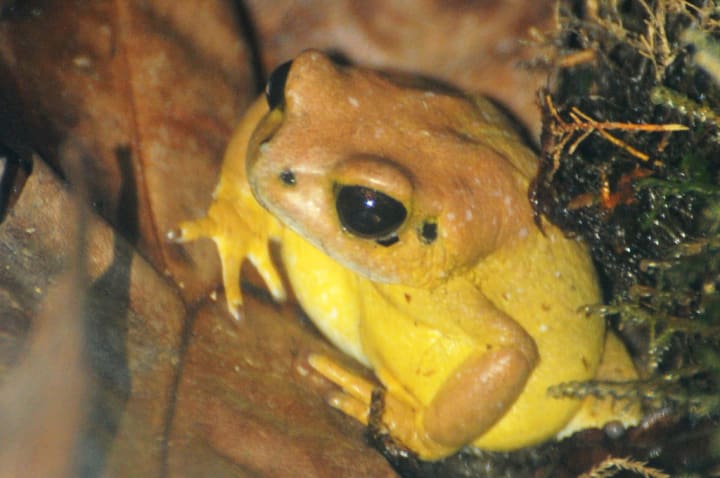
Morogoro tree toads are small frogs and come in a wide array of colors. They have small mucous glands all over their bodies. These frogs live in regions of Tanzania between the Udzungwa and Uluguru Mountains in Africa. They spend their days among bamboos and in wooded areas neat forest edges at altitudes over 4,000 feet.
They primarily dine on ants but also prey on other small invertebrates such as beetles, spiders, and termites. These toads spend a significant amount of their time on the forest floor, where they actively search for prey using their keen eyesight to spot potential meals and capture them with their tongue.
Purple Frogs

Purple frogs are also referred to as Pignose frogs. They live in Western Ghats in India. They burrow underground and remain hidden for much of their lives. They return to the surface to mate during monsoon season. These frogs mostly dine on termites.
Shovel-headed Tree Frogs

These frogs are known as Mexican Shovel-headed frogs in Mexico and can be found along the Southwestern coastline. Their faces sort of look like shovels. They inhabit shrublands and tropical forests.
Suriname Toads
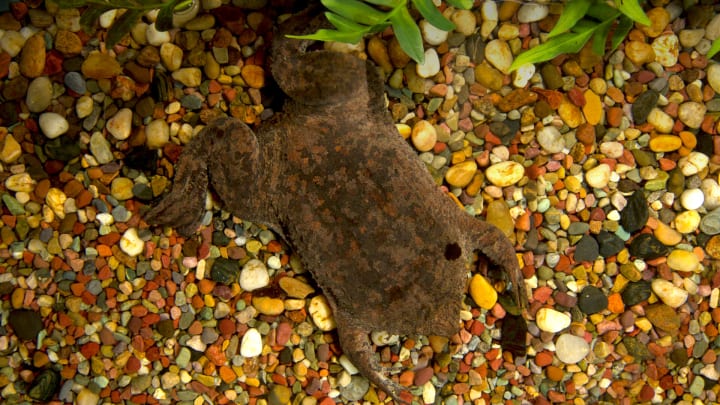
These toads are also known as star-fingered toads. They live in the swamps and freshwater marshes of the northern regions of South America. These toads are completely flat with the coloring of a leaf. They have tiny eyes, no teeth or tongue and star-shaped appendages on their front toes.
These toads are best known for their method of reproduction. Female toads release their eggs and male toads embed them into the female toads backs. The fertilized eggs remain in the backs until they're fully developed toads and then the baby toads emerge from the mother's back.
They eat earthworms, blackworms and small fishes such as guppies, platys.
Titicaca Water Frogs

These are among the world's largest aquatic frogs. They absorb so much oxygen from water that they never have to resurface to breathe air. These frogs make their homes in the waters of Lake Titicaca on the border between Bolivia and Peru in South America.
The most distinguishing feature of the Titicaca water frog is its baggy skin. Like all frogs, these giants have four legs, webbed toes, large mouths, and round bodies.They eat freshwater shrimp, insects, tadpoles, fish, and snails
Turtle Frogs

Turtle frogs are in appearance like turtles with no shells. They have short, stumpy legs, beady eyes, flat noses, and plump, flat-shaped bodies. These frogs are native to Australia and found between the Fitzgerald and Geraldton Rivers in semi-arid and sandy areas. Turtle frogs can dig forward. They feed on termites.
Wallace's Flying Frogs

These frogs are also known as Abah River flying frogs or gliding frogs. They make their homes in the dense jungles of Borneo and Malaysia spending most to their time in trees. Adult frogs are bright green, white, and yellow and blend in with the natural environment.
Wallace's flying frogs have webbed feet giving them the ability to glide from one place to another. They can glide 50 feet or more and have over sized toe pads for landing. These forgs are carnivores and dine on invertebrates and small vertebrates.
About the Creator
Rasma Raisters
My passions are writing and creating poetry. I write for several sites online and have four themed blogs on Wordpress. Please follow me on Twitter.
Keep reading
More stories from Rasma Raisters and writers in Earth and other communities.
Playing and Living in the Desert
The animals who can survive the harsh conditions of the desert do it in various ways. It can be with large ears to radiate heat or thick coats to prevent sunburn and withstand freezing temperatures are night. Some of the are nocturnal and avoid the heat of day. All of them can get by with very little water.
By Rasma Raisters10 months ago in Earth
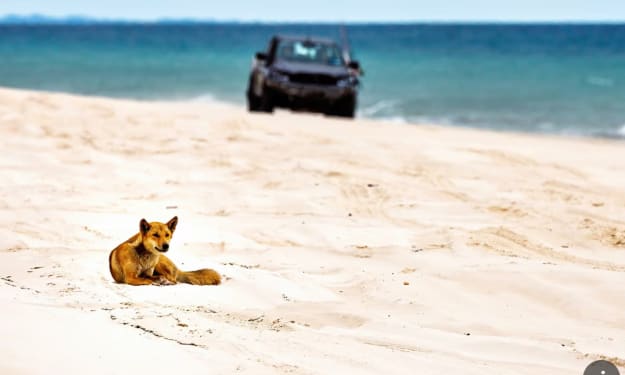
Canadian Backpacker’s Death Raises Hard Questions for Queensland’s K’gari
The tragic death of a Canadian backpacker on K’gari, the world-heritage-listed island off Queensland’s coast formerly known as Fraser Island, has reignited a difficult and emotional debate: can humans and dingoes safely coexist in a shared tourist space?
By Muhammad Hassan4 days ago in Earth
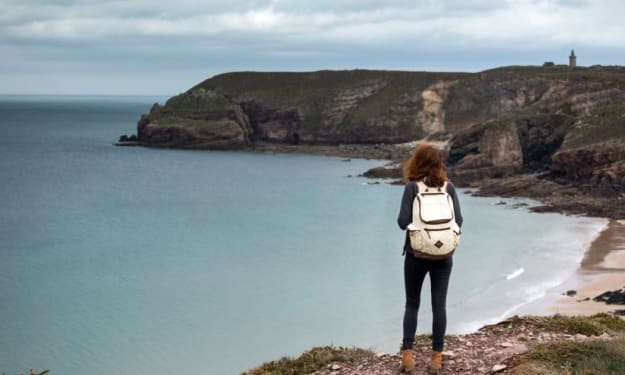
Walk the Coast Your Way: A Self-Guided Cape to Cape Experience
The Cape to Cape Track is a stunning walking trail in Western Australia, stretching about 135 kilometres along the Margaret River coastline. The trail passes sandy beaches, rugged cliffs, and peaceful forests, offering a mix of adventure and calm. While guided tours are popular, many walkers prefer a self-guided experience. Walking independently lets you set your own pace, choose when to rest, and spend more time enjoying each view.
By David Jhon5 days ago in Earth


Comments
There are no comments for this story
Be the first to respond and start the conversation.