
"Kashmir: Paradise on Earth - A Journey Through Its Beauty, History, and Challenges"
A Brief Overview of Kashmir's History, Culture, Conflict, and Tourism Potential.


Kashmir is a region located in the northernmost part of the Indian subcontinent. It is surrounded by the Himalayan mountain ranges and shares borders with India, Pakistan, and China. The region has a rich history dating back to ancient times when it was ruled by various dynasties and empires. It was an important center of Hinduism and Buddhism in ancient times and was known for its rich culture, arts, and crafts.
In the 14th century, the Sultanate of Delhi took over the region, followed by the Mughal Empire in the 16th century. During this time, the region saw a period of growth and development, with the construction of numerous palaces, gardens, and mosques. The British Empire took over the region in the 19th century and ruled it until the partition of British India in 1947.
At the time of the partition, the ruler of the region, Maharaja Hari Singh, decided to remain independent. However, due to pressure from both India and Pakistan, he signed the Instrument of Accession with India, making Kashmir a part of India. Since then, Kashmir has been a subject of dispute between India and Pakistan, leading to widespread unrest and loss of lives in the region.
Kashmir is divided into three parts: the Indian-administered Jammu and Kashmir, the Pakistan-administered Azad Jammu and Kashmir, and the Chinese-administered Aksai Chin. The Indian-administered Jammu and Kashmir is further divided into two parts - Jammu and Kashmir, and Ladakh. Jammu and Kashmir is known for it's scenic beauty, forests, lakes, and mountains, while Ladakh is characterized by its high-altitude desert landscape.
The region is also known for its rivers, including the Jhelum, Chenab, Indus, and Tawi, which are important sources of water for the people living in the region. Kashmir is also home to several large lakes, including the Dal Lake, which is a popular tourist destination.
The geographical aspect of Kashmir is characterized by its rugged mountainous terrain, diverse landscapes, and abundant water resources. Despite the ongoing political conflict, Kashmir remains a region of great natural beauty, cultural richness, and historical significance.
The Kashmir conflict began after the partition of British India in 1947. Pakistan, a country created for Muslims, believed that Kashmir, which had a Muslim majority population, should be a part of Pakistan. India, however, argued that the Maharaja of Kashmir had signed the Instrument of Accession with India, making it a part of India.
In 1947, Pakistan sent troops to take control of Kashmir, which led to the first India-Pakistan war. The war ended in 1948 with a ceasefire line being drawn, which divided Kashmir into two parts - the Indian-administered Jammu and Kashmir and the Pakistan-administered Azad Jammu and Kashmir. The conflict has resulted in three wars between India and Pakistan, in 1947-48, 1965, and 1999, as well as numerous incidents of cross-border firing and terrorism.
Currently, the region is divided into three parts - the Indian-administered Jammu and Kashmir, the Pakistan-administered Azad Jammu and Kashmir, and the Chinese-administered Aksai Chin. In August 2019, the Indian government revoked Article 370 of the Indian Constitution, which granted special status to Jammu and Kashmir. The move was controversial and led to protests and unrest in the region. The government also divided the region into two Union Territories - Jammu and Kashmir, and Ladakh.
Islam is the dominant religion in the Indian-administered state of Jammu and Kashmir, with around 68% of the population being Muslims. The religion arrived in the region during the 14th century with the arrival of Sufi saints who spread the message of Islam. It gradually spread among the masses and became the dominant religion in the 16th century during the rule of the Mughal Emperor Akbar. The Mughal Empire played a significant role in promoting Islam in Kashmir and patronized the Sufi saints who had settled in the region. The Hazratbal Shrine, which houses a relic of the Prophet Muhammad, is one of the most important shrines in the region.
Islam has had a significant impact on the culture, society, and history of Kashmir. The region has a rich Islamic cultural heritage, with numerous shrines and mosques located throughout the state. The spread of Islam in Kashmir led to the emergence of a unique blend of Islamic and local cultures, which can be seen in the region's architecture, cuisine, music, and poetry.
However, the region has also witnessed conflicts between India and Pakistan, which were fueled by political differences. The conflict has had a lasting impact on the region, resulting in the loss of countless lives
Kashmir is widely recognized for its scenic beauty, rich culture, and adventure activities, making it a popular tourist destination. The region is often referred to as the "Paradise on Earth" due to its breathtaking landscapes, snow-capped mountains, and serene lakes.
The state of Jammu and Kashmir is home to several tourist hotspots, including Srinagar, Gulmarg, Pahalgam, Sonamarg, and Leh, which offer an array of activities such as skiing, trekking, camping, boating, and mountaineering. The Dal Lake in Srinagar is a renowned spot for houseboat stays and shikara rides, while Gulmarg is known for its winter sports.
Kashmir is also famous for its handicrafts, including traditional carpets, shawls, papier-mache products, and wooden carvings. Visitors can buy these items as souvenirs from several markets and bazaars in the region.
The Indian government has initiated several efforts to promote tourism in the region and attract more visitors. These include enhancing infrastructure, promoting adventure tourism, and organizing cultural festivals. The government has also launched several initiatives to promote Kashmiri handicrafts and traditional art forms.
Wazwan is a traditional multi-course meal served at weddings and special occasions in Kashmir. The meal includes up to 36 different dishes, including meat-based curries, rice dishes, and kebabs. The food is served on a large plate called a trami and eaten with hands.
Kashmiri cuisine is renowned for its delectable and aromatic dishes that feature a blend of spices and herbs. The cuisine is influenced by the geography and climate of the region, with meat and dairy products being common ingredients due to the harsh winters.
One of the most famous dishes in Kashmiri cuisine is Rogan Josh, a slow-cooked lamb dish in a rich tomato-based sauce infused with spices like cinnamon, cloves, and cardamom. Another popular dish is Gushtaba, which consists of minced meatballs in a thick yogurt-based gravy.
Kashmiri cuisine also features several vegetarian dishes such as Dum Aloo, a slow-cooked potato dish in a spicy yogurt-based gravy, and Nadru Yakhni, a lotus stem curry in a yogurt-based sauce.
The region is also known for its bread, with Kashmiri Naan and Kulcha being popular choices. The bread is typically cooked in a tandoor, a traditional clay oven.
Kashmiri cuisine also boasts a range of sweet dishes such as Phirni, a creamy rice pudding infused with saffron and cardamom, and Shufta, a dessert made with dry fruits, nuts, and sugar. Kashmiri cuisine is a reflection of the region's unique cultural heritage and offers a delightful culinary experience for visitors.
The future of Kashmir is dependent on a number of issues, including the resolution of the conflict between India and Pakistan, the participation of Kashmiris in decision-making, the encouragement of economic development, and the restoration of regional peace and stability.
About the Creator
Keep reading
More stories from SHAH JAHAN MUGHAL and writers in Earth and other communities.
The Rich History and Promising Future of Kashmiri Saffron: A Spice Worth Celebrating
Kashmiri saffron, known as "Kesar," is more than just a spice; it's a symbol of Kashmir Valley's rich culture and heritage. For over 2000 years, saffron has been an integral part of the region's tradition. The unique climate and soil conditions of the valley make it an ideal place for producing high-quality saffron. The fields are situated at an altitude of 1600 meters and surrounded by the Himalayan mountain range, which protects them from harsh weather conditions.
By SHAH JAHAN MUGHAL3 years ago in Earth
I Spoke to Astrophysicists About Starlink’s Expansion: The Doomsday Scenario Keeping Them Up at Night
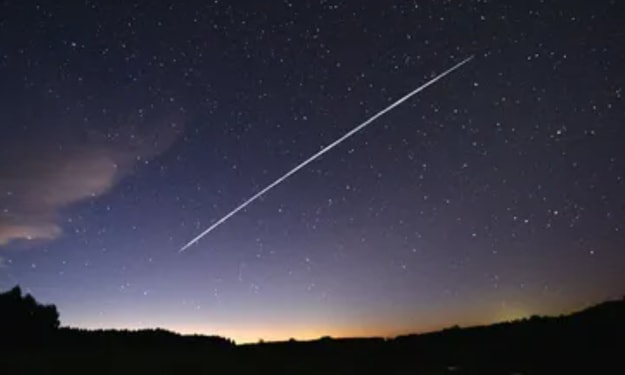
SpaceX’s Starlink project has captured headlines for its ambitious goal: provide high-speed internet across the globe by deploying thousands of low-Earth orbit satellites. While the idea of connecting remote communities is exciting, astrophysicists and space experts are sounding the alarm about a growing doomsday scenario that could threaten both space exploration and our ability to observe the night sky. After speaking to several astrophysicists, it’s clear that Starlink’s expansion, if unchecked, could dramatically alter Earth's orbital environment, disrupt astronomical observations, and even increase the risk of space debris collisions. Here’s what experts are warning the public about. The Scale of Starlink’s Expansion As of now, SpaceX has launched over 4,000 Starlink satellites, with plans to deploy tens of thousands more in the coming years. Each satellite orbits at altitudes between 340 km and 1,200 km, which places them in the low-Earth orbit region used by countless other satellites and scientific missions. Astrophysicists point out that this rapid proliferation is unprecedented. Dr. Lisa Montez, an astronomer specializing in satellite impacts on optical telescopes, told me, “We are looking at a situation where the density of satellites is increasing faster than anyone has fully planned for. This is uncharted territory.” The problem isn’t just the sheer number of satellites—it’s the concentration in specific orbital bands, which makes collisions more likely and complicates orbital management. The Night Sky Is at Risk For centuries, humanity has marveled at the stars, studying the cosmos to better understand our place in the universe. But astrophysicists warn that Starlink is dramatically altering the night sky, making it more challenging to conduct research and enjoy unpolluted stargazing. Every time a telescope captures an image, the reflective surfaces of Starlink satellites can leave streaks of light, masking or distorting the data. “Even a single bright satellite passing through a telescope’s field of view can ruin an entire night of observation,” Dr. Montez explains. Observatories around the world are already noticing the impact. The Vera C. Rubin Observatory in Chile, set to be one of the most advanced facilities for studying dark matter and the evolution of galaxies, may see thousands of Starlink satellites crossing its field of view nightly, potentially reducing the quality of its data and increasing processing costs. The Doomsday Scenario: Space Debris Beyond observations, astrophysicists are increasingly concerned about space debris, which could trigger a cascading chain reaction known as Kessler Syndrome. This occurs when collisions between satellites produce debris that then hits other satellites, creating more debris in an accelerating feedback loop. Professor Rajesh Patel, a space environment specialist, told me, “If a few hundred Starlink satellites collide, it could create tens of thousands of fragments. That would threaten other satellites, international space missions, and even human spaceflight.” Space debris doesn’t just float harmlessly—it travels at speeds over 28,000 km/h, enough to destroy functional satellites or damage spacecraft. With tens of thousands of Starlink satellites planned, the potential for catastrophic collisions is growing, especially since low-Earth orbit is already crowded. Mitigation Efforts and Controversies SpaceX has acknowledged these concerns and claims to implement collision avoidance protocols, using automated systems to maneuver satellites out of harm’s way. The company also plans for satellites to deorbit at the end of their lifespan, burning up in the atmosphere. However, experts argue that these measures may not be enough. Automated systems can fail, and human error or unexpected orbital dynamics could still lead to accidents. Furthermore, the sheer number of satellites makes it difficult to track and manage each one effectively, particularly as other private companies and nations plan similar mega-constellations. Dr. Montez adds, “Even if every satellite works perfectly, the night sky is already changing. The aesthetic and scientific impacts are immediate, whereas collision risks are looming but potentially devastating.” Broader Implications for Humanity The expansion of Starlink raises ethical and regulatory questions. Who has the right to fill low-Earth orbit? How much impact on astronomy and scientific research is acceptable for the sake of global internet coverage? International regulatory bodies like the United Nations Office for Outer Space Affairs (UNOOSA) and the Federal Communications Commission (FCC) have some oversight, but critics argue that global coordination is lagging behind corporate launches. Without international agreements and enforceable regulations, the sky could become a congested and hazardous environment, impacting both science and commerce. Astrophysicists emphasize that this isn’t just a matter of aesthetics. The ability to observe celestial phenomena affects climate science, space weather monitoring, and tracking near-Earth objects. If observations are increasingly compromised, our understanding of Earth and space could suffer. What Can Be Done? Experts suggest several strategies to mitigate risks: International Coordination: Global treaties or agreements to regulate satellite density and orbital placement. Reflectivity Reduction: Coating satellites to reduce brightness and their impact on telescopes. Enhanced Tracking Systems: Better monitoring of orbital debris and automated collision avoidance. Selective Deployment: Careful planning to avoid overcrowding specific orbital bands. While SpaceX is implementing some of these solutions, astrophysicists argue that industry self-regulation is insufficient. They advocate for a coordinated international approach to protect both scientific research and long-term orbital sustainability. Conclusion The expansion of Starlink represents a remarkable technological achievement, promising global internet access and unprecedented connectivity. Yet it also highlights the unintended consequences of space commercialization, including the potential for a cluttered sky, disrupted astronomy, and catastrophic space debris collisions. Astrophysicists remain vigilant. They warn that without careful oversight, humanity could face a doomsday scenario in low-Earth orbit, jeopardizing scientific discovery and space safety for generations. As we continue to celebrate innovations like Starlink, it’s crucial to remember that the sky belongs to all of us—scientists, enthusiasts, and everyday observers alike. Balancing technological progress with environmental stewardship of space may be one of the most critical challenges of the 21st century.
By Muhammad Hassana day ago in Earth


Comments
There are no comments for this story
Be the first to respond and start the conversation.