
Is it possible for supergiant creatures to exist in the deep sea?
Are there giant beasts in the deep sea?


When life began to appear on Earth about 3.6 billion years ago, all living organisms were small, and it took almost 2.5 billion years to evolve organisms larger than a single cell.
After the emergence of multicellular organisms, the rate of biological evolution began to accelerate, and animals tended to become larger as their body sizes diversified enormously. By the time of the dinosaurs, it seems that creatures were becoming plus-sized, but after that, they seem to have started getting smaller again.
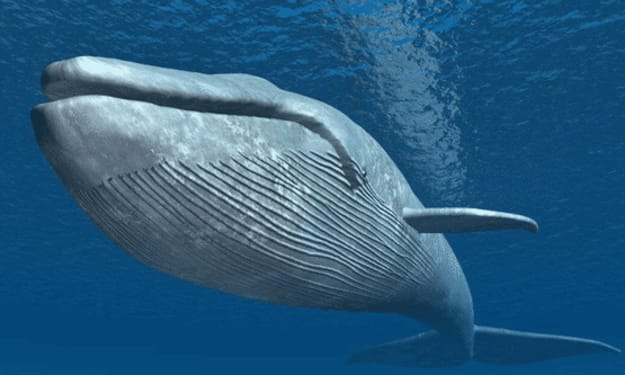
It is important to note here that the largest animal ever found is now the blue whale, which has been swimming in the world's oceans for only a few million years.
This tendency to grow larger during evolution is known as Cope's Law, named after the American paleontologist Edward Drinker Cope.
Many people may not have even heard of this Cope's Law because it is too controversial and there are too many opposing voices, but it does seem to be true that creatures are getting bigger.
In 2015, a study published in the journal Science showed that since the Cambrian period 5.42 years ago, the average and maximum size of marine organisms have increased dramatically, while the minimum size has remained fairly constant.
To some extent, it was inevitable that organisms would grow larger, and if vertebrates are more "advanced," then the smallest vertebrate must be larger than the smallest invertebrate because it requires an organism of a certain size to encapsulate it all.
Likewise, warm-blooded marine animals like whales can only avoid hypothermia if they are more than a meter long.
Thus, when the ancestors of today's marine mammals invaded the ocean again, they had already set a new hard target for the minimum body size of this group, which in turn must have affected the average size of the whole group.
So in general, marine life has evolved very much by Cope's Law, and will only continue to trend towards larger.
So does this mean that marine life is inexorably getting bigger and bigger until the oceans are full of behemoths?
Will we enter the age of giants?
The answer is no way!
First of all, the minimum size has not changed. It has been some time since evolution to ecology, and most species are very small, and not many become giants, just as 75% of animals are now insects.
This situation of more small species is especially evident in the oceans because marine food webs usually have a highly size-dependent structure, which simply means that big fish eat small fish and small fish eat shrimp.
It takes a large number of small fish to meet the energy needs of a large fish, so the only way these food webs can work is if the number of small fish far exceeds the number of large fish.
Second, most of the overall increase in body size of all marine animals has resulted from the evolution of major new populations, which means that all the anatomical and physiological innovations are needed.
There is little incentive to become larger in any existing species.
The blue whale, for example, could not have been as large as it is on land because the earth's gravity would limit the creature's size, while ocean buoyancy gives it the incentive to get bigger, but then food would limit its size, and bigger would mean eating more.
In fact, given the physical and physiological limitations, many ocean giants have pretty much reached the limit of what they can achieve.
Pictured: Bigger marine life means new species and new food
Right now, for most groups of marine animals that we know of, it's unlikely that there will be significantly larger members shortly, or that we'll see larger blue whales or squid.
But there is the possibility of some new behemoth whose blueprint we don't yet know.
But could it exist in the deep sea? After all, so many of the sea monsters caught are from the deep!
It's hard to say, I can only guess that it may live in shallow waters like the blue whale and will enter deeper waters to feed.
Food in the deep sea is limited, and many times may have to rely on the leftovers that fall from above, which is hardly enough to satisfy the needs of large creatures. If there is such a large creature, it has no reason to let itself stay below, and give up more food, more convenient to hunt in the shallow sea.
But the deep sea also has conditions that create large creatures, such as colder temperatures, which can reduce their metabolism, and the preference for food can be greatly reduced.
Perhaps, like Godzilla such creatures beyond our understanding of real existence are not unlikely.
One more interesting fact is that human activity has affected Koop's Law of marine animals. As a species, we are very effective at repelling larger animals wherever we go.
Faced with fishing pressure and other anthropogenic threats, individuals in many populations may not reach their maximum age or size before we eat them.
Many studies have shown that our rule of catching the big and leaving the small has made much fish in the ocean smaller.
About the Creator
Gareth Geyer
The waterfall only looks particularly majestic when it crosses a treacherous steep wall.
Keep reading
More stories from Gareth Geyer and writers in Earth and other communities.
Ten animals that can regulate their body temperature in nature
On Earth, some animals are warm-blooded and some are cold-blooded. Warm-blooded animals, also known as arthropods, are animals that can regulate their body temperature without the help of the outside environment. In contrast, cold-blooded animals, such as snakes and crocodiles, cannot warm themselves up without a little help from the sun, while warm-blooded animals can use a variety of internal mechanisms to keep their bodies at a constant temperature. Let's take a look at ten animals that can regulate their body temperature in this issue, and there are even some you may never have heard of.
By Gareth Geyer3 years ago in Earth
Death Valley sees its most spectacular superbloom in a decade
One of the most extreme landscapes on the planet—Death Valley National Park—is currently experiencing an extraordinary natural event: its most spectacular wildflower superbloom in a decade. What is usually a stark expanse of sun‑baked desert has transformed into sweeping carpets of vibrant color, drawing visitors, scientists, and photographers to witness a rare and fleeting burst of life. This year’s bloom, described by the U.S. National Park Service as the most dramatic since 2016, is the result of unusually wet weather during the fall and winter months. Typically known as the hottest and driest place in North America, Death Valley averages only about two inches of rain annually. But from late autumn through early January, the region received more than its yearly average in a short span, creating ideal conditions for dormant wildflower seeds to sprout and burst into bloom. A Desert Transformed Normally a landscape of sand and jagged rock, this spring the valley floor has come alive with a riot of pinks, purples, yellows, and whites. Species such as Desert Gold, Phacelia, Sand Verbena, and Mojave Desertstar blanket the ground, creating scenes that defy Death Valley’s harsh reputation. Park officials and wildlife enthusiasts alike have expressed amazement at the scale of the bloom and the speed with which it has taken over the valley. “This area that’s known basically for hot weather, sand and dirt has just become this amazing landscape of colors,” said David Blacker, executive director of the Death Valley Natural History Association. “The smell is just amazing.” At lower elevations, the wildflower display is already widespread and expected to last through mid to late March, weather permitting. As temperatures gradually shift, blooms at higher elevations may continue into April and even through June, though the full extent of later displays will depend on ambient heat and moisture levels. Rain: The Key to the Bloom Superblooms in desert environments are extremely rare and hinge upon a delicate balance of weather conditions. In Death Valley, a confluence of well‑timed rainfall events and moderate winter temperatures created just the right environment for seeds that often lie dormant for years to germinate, grow, and flower. Abby Wines, acting deputy superintendent at the park, noted that the exceptionally wet period provided more moisture than the valley would typically receive in an entire year. This unusual rainfall allowed plants to take root and flourish, even in areas that ordinarily remain barren. Although the term “superbloom” doesn’t have a strict scientific definition, it is widely used by park officials and visitors to describe years when wildflower blooms exceed normal patterns in scale and intensity. These events usually happen only once every decade or so in Death Valley, adding to their scarcity and appeal. A Magnet for Visitors and Scientists The rare spectacle has drawn crowds of visitors who typically think of Death Valley as nothing more than a harsh landscape of sand dunes and heat. In recent days, photographers and nature lovers have flocked to well‑known viewing areas such as Badwater Basin, Jubilee Pass Road, and surrounding alluvial fans where blooms are especially dense. Park officials are encouraging visitors to follow “Leave No Trace” principles: staying on designated paths, avoiding picking flowers, and being mindful of fragile ecosystems. Because these blooms are so dependent on specific conditions, conservation‑minded behavior plays a key role in protecting future displays. For scientists and ecologists, the superbloom offers a unique opportunity to observe how desert ecosystems respond to atypical weather events. Flowering cycles in these environments are closely tied to climatic patterns, and scientists can gather valuable data that may inform understanding of ecological resilience in the face of climate variability A Fleeting Celebration of Life Despite the stunning display, the superbloom is temporary. Once the rains stop and the desert heats up, the flowers will quickly fade and set seed, leaving behind a memory of colors before the valley reverts to its usual starkness. Still, for those who have made the journey this spring, the sight of Death Valley awash in hues of gold, purple, and pink is a reminder of nature’s capacity to surprise—and a testament to the fragile beauty that can spring from even the harshest environments.
By Fiaz Ahmed 4 days ago in Earth


Comments
There are no comments for this story
Be the first to respond and start the conversation.