Gareth Geyer
Bio
The waterfall only looks particularly majestic when it crosses a treacherous steep wall.
Stories (8)
Filter by community
How strong is the peak of a first-class civilization?
In 1964, Nikolai Kardashev, a famous astrophysicist, proposed the Kardashev Index (Kardashev Scale), a major reference for future generations, based on the maximum magnitude of energy that an intelligent civilization could use.
By Gareth Geyer3 years ago in Earth
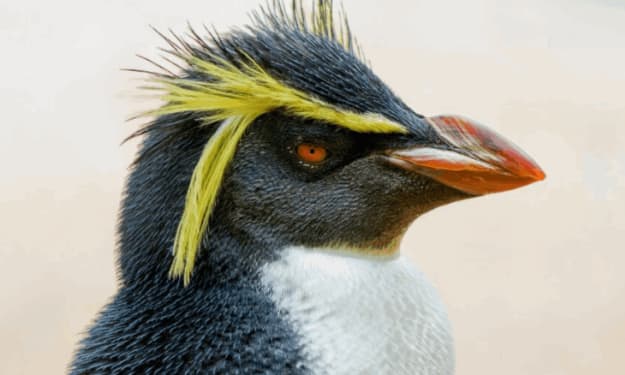
Vertical-crested penguin lays two eggs
Vertical-crowned penguins have an unusual and seemingly manipulative breeding strategy in that they lay two eggs per year but only hatch one chick. They are indifferent to the first egg they lay, often not hatching it at all or tossing it out of the nest to be smashed or eaten by scavenging seabirds. Biologists have long been puzzled by this "wasteful" breeding strategy and have tried to understand the reasons behind it.
By Gareth Geyer3 years ago in Petlife
Ten animals that can regulate their body temperature in nature
On Earth, some animals are warm-blooded and some are cold-blooded. Warm-blooded animals, also known as arthropods, are animals that can regulate their body temperature without the help of the outside environment. In contrast, cold-blooded animals, such as snakes and crocodiles, cannot warm themselves up without a little help from the sun, while warm-blooded animals can use a variety of internal mechanisms to keep their bodies at a constant temperature. Let's take a look at ten animals that can regulate their body temperature in this issue, and there are even some you may never have heard of.
By Gareth Geyer3 years ago in Earth
Australia's 10 extinct prehistoric giants
Australia is the only country in the world that has a continent all to itself with a wide variety of creatures. In Australia's prehistory, many fierce giants were born and roamed all over the land. In this issue, let's take a look at 10 prehistoric beasts in Australia and see how many you know.
By Gareth Geyer3 years ago in Earth
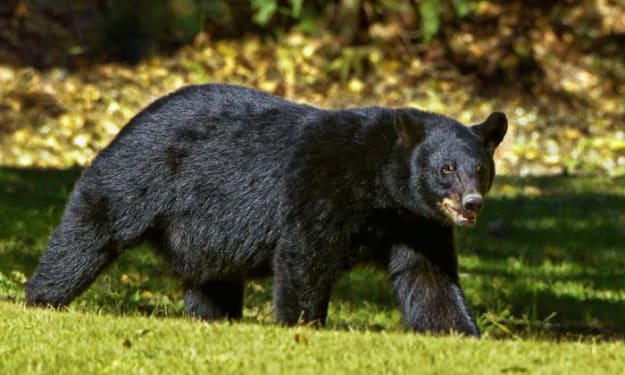
Bears are not just carnivores, study finds
Bears are perceived as fierce carnivores, but a team from Washington State University recently studied the diets of giant pandas and sloth bears and found that bears are closer to omnivores. Bears also appear to need much less protein than they do in captivity in zoos.
By Gareth Geyer3 years ago in Petlife
Bears may not be carnivores
Bears are perceived as fierce carnivores, but a team from Washington State University recently studied the diets of giant pandas and sloth bears and found that bears are closer to omnivores. Bears also appear to need much less protein than they do in captivity in zoos.
By Gareth Geyer3 years ago in Petlife
The world's only flying mammal
1. Bats are found in almost every corner of the world Bats live on every continent on Earth, except Antarctica. Bats can be found as far north as the Arctic Circle and as far south as Argentina and the southernmost tip of South Africa. The largest bat is the giant golden-crowned flying fox, a rare fruit bat that lives only in the Philippines. Not only does this bat weigh 1.5 kg, but it also has a wingspan of 1.5 to 1.6 meters! The smallest bat in the world is the Kitts hog-nosed bat, an endangered bat species that live in southeastern Burma and western Thailand. This tiny bat is probably the smallest mammal on Earth.
By Gareth Geyer3 years ago in Petlife