
Ten animals that can regulate their body temperature in nature
How many do you know?


On Earth, some animals are warm-blooded and some are cold-blooded. Warm-blooded animals, also known as arthropods, are animals that can regulate their body temperature without the help of the outside environment. In contrast, cold-blooded animals, such as snakes and crocodiles, cannot warm themselves up without a little help from the sun, while warm-blooded animals can use a variety of internal mechanisms to keep their bodies at a constant temperature. Let's take a look at ten animals that can regulate their body temperature in this issue, and there are even some you may never have heard of.
1. Blue whale
Blue whales are not only the largest warm-blooded animals on the planet, but they are also the largest animals! Blue whales are thought to be the largest animals known to have ever lived on Earth, reaching 33 meters in length and weighing 181 tons. The gestation period of a blue whale is 10-12 months. At birth, a baby blue whale is already about 6 meters long. Scientists believe that these amazing creatures live to be about 90 years old. Despite their size, blue whales are not predators. Blue whales feed on plankton, with krill being the mainstay. A blue whale consumes between 2-5 tons of food per day.
2. okapi
The okapi is probably one of the strangest warm-blooded animals on the planet. These African herbivores live in the tropical rain forests of the Democratic Republic of Congo in central Africa. The okapi has a dark brown body with white striped legs and hindquarters. They resemble a cross between a horse and a zebra but are not closely related to either. These creatures sometimes referred to as forest giraffes, are the only living relatives of the giraffe. They are currently listed as an endangered species.
3. Lowland Tapir
Tapirs look like a cross between a pig and an anteater. Lowland tapirs, also known as South American tapirs, live in most of South America. It reaches 1.7-2.1 meters in length and weighs 200-250 kg. However, unlike wild boars, they do not have tusks and pose little threat to humans. These gentle guys are herbivores with long, flexible nose that runs from the upper lip to the snout and can be used to pick leaves and fruits.
4. Bobcat
In North and Central America, the bobcat is one of the most ferocious and warm-blooded of all animals. The average body length is 85 to 105 cm, the tail length is 20 to 31 cm, and the weight is 20 to 30 kg. Bobcats are carnivores, eating mainly small mammals such as hares, rabbits, raccoons, and the occasional small deer. Also known as lynxes, these cats are smaller than Canadian lynxes and mountain lions. They are usually tan in color, with striped and spotted legs and huge vertical ears.
5. Hedgehog
Hedgehogs are small, warm-blooded animals that are no more than 25 centimeters in length, with adults weighing up to 2.5 kilograms. It has become one of the world's most popular pets in recent decades. These warm-blooded animals are covered with sharp, porcupine-like spines. When threatened, they curl up into a ball and cover their vulnerable heads and abdomens with defensive spines. They are insectivores, eating mainly earthworms, caterpillars, beetles, snails, and other crawling insects.
6. Japanese macaque
The Japanese macaque is a medium-sized, dwarf monkey, 47-60 cm in length, 7-12 cm in tail length, and 8 kg-11 kg in weight, making it one of the world's most famous warm-blooded animals. Members of these primates (which also include chimpanzees and gorillas) live only in northern Japan. They have furry, gray-brown bodies with pink human faces. To stay warm in winter, they spend hours at a time sitting in geothermal hot spring pools. Also known as snow monkeys, these laid-back macaques are one of the biggest tourist attractions in northern Japan.
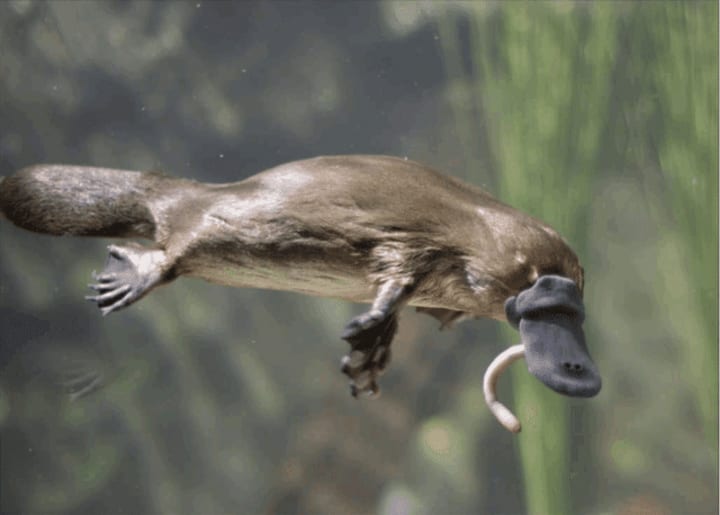
7. Platypus
The platypus is one of the strangest creatures on earth. Although platypuses look like "ducks," they are mammals. The difference between them and other mammals is that they lay eggs. Platypus emerged 25 million years ago and still lives in Australia today, feeding on insect larvae, snails, tadpoles, and other small animals.
8. Kiwi bird
The kiwi is a warm-blooded animal native only to New Zealand. These strange flightless birds are a national icon of New Zealand and can live up to 50 years in the wild. Kiwis are small, with brown feathers that hang down from their bodies. Their eyes are small and their beaks are long and thin. They do not have tails and they do not fly. Kiwis feed mainly on berries, seeds, earthworms, and insects. They are nocturnal and nest on the ground, which makes them vulnerable to predators such as dogs, cats, and weasels.
9. Small-headed porpoise
You may not even have heard of this animal, but the small-headed porpoise is currently one of the most endangered species on the planet. These cetaceans (dolphins, porpoises, and whales) live in the waters of the northern Gulf of California. They grow up to 1.5 meters long and resemble miniature dolphins. They are the smallest cetaceans in the world and eat everything from small fish to squid and crabs. Extensive conservation efforts are underway to save this species, but it may already be too late.
10. Amur leopard
Like the small-headed porpoise, the Amur leopard is one of the most endangered species on the planet. These warm-blooded animals live only in the Far East of Russia. Amur leopards look very similar to African leopards, but their fur is thicker and fluffier and their bodies are stronger. These adaptations allow them to survive the freezing winters of their home forests. Like the Northeast tiger, the Northeast leopard feeds on medium-sized mammals such as deer. Conservation efforts to save the Amur leopard are currently underway.
About the Creator
Gareth Geyer
The waterfall only looks particularly majestic when it crosses a treacherous steep wall.
Keep reading
More stories from Gareth Geyer and writers in Earth and other communities.
Australia's 10 extinct prehistoric giants
Australia is the only country in the world that has a continent all to itself with a wide variety of creatures. In Australia's prehistory, many fierce giants were born and roamed all over the land. In this issue, let's take a look at 10 prehistoric beasts in Australia and see how many you know.
By Gareth Geyer3 years ago in Earth


Comments
There are no comments for this story
Be the first to respond and start the conversation.