

In the western part of Egypt lies the Great Sand Sea which covers a whopping 28,000 square miles and spills into eastern Libya.
One region of this vast desert is littered with yellow glass, whose origins many scientists believe to be otherworldly.
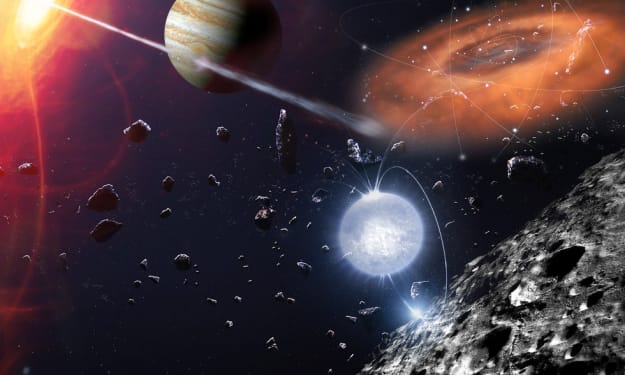
While investigating this glass field, small stones containing diamonds were discovered that challenge all preconceived notions about the formation of our solar system.
In 1996, Dr. Aly A. Barakat was exploring an area of the Great Sand Sea that is abundant in desert glass.
Known as the Libyan Desert Glass Strewn Field, this 2,500 square mile region is covered in pieces of yellow glass that perplexes researchers.
It is very similar to Trinitite, the glass formed in the New Mexico desert underneath the first atomic bomb explosion that was nicknamed “Operation Trinity.”
This glass was very important to the ancient Egyptians, as evidenced by its use in jewelry that adorned the mummies of the Pharaohs, including Tutankhamun.
Barakat's 1996 exploration collected a few pieces of seemingly unspectacular stones that were surrounded by this mysterious yellow glass.
These stones have been named after Hypatia, Hypatia was a famous female astronomer and mathematician in Alexandria, Egypt during the 4th and 5th centuries AD.
Upon further analysis of the noble gas and nitrogen isotopes, it was announced in 2013 that these stones were extraterrestrial in origin.
This was followed by a 2015 announcement stating that the Hypatia stones were not from any known comet or meteor impact.
What really made the scientists sit up and take notice was the revelation that the stones were almost pure carbon with very little silica, the opposite of what is observed in every other meteor or comet fragment analyzed to date.
Furthermore, the shock diamonds have unusual nitrogen isotope ratios unlike those found on earth, leading researchers to believe they were formed before the mysterious impactor entered our atmosphere.
"We can think of the badly mixed dough of a fruit cake representing the bulk of the Hypatia pebble, what we called two mixed 'matrices' in geology terms," said lead researcher Jan Kramers.
"The glace cherries and nuts in the cake represent the mineral grains found in Hypatia 'inclusions'.
And the flour dusting the cracks of the fallen cake represent the 'secondary materials' we found in the fractures in Hypatia, which are from Earth."
This baking analogy gets even stranger due to the presence of a few exceedingly rare components.
Pure metallic aluminum was found, aluminum is never found in this form on the earth and is thought to be extremely rare in our solar system.
An even more astounding discovery was an alloy of phosphorus and nickel that contains no iron, this has never been observed before.
Kramers went on to say, "Even more unusual, the matrix contains a high amount of very specific carbon compounds, called polyaromatic hydrocarbons, or PAH, a major component of interstellar dust, which existed even before our solar system was formed.
Interstellar dust is also found in comets and meteorites that have not been heated up for a prolonged period in their history."
The South African professor believes the data is telling him that the formation process must have happened very far from the warmth of a star like our sun.
These are regions of our solar system that currently we know very little about.
"Hypatia was formed in a cold environment, probably at temperatures below that of liquid nitrogen on Earth.
In our solar system it would have been way further out than the asteroid belt between Mars and Jupiter, where most meteorites come from.
Comets come mainly from the Kuiper Belt, beyond the orbit of Neptune and about 40 times as far away from the sun as we are.
Some come from the Oort Cloud, even further out.
We know very little about the chemical compositions of space objects out there.
So our next question will dig further into where Hypatia came from," Kramer concluded.
What if this yellow glass was formed by Hypatia exploding with the force of an atomic bomb leaving only tiny pieces of itself as clues for future researchers, in that case, where
is the crater?
It turns out that one potential candidate for the crater created from the event that produced all of this nuclear glass, was too big to be seen except from space.
It wasn't until 2007 when Egyptian space scientist Farouk El-Baz and geomorphologist Eman Goneim
analyzed data collected by orbiting satellites that they discovered what they believe to be a 19 mile diameter crater that could very well explain the origins of the desert glass and Hypatia stone fragments.
They named the formation they discovered the Kebira Crater, but due to its remote location,there has been little additional research done.
About the Creator
UAE Enters Al Shabt: Brace for Winter’s Coldest Days
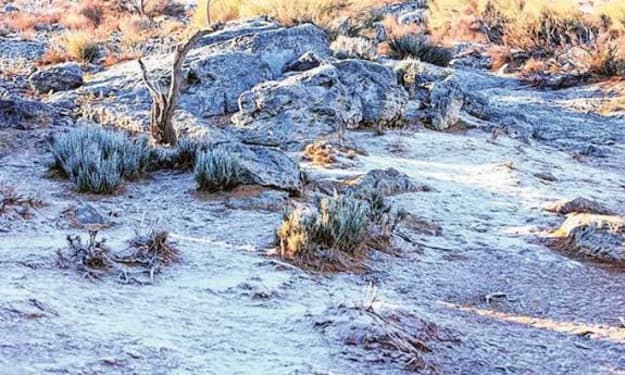
The United Arab Emirates is set to experience one of the harshest winter spells in recent memory as the country enters Al Shabt, a period traditionally associated with extreme cold. Residents across the emirates are being urged to prepare for temperatures that are expected to drop well below seasonal averages, with potential disruptions to daily life, travel, and energy consumption. Meteorologists have warned that Al Shabt, historically marked by icy winds and sudden temperature dips, will this year be particularly severe due to a combination of regional weather patterns and shifting global climatic trends. Forecasters predict nighttime temperatures in some areas could drop to as low as 8–10°C, a significant decline for a country more accustomed to mild winters. Coastal regions may experience slightly warmer conditions, but the cold will be intensified by strong northern winds sweeping across the Arabian Peninsula. Understanding Al Shabt Al Shabt, which translates to “the coldest part of winter,” is a term deeply embedded in Gulf traditions. Historically, Bedouins and farmers used the period to plan agricultural activities, livestock care, and resource management. Today, while modern infrastructure and urban planning mitigate some effects of the cold, the cultural significance remains, and residents are reminded of its intensity through historical observations and local weather lore. “Al Shabt is more than a cultural marker—it’s a meteorological reality,” said Dr. Aisha Al Mansoori, a senior climatologist at the UAE National Center for Meteorology. “We are observing patterns that suggest this Al Shabt could be colder than usual. Residents should take precautions, especially in northern and inland regions where the temperature drop will be most pronounced.” Preparing for the Cold Authorities across the UAE are taking proactive measures to help residents and businesses prepare for the upcoming cold spell. The Ministry of Interior has issued advisories for motorists to check vehicle heating systems and tire conditions, while electricity and water authorities are ensuring that energy grids are ready for increased demand. Hospitals and emergency services have also been put on alert to handle potential cold-related health incidents. Schools and universities are expected to remain open, but parents are being advised to dress children in warm layers and limit outdoor exposure, especially during early morning and late evening hours. Workplaces are encouraged to implement flexible schedules to reduce the risks associated with commuting during frigid mornings. Travel and Transportation Challenges The UAE’s extensive road network and urban infrastructure may face some challenges during Al Shabt. While snow is highly unlikely, fog formation during the early morning hours could reduce visibility, leading to potential travel disruptions. Aviation authorities are coordinating with meteorologists to monitor conditions at major airports, ensuring that flights remain on schedule while prioritizing passenger safety. “Drivers should exercise caution and plan extra time for their journeys,” said Hamad Al Suwaidi, a senior official at the Roads and Transport Authority. “Even a minor dip in temperature can create slick roads in certain areas, and we advise everyone to remain vigilant and adhere to safety guidelines.” Impact on Daily Life Beyond transportation, the cold weather is expected to affect outdoor events, construction projects, and energy consumption. Many outdoor workers may need additional protective clothing, while households will see a surge in electricity usage for heating. Retailers and service providers are preparing for increased demand for warm clothing, heaters, and other winter essentials. Health experts emphasize the need for precautions, particularly among vulnerable populations such as the elderly, children, and individuals with preexisting conditions. “Cold weather can exacerbate respiratory illnesses and cardiovascular problems,” said Dr. Mohammed Al Hammadi, a public health specialist. “Hydration, proper clothing, and staying indoors during the coldest hours are key measures to minimize health risks.” Looking Ahead While Al Shabt is expected to last for several days, meteorologists suggest that the period of extreme cold will gradually ease as the region transitions toward milder winter conditions. Nevertheless, residents are advised to remain prepared and informed, as sudden weather shifts are common in the Gulf. “The key to navigating Al Shabt is awareness and readiness,” Dr. Al Mansoori concluded. “The cold may be intense, but with proper precautions and respect for the weather, residents can stay safe and even enjoy the unique aspects of this traditional winter period.” In the coming days, the UAE will experience an unusual contrast—desert landscapes typically associated with warmth will be gripped by biting cold, reminding residents of the country’s diverse climatic character. As the nation braces for Al Shabt, the emphasis is on preparation, safety, and resilience, ensuring that the coldest days of winter are met with caution rather than surprise.
By Fiaz Ahmed Brohia day ago in Earth
Avalanches Kill Five Off-Piste Skiers in the Austrian Alps
The Austrian Alps are often portrayed as a winter paradise — a place of pristine white slopes, thrilling descents, and breathtaking mountain views. Every year, thousands of skiers and snowboarders travel from across the world to experience Austria’s famous alpine resorts. But over the weekend, that dream turned into a nightmare when five off-piste skiers lost their lives in two separate avalanche incidents, once again reminding the world that nature can be as unforgiving as it is beautiful. The deadly avalanches struck the Salzburg region, one of Austria’s most popular winter sports areas, despite clear warnings about dangerous snow conditions. As rescue teams worked tirelessly in freezing temperatures, the tragedy raised serious questions about off-piste skiing, risk awareness, and the limits of human control in extreme environments. What Happened in the Austrian Alps? According to Austrian authorities, the fatal incidents occurred on Saturday in two different locations within the Salzburg Alps. The first and deadliest avalanche struck a group of off-piste skiers in the Gastein Valley. A large mass of snow broke loose on a steep slope, sweeping through the area and burying multiple people. Four skiers were killed, while two others were injured, one of them critically. One person in the group managed to escape without injuries. Roughly 90 minutes earlier, a separate avalanche occurred near Bad Hofgastein, another well-known alpine destination. In that incident, a female skier was buried under snow at an altitude of around 2,200 meters. Despite rapid rescue efforts, she did not survive, bringing the death toll to five. Emergency services responded immediately, deploying multiple rescue helicopters, mountain rescue teams, search dogs, and medical personnel. However, avalanches move with terrifying speed, often leaving rescuers with only minutes to locate victims before survival chances drop dramatically. Avalanche Warnings Were Already in Place One of the most troubling aspects of this tragedy is that avalanche warnings had already been issued across much of the Austrian Alps. In the days leading up to the weekend, heavy snowfall combined with shifting temperatures created unstable snow layers. Avalanche experts warned that conditions were particularly dangerous, especially in ungroomed and off-piste areas. Some regions were placed under high avalanche risk levels, signaling that even experienced skiers could trigger deadly slides. Local mountain rescue officials later emphasized that the danger was well known. They described the incident as a painful reminder that avalanche bulletins are not theoretical — they exist to save lives. The Risk of Off-Piste Skiing Off-piste skiing, sometimes called backcountry skiing, has grown increasingly popular in recent years. Many skiers are drawn to untouched snow, quieter slopes, and the thrill of adventure beyond resort boundaries. But unlike marked ski runs, off-piste terrain is not controlled or secured against avalanches. Ski resorts routinely use explosives and monitoring systems to reduce avalanche risk on official slopes. Outside those boundaries, however, skiers are fully exposed to natural conditions. Snowpack stability can change suddenly due to wind, temperature shifts, or the weight of a single skier. Even with modern equipment like avalanche beacons and airbags, survival is never guaranteed. Once a person is buried, compacted snow can harden quickly, making self-rescue nearly impossible. A Pattern of Tragedy Across the Alps Sadly, this is not an isolated incident. Avalanche fatalities occur every winter across Europe’s mountain regions, and this season has already seen multiple deadly events. Earlier in the week, a 13-year-old boy was killed in an avalanche at another Austrian resort. In separate incidents, skiers have died in Tyrol, Switzerland, and France, all during periods of elevated avalanche risk. Austria alone records an average of around 20 avalanche-related deaths each year, depending on snow conditions and winter tourism levels. Experts warn that climate change may further complicate the issue by creating more unpredictable weather patterns and unstable snowpacks. Rescue Efforts and Emotional Toll Mountain rescue teams are highly trained and deeply committed, but avalanches remain one of the most challenging emergencies they face. In the Salzburg incidents, rescuers worked under intense pressure, racing against time and extreme weather. Beyond the physical danger, such events take an enormous emotional toll on rescuers, local communities, and families of the victims. Alpine towns rely heavily on tourism, and tragedies like this cast a long shadow over what should be a joyful winter season. Authorities have expressed condolences while also urging visitors to reflect seriously on the risks involved in off-piste activities. What Can Be Learned from This Tragedy? While no lesson can undo the loss of five lives, experts consistently highlight several key points: Respect avalanche warnings and bulletins These alerts are based on scientific analysis and real-time data, not guesswork. Understand that experience does not equal immunity Even skilled skiers can misjudge conditions. Stick to groomed slopes during high-risk periods Official ski runs are actively monitored and controlled. Avoid peer pressure and “powder fever” The desire for untouched snow can cloud judgment. Ultimately, the mountains will always involve risk — but informed decisions can mean the difference between life and death. A Sobering Reminder from the Mountains The Austrian Alps remain one of the world’s most spectacular winter destinations. Yet, as this heartbreaking weekend shows, they demand humility and respect. Nature does not negotiate, and it does not forgive recklessness. As investigations continue and families mourn their loved ones, the tragedy serves as a sobering reminder: adventure should never come at the cost of ignoring clear danger. For skiers and snowboarders everywhere, the message is painfully clear — no descent is worth a life.
By Muhammad Hassanabout 3 hours ago in Earth


Comments
There are no comments for this story
Be the first to respond and start the conversation.