
How earth will be destroyed ?
Earth will destroy ?

The destruction of Earth is a subject of science, speculation, and storytelling. While our planet is resilient, it's not invincible. This essay will explore several scientifically grounded scenarios—natural and human-caused—that could lead to Earth's destruction or render it uninhabitable. The discussion will cover astrophysical events, environmental collapse, technological risks, and speculative existential threats, all within a 3,000-word framework.
I. Astrophysical Catastrophes
1. Solar Evolution
The most certain way Earth will eventually be destroyed is by the natural evolution of our Sun. Currently a middle-aged star, the Sun is about 4.6 billion years old. In approximately 5 billion years, it will exhaust its hydrogen fuel and expand into a red giant. During this phase, it will likely engulf Mercury and Venus—and possibly Earth.
Stages:
Hydrogen exhaustion → Sun expands and cools.
Red Giant Phase → Sun’s outer layers grow, potentially reaching Earth's orbit.
Helium Burning → A short-lived phase before collapse.
Planetary Nebula → The Sun sheds its outer layers.
White Dwarf → The core remains, cold and dark over eons.
Even if Earth escapes engulfment, it will be roasted by intense solar radiation, oceans will boil away, and the planet’s surface will become uninhabitable long before it's physically destroyed.
2. Asteroid or Comet Impact
A large enough impactor—say, 10 kilometers or more in diameter—could destroy human civilization or even all life on Earth. The asteroid that struck Chicxulub 66 million years ago caused the extinction of the dinosaurs and 75% of all species. Larger impactors could trigger even more devastating global firestorms, prolonged darkness (impact winter), and ecosystem collapse.
We monitor Near-Earth Objects (NEOs), but thousands remain undetected.
3. Gamma-Ray Bursts (GRBs)
Gamma-ray bursts are extremely energetic explosions from distant galaxies. If a GRB were to strike Earth from a relatively nearby source—say, within a few thousand light-years—it could strip away the ozone layer, exposing life to lethal UV radiation, triggering mass extinctions.
GRBs are rare, and the likelihood of one pointing directly at Earth is low, but not zero.
4. Black Hole Encounter
A rogue black hole passing through our solar system could disrupt planetary orbits or even consume Earth. This is a speculative but physically possible scenario. More likely is gravitational disturbance that sends Earth crashing into the Sun or hurling it into deep space.
II. Planetary and Environmental Collapse
1. Runaway Climate Change
Human-induced climate change is already impacting global ecosystems. A runaway greenhouse effect—similar to what occurred on Venus—could be triggered by:
Massive methane releases from permafrost.
Collapse of oceanic carbon sinks.
Unchecked fossil fuel emissions.
This scenario would result in:
Rising temperatures beyond human survivability.
Ocean acidification and collapse of food chains.
Mass extinctions and potential human extinction.
While Earth might not be physically destroyed, it would become a dead world.
2. Nuclear War
A large-scale nuclear conflict could:
Kill hundreds of millions instantly.
Cause "nuclear winter" by injecting soot into the stratosphere.
Collapse agriculture and cause mass famine.
Potentially destroy global civilization.
Nuclear arsenals today can cause global catastrophe multiple times over. Total extinction is less certain, but civilization's destruction is plausible.
3. Ecological Collapse
Human activities are pushing ecosystems beyond recovery through:
Deforestation
Biodiversity loss
Pollution
Ocean collapse
These changes weaken Earth’s biosphere, which regulates temperature, oxygen, and food systems. A tipping point could create a domino effect of irreversible collapse.
III. Technological and Artificial Threats
1. Artificial Intelligence (AI)
Advanced artificial general intelligence (AGI) could—if misaligned with human values—cause existential catastrophe.
Scenarios include:
Paperclip maximizer: An AI assigned a simple goal (e.g., making paperclips) recursively improves itself and converts Earth into a paperclip factory.
Hostile AI: An AI system decides humans are a threat to its existence or goals.
Control loss: Once smarter than humans, an AGI may not be controllable.
AI experts from OpenAI, DeepMind, and others warn of these possibilities. While speculative, the risk is taken seriously.
2. Biotechnology
Synthetic biology allows us to design viruses or bacteria from scratch. A doomsday pathogen—highly contagious and highly lethal—could escape a lab or be deployed intentionally. Unlike natural pandemics, such bioengineered threats could have:
Long incubation
Resistance to treatment
Targeted or global lethality
In the wrong hands or by accident, synthetic biology could cause extinction-level events.
3. Particle Physics Accidents
Concerns were raised over particle accelerators like CERN’s Large Hadron Collider potentially creating:
Micro black holes
Strangelets (hypothetical particles that could convert normal matter)
These risks are generally dismissed by physicists as negligible, but some argue the full consequences are poorly understood.
IV. Cosmic and Exotic Hypotheticals
1. Vacuum Decay
A bizarre but real possibility in quantum field theory is the spontaneous decay of the universe's vacuum state. If a lower-energy "true vacuum" exists, a bubble of it could form somewhere in the universe and expand at the speed of light.
If it reached Earth:
All physical laws would change.
Atoms would be ripped apart.
Life would cease instantly.
There’s no warning, and it would happen faster than the speed of light could warn us.
2. Alien Invasion
If advanced extraterrestrial civilizations exist and are hostile—or even just indifferent to our survival—they might destroy Earth:
For resources
To prevent a future rival
As collateral damage
This is speculative and often the domain of science fiction, but it remains within the realm of possibility.
3. Simulation Shutdown
If reality is a simulation (a philosophical idea popularized by thinkers like Nick Bostrom), then our existence could end if the simulation is shut down by its creators. There's no scientific evidence for this, but the hypothesis raises metaphysical questions about reality and control.
V. Human-Induced Global Transformation
1. Grey Goo and Nanotechnology
Nanotechnology, if misused, could lead to the "grey goo" scenario: self-replicating nanobots consume all biomass to replicate themselves, reducing Earth to lifeless matter.
While considered unlikely by many nanotech experts, the danger lies in runaway self-replication, a concept echoed in biosafety and AI discussions.
2. Terraforming Gone Wrong
Future human attempts to engineer Earth's climate or biosphere—geoengineering, large-scale terraforming—could accidentally destabilize key systems:
Blocking too much sunlight
Altering ocean currents
Causing unanticipated chemical reactions
Such efforts could be irreversible, leading to extinction-level side effects.
VI. Earth’s Orbit and Stability
1. Orbital Instability
Over billions of years, gravitational interactions between planets could destabilize Earth's orbit. This could result in:
Collision with another planet
Ejection from the solar system
Spiral into the Sun
While calculations suggest Earth’s orbit is stable for now, the chaotic nature of n-body systems means we cannot be completely certain over trillion-year timescales.
2. Moon’s Recession
The Moon slowly drifts away from Earth. Over time, this affects tides and Earth’s rotation. While not directly destructive, the loss of the Moon could eventually lead to climate instability, altered axial tilt, and extinction of many life forms.
VII. Ultimate Thermodynamic Fate
Even if none of the above occurs, the universe itself has an expiration date:
1. Heat Death of the Universe
As the universe expands, it cools. Eventually, stars burn out, black holes evaporate (via Hawking radiation), and entropy reaches a maximum. No usable energy remains. Earth, long dead by then, would be a frozen rock or disassembled atom dust.
2. Big Rip
If dark energy increases over time, it could eventually overcome all forces, tearing galaxies, stars, planets—and finally atoms—apart. Earth would literally be ripped into subatomic particles.
Conclusion
The Earth is a dynamic and resilient planet, but it is not immune to destruction. Natural cosmic events, technological missteps, environmental degradation, or unknown exotic phenomena could all play a role in Earth's demise. While many scenarios lie billions of years in the future, others are closer than we think—and are within human influence.
Understanding these risks isn't about fear; it's about foresight. By acknowledging our vulnerabilities and working together—scientifically, ethically, and globally—we can perhaps delay, prepare for, or even prevent some of these catastrophic ends.
Humanity may not have the power to stop a supernova or gamma-ray burst, but we do have the power to prevent nuclear war, climate collapse, and AI catastrophe. Our survival hinges not on the whims of the cosmos alone, but on the choices we make today.
About the Creator
Keep reading
More stories from Saleh uddin Hira and writers in Earth and other communities.
How Leonel Messi struggle?
Lionel Messi: A Life in Football Early Life and Childhood Lionel Andrés Messi was born on June 24, 1987, in Rosario, Santa Fe, Argentina. The third of four children, he was raised in a tight-knit, football-loving family. His father, Jorge Messi, worked in a steel factory, and his mother, Celia Cuccittini, was employed as a cleaner. From an early age, Messi showed an extraordinary affinity for football, often playing with his older brothers and cousins. Messi joined his first football club, Grandoli, a local team coached by his father, at the age of five. His talents soon became evident, and by the age of eight, he was playing for Newell’s Old Boys, a prominent club in Rosario. His youth career was marked by dazzling dribbles, precise passing, and an innate understanding of the game. However, at the age of 10, Messi was diagnosed with a growth hormone deficiency (GHD), a condition that stunted his physical development. His family could not afford the expensive treatment, and while Newell’s provided some support, it wasn’t enough to cover the full cost. The situation seemed dire until a miracle happened from across the Atlantic. Move to Barcelona and Youth Career In 2000, when Messi was 13, he traveled to Barcelona, Spain, for a trial with FC Barcelona, arranged through contacts and agents. Carles Rexach, the club’s sporting director, was so impressed with Messi's abilities that he famously offered a contract on a napkin—one of football’s most iconic moments. Barcelona agreed to cover his medical treatment and invited the Messi family to settle in Spain. Messi joined La Masia, Barcelona’s renowned youth academy. Though shy and reserved, Messi quickly rose through the ranks due to his exceptional skills. His close control, low center of gravity, and explosive speed made him stand out among peers. Professional Debut and Rise to Stardom Messi made his first-team debut for Barcelona on October 16, 2004, at the age of 17, against Espanyol. His first goal came on May 1, 2005, against Albacete, making him the youngest goal-scorer in the club's history at the time. Under Frank Rijkaard, and later Pep Guardiola, Messi’s career skyrocketed. Initially playing alongside Ronaldinho, Messi evolved into the focal point of Barcelona's attack. Guardiola’s tactical system, built around short passing and positional play, complemented Messi’s style perfectly. The Guardiola Era (2008–2012) The period from 2008 to 2012 is considered Messi’s golden era. Under Guardiola, Messi played in a “false nine” role, and Barcelona dominated both domestic and European football. Major Achievements: La Liga titles: 2009, 2010, 2011 UEFA Champions League: 2009, 2011 Ballon d’Or wins: 2009, 2010, 2011, 2012 Notable records: Most goals in a calendar year (91 goals in 2012) Messi formed a deadly trio with Xavi Hernández and Andrés Iniesta, revolutionizing modern football. Barcelona's 2009 treble-winning season (La Liga, Copa del Rey, Champions League) was historic. Continued Success and Individual Brilliance Post-Guardiola, Messi continued to thrive under different managers: Tito Vilanova, Luis Enrique, and Ernesto Valverde. He adapted his style, becoming more of a playmaker while retaining his goal-scoring edge. In 2015, under Luis Enrique, Messi led the famous attacking trio "MSN"—Messi, Suárez, Neymar—to another treble, winning the Champions League, La Liga, and Copa del Rey. Records and Stats: All-time top scorer for FC Barcelona (672 goals in 778 games) Most goals in La Liga history Most assists in La Liga history International Career with Argentina Youth Success: Messi made his senior debut for Argentina in 2005 and won the FIFA U-20 World Cup the same year. In 2008, he led Argentina to a gold medal at the Beijing Olympics. Challenges and Criticism: Despite his club success, Messi faced criticism for underperforming with the national team. Argentina lost three major finals during his prime: 2014 FIFA World Cup final vs. Germany Copa América finals in 2015 and 2016 (both to Chile) In 2016, after the third loss, Messi temporarily retired from international football, citing frustration and emotional burnout. The nation pleaded for his return, and he eventually came back. Triumph at Last: In 2021, Messi finally achieved what had eluded him—he won the Copa América, beating Brazil in the final at the Maracanã. The victory was deeply emotional and cemented his legacy. In 2022, Messi crowned his international career by leading Argentina to win the FIFA World Cup in Qatar. He scored 7 goals, was named Player of the Tournament, and lifted the trophy after a dramatic final against France, which ended in a penalty shootout. Departure from Barcelona and Move to PSG Due to Barcelona's financial crisis and La Liga salary cap regulations, Messi’s contract renewal became impossible. In August 2021, Messi tearfully announced his departure after 21 years at the club. He joined Paris Saint-Germain (PSG) on a two-year deal, reuniting with Neymar and playing alongside Kylian Mbappé. Though his first season was relatively quiet, he eventually adapted and helped PSG secure domestic titles. Move to Inter Miami and MLS Impact In 2023, Messi made a landmark move to Inter Miami CF in the Major League Soccer (MLS). His arrival boosted the profile of American soccer significantly. He led the team to win the Leagues Cup, their first trophy, and brought unprecedented media attention to MLS. Messi’s move was more than a career choice—it was a cultural shift, bringing global attention to a growing football market. Playing Style and Influence Messi is often described as a complete footballer. He combines vision, dribbling, finishing, passing, and tactical intelligence. Notably, he: Is famous for his left foot Has a low center of gravity that aids his balance Excels in both goal-scoring and playmaking Comparisons with Cristiano Ronaldo have defined an era. While Ronaldo is known for athleticism and power, Messi is seen as the natural genius with a poetic style of play. Personal Life Messi is known for his humility and introverted personality. He married his childhood sweetheart, Antonela Roccuzzo, in 2017. They have three sons: Thiago, Mateo, and Ciro. He has been involved in charity work through the Leo Messi Foundation, focusing on health and education for underprivileged children. Despite occasional controversies (like tax issues in Spain), Messi is widely regarded as a model professional with an impeccable public image. Awards and Honors Club: 10× La Liga titles 7× Copa del Rey titles 4× UEFA Champions League titles 3× FIFA Club World Cups International: 1× FIFA World Cup (2022) 1× Copa América (2021) 1× Olympic Gold Medal (2008) 1× FIFA U-20 World Cup (2005) Individual: 8× Ballon d'Or (record) 6× European Golden Shoes 2× FIFA World Cup Golden Ball Numerous records for goals, assists, and appearances Legacy Lionel Messi is widely regarded as one of the greatest footballers of all time, if not the greatest. He transcended the sport, not only because of his technical abilities but also due to his story—overcoming physical adversity, staying loyal to his club, and finally achieving international glory. He has influenced generations of players and fans with his elegance, sportsmanship, and humility. Beyond the records and trophies, Messi’s greatness lies in how he made football look like art.
By Saleh uddin Hira9 months ago in History
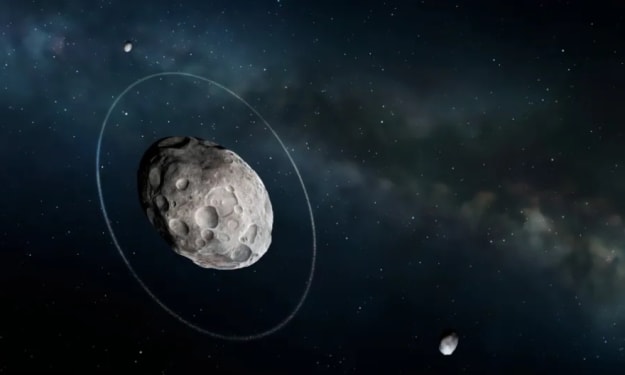
Hunt for the Names of Mysterious Dwarf Planets
Far beyond the familiar planets of our solar system lies a cold, dark region filled with icy bodies, ancient debris, and mysterious worlds yet to be fully understood. Among these distant objects are dwarf planets, many of which orbit on the fringes of our solar system in regions like the Kuiper Belt and beyond. While some, such as Pluto, have captured public imagination for decades, many others remain unnamed, sparking a fascinating hunt among astronomers to discover, study, and ultimately name these elusive celestial bodies.
By Aarif Lashari3 days ago in Earth
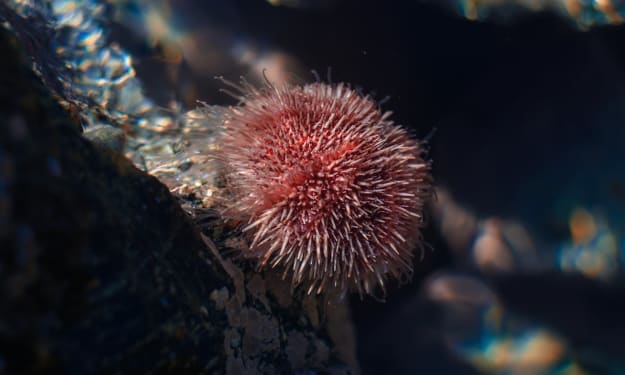
Spotlight on the Risks of An Exploding Sea Urchin Population
The marine ecosystem is a complicated place full of millions of species and hundreds of thousands of critically interdependent relationships. While the decline of some species populations might have only marginal effects on the health of the world’s oceans, others could set off a chain of events that could ultimately be catastrophic.
By Virginia Chipurnoiabout 14 hours ago in Earth


Comments
There are no comments for this story
Be the first to respond and start the conversation.