
Hunt for the Names of Mysterious Dwarf Planets
Exploring the Distant Worlds on the Fringes of Our Solar System
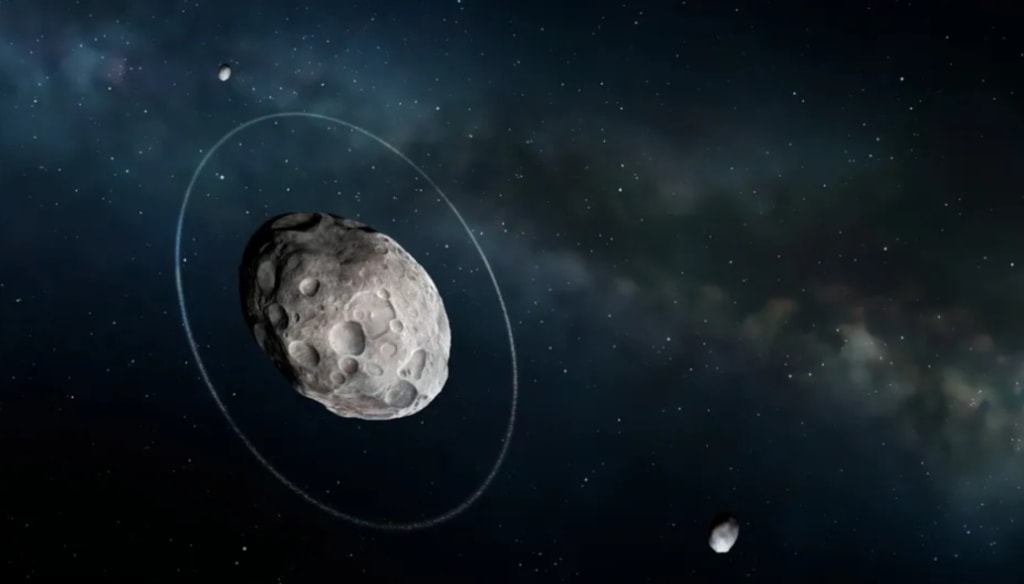
Far beyond the familiar planets of our solar system lies a cold, dark region filled with icy bodies, ancient debris, and mysterious worlds yet to be fully understood. Among these distant objects are dwarf planets, many of which orbit on the fringes of our solar system in regions like the Kuiper Belt and beyond. While some, such as Pluto, have captured public imagination for decades, many others remain unnamed, sparking a fascinating hunt among astronomers to discover, study, and ultimately name these elusive celestial bodies.
The search for names is more than a symbolic exercise. It reflects humanity’s growing understanding of the solar system’s outer reaches and highlights how science, culture, and mythology intersect in modern astronomy.
What Are Dwarf Planets?
Dwarf planets are celestial bodies that orbit the Sun and are massive enough to be rounded by their own gravity but have not cleared their orbital neighborhood of other debris. This distinction separates them from the eight major planets.
The most well-known dwarf planet, Pluto, was reclassified in 2006 by the International Astronomical Union (IAU), a decision that reshaped how scientists define planets. Since then, several other dwarf planets have been officially recognized, including Eris, Haumea, Makemake, and Ceres.
However, astronomers believe there may be dozens—if not hundreds—of dwarf planets lurking in the outer solar system, many of them unnamed and only partially studied.
The Fringes of the Solar System: A Hidden Frontier
Most mysterious dwarf planets orbit in the Kuiper Belt, a vast ring of icy objects beyond Neptune, or even farther in the scattered disk and Oort Cloud. These regions are extremely difficult to study due to their immense distance from Earth and faint visibility.
Objects in these distant zones can take hundreds or even thousands of years to complete a single orbit around the Sun. Because of their slow movement and weak reflected light, discovering them requires powerful telescopes and years of observation.
Despite these challenges, advances in technology have allowed astronomers to detect new objects regularly, reigniting the hunt not only for their physical characteristics but also for their identities through naming.
Why Naming Dwarf Planets Matters
Naming celestial bodies is a long-standing tradition in astronomy. Names help scientists communicate clearly, allow the public to connect with discoveries, and preserve cultural and historical narratives.
For dwarf planets, names are typically drawn from mythology, often associated with gods of creation, the underworld, darkness, or distant realms—fitting themes for objects that reside on the solar system’s edge.
For example:
Eris, named after the Greek goddess of discord, reflected the controversy surrounding Pluto’s reclassification.
Haumea draws from Hawaiian mythology, honoring a goddess of fertility and birth.
Makemake is named after a creator deity of the Rapa Nui people.
These names are not chosen casually; they are proposed by discovery teams and reviewed by the IAU, ensuring they follow strict naming conventions.
The Current Hunt for Unnamed Dwarf Planets
Many candidate dwarf planets currently carry temporary designations, such as 2007 OR10 or 2015 TG387, making them sound more like serial numbers than worlds. Astronomers are actively working to confirm their status and propose suitable names once enough data is collected.
Some of the most intriguing unnamed or semi-named objects include:
Sedna, a distant body with an extremely elongated orbit
Gonggong (formerly 2007 OR10), which only recently received an official name
Several large Kuiper Belt Objects that may qualify as dwarf planets but lack sufficient observational data
The process can take years or even decades, as confirmation requires precise measurements of size, mass, and orbital dynamics.
Cultural Representation in Naming
In recent years, there has been a conscious effort within the scientific community to diversify the mythologies used in naming celestial objects. Instead of relying solely on Greek or Roman myths, astronomers are increasingly drawing from Indigenous, Polynesian, Asian, and African mythologies.
This shift reflects a broader recognition that space exploration belongs to all of humanity, not just one cultural tradition. Naming dwarf planets after global myths allows different cultures to see themselves represented in the story of cosmic discovery.
Challenges in the Naming Process
Naming dwarf planets is not without controversy or complexity. The IAU enforces strict rules:
Names must be unique
They must align with mythological themes
They cannot resemble existing planetary names too closely
Additionally, public interest sometimes clashes with scientific tradition. While popular votes and online campaigns have influenced names in the past, final approval rests with scientific authorities, balancing public engagement with academic standards.
What These Distant Worlds Can Teach Us
Beyond their names, dwarf planets offer valuable insights into the formation of the solar system. Because they have remained largely unchanged for billions of years, they serve as cosmic time capsules, preserving information about the early solar nebula.
Studying these objects can help scientists understand:
How planets form
Why some bodies grow large while others remain small
The distribution of ice, rock, and organic materials in early space
Each newly named dwarf planet represents not just a label, but a step forward in understanding our cosmic origins.
Conclusion: Giving Identity to the Unknown
The hunt for the names of mysterious dwarf planets orbiting on the fringes of our solar system is a blend of science, culture, and imagination. As astronomers continue to uncover these distant worlds, naming them becomes a way to acknowledge their place in the cosmic family and humanity’s role in discovering them.
In the vast darkness beyond Neptune, countless worlds await recognition. With every new name, we bring a piece of the unknown into the realm of human understanding—transforming distant points of light into meaningful members of our solar system’s story.
About the Creator
Keep reading
More stories from Aarif Lashari and writers in Earth and other communities.
Dollar Falls to Four-Year Low as Trump Insists US Currency Is ‘Doing Great’
The US dollar has fallen to its lowest level in four years, rattling global currency markets and reigniting debate over the strength of the world’s dominant reserve currency. The decline comes amid mounting economic uncertainty, shifting interest rate expectations, and renewed political rhetoric—most notably from former President Donald Trump, who has insisted that the US currency is “doing great.”
By Aarif Lashariabout 3 hours ago in Earth
True Happiness
On a sturdy apple tree, a mother dove lived peacefully with her tiny baby. The tree provided them with shelter, shade, and a sense of security. Every day, the mother dove would watch over her little one, teaching it to flap its wings, coo softly, and enjoy the calm of the natural world. Life had been simple, quiet, and safe for them, and she felt content in the little world that belonged entirely to her and her chick.
By Sudais Zakwan3 days ago in Earth
Take a Roundtrip to Hell and Back
The Acheron River in Greece got its name from a river in Greek mythology located in the underworld of Hades and associated with woes and pain. The river flows through the region of Epirus in northwestern Greece and flows into the Ionian Sea at Ammoudia.
By Rasma Raisters4 days ago in Earth
🅼🅸🅳🅽🅸🅶🅷🆃 🆂🅽🅰🅲🅺🆂
"It's 10 in Tuscon! We all know what that means... It's Time for Midnight Snacks with your man, Gerald Gee! Ready to spend the night together? Me too! I'm full of snacks and can't wait to regurgitate them all back into your hungry ears. Crack a brew! Pop some corn! Anything to get ready for one hell of a show where the talk maybe cheap but the words cut deep...
By Lamar Wiggins5 days ago in Fiction




Comments
There are no comments for this story
Be the first to respond and start the conversation.