
"Experience the Spectacular 2025 Quadrantid Meteor Shower: A Celestial New Year Highlight"
"When and Where to Witness the 2025 Quadrantid Peak"

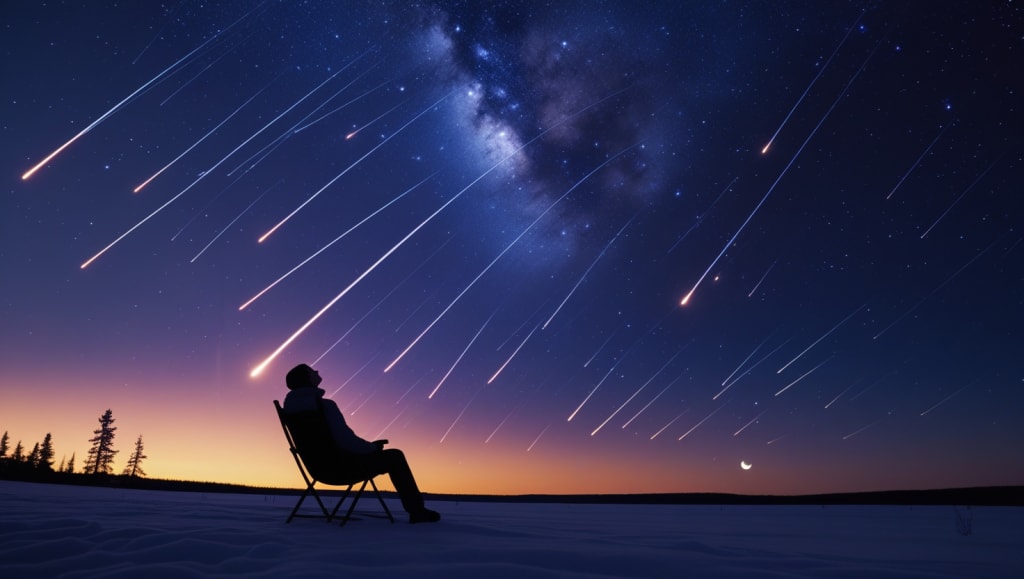
The 2025 Quadrantid Meteor Shower: A display of brilliance
The Quadrantid meteor shower brightens the early morning hours as it greets the skies in early January 2025. Unlike most meteor showers, which originate from a comet, the Quadrantid meteor shower traces its origin to the asteroid 2003 EH1, which some astronomers believe is a "rock comet" or an extinct comet. That makes for a very special astronomical event.
Peak Activity and Viewing Window
The Quadrantids are forecast to peak on January 3, 2025, at about 15:00 UT. What is most catching about this display, however, is its brevity. Since Earth is crossing the meteor stream's narrow particle trail at right angles, the period of peak activity usually extends only for about six hours. This demands accurate timing in observing the shower when it is at its best.
Optimal Viewing Times
For Northern Hemisphere observers, the Quadrantids' radiant appears to be in the constellation Boötes, off the handle of the Big Dipper. In early January this radiant begins the night low on the northwestern horizon but rises higher in the sky as the night wears on. The best time to view this shower will be between 02:00 and dawn local time, when the radiant is well-placed in the sky.
Favoring the viewing conditions of the 2025 Quadrantid meteor shower are a waxing crescent moon that sets in the evening, enabling it to have dark and unobstructed skies during its peak visibility.
Expected Meteor Rates
Under perfect conditions, with clear skies and minor light pollution, viewers could see up to 100 meteors during the peak. However, meteor rates can be quite variable depending on various factors such as local weather, light pollution, and the exact timing of the peak relative to your location. Even if the viewing conditions are not quite ideal, Quadrantids merit the effort invested since the shower's bright and often persistent meteors can leave a long-lasting impression.
Viewing Tips for an Unforgettable Experience
Choose the Right Location**: Find a dark, open area far from city lights, with an unobstructed view of the sky. Parks, rural areas, or elevated locations often work well.
Time It Right: Plan your observation between 02:00 and dawn local time on January 3, 2025, when the radiant point is highest.
Dress Comfortably: Dress warmly in layers, as it can get quite cool in January nights. Bring a reclining chair or blanket to make viewing more comfortable for an extended period.
Be Patient: Give your eyes about 30 minutes to adapt to the darkness, and plan on watching for at least an hour to maximize your viewing opportunities.
Safety Considerations
Check the local weather forecast before going out to see the Quadrantids, to avoid disappointment. Make sure you have any permissions to access your selected site if it is a private property or a preserved area. Bring along only what you need to eat and drink as well as a first-aid kit to keep you healthy and comfortable during the night.
The Science Behind the Quadrantids
The name Quadrantids comes from the earlier, now defunct, constellation Quadrans Muralis. Nowadays, their radiant is located within Boötes, a constellation which still appears on modern star charts. The meteors themselves are fragments from asteroid 2003 EH1, which likely shed the particles centuries ago. When Earth passes through this debris trail, the particles burn up in the atmosphere, creating the bright streaks of light we see.
Conclusion
The 2025 Quadrantid meteor shower is spectacularly ushering in the new year; it's a rare privilege to observe one of nature's wonders. With this intense and very brief peak, clear planning is required so as not to miss such an event. Indeed, for both the first-time observer and the old hand, the Quadrantids can't fail to inspire. So grab your gear, find a dark spot, and get ready to be amazed by the beauty of the night sky.
About the Creator
Sohel
I Am Sohel Hasan, an article writer who loves creating inspiring and engaging stories. Subscribe me And Support,
Global Agreement to Limit Greenhouse Gases Enters into Force
A major step in the global fight against climate change has begun as countries around the world start implementing a landmark agreement designed to limit greenhouse gas emissions. The agreement represents years of negotiations, scientific warnings, and increasing public concern about the growing impacts of global warming on ecosystems, economies, and human life.
By Irshad Abbasi 4 days ago in Earth



Comments
There are no comments for this story
Be the first to respond and start the conversation.