
"Inferno in Los Angeles: A City Fighting to Survive"
"Unstoppable Wildfires Leave Communities in Ruins and Test the Limits of Resilience"

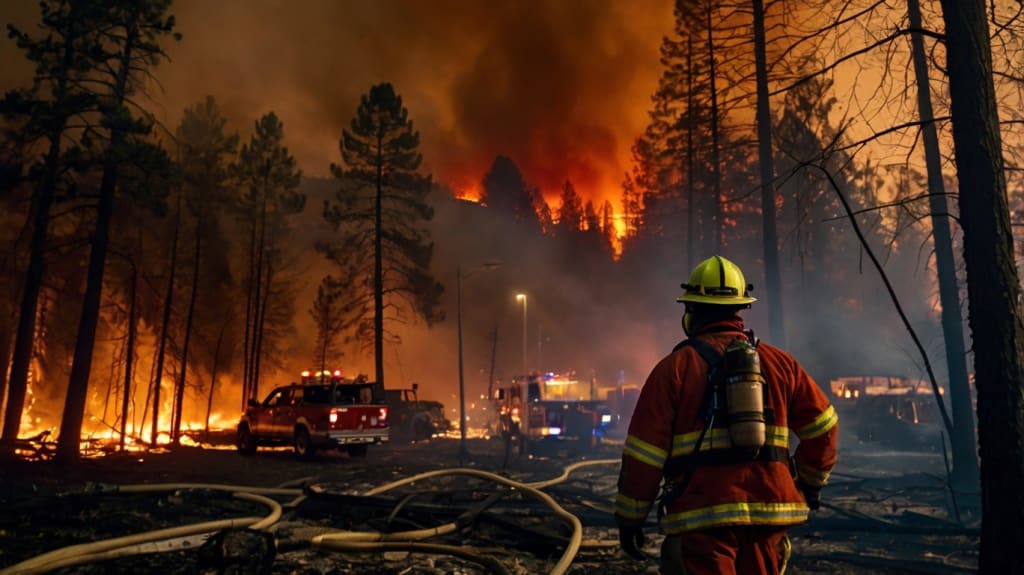
"Like Armageddon": The Wildfires Devastating Los Angeles
The usually vibrant cultural haven, Los Angeles, bathed in sunshine, was today shrouded in darkness due to the destructive wildfires that have ravaged the city. The size of the destruction resembles "Armageddon," as described by witnesses, while whole communities were burned down and thousands of people were evacuated.
A City Under Siege
Los Angeles is battling at least five major fires: the Palisades Fire, Eaton Fire, Hurst Fire, Lidia Fire, and Sunset Fire. All of them together have consumed tens of thousands of acres of land, leaving destruction in their wake. The biggest and most destructive among them is the Palisades Fire, which has already burned more than 17,000 acres. Wind gusts over 100 mph are fueling these infernos, creating a perfect storm of chaos and destruction.
The situation remained grave: more than 2,000 structures turned into ash, with more than 300,000 residents forced to flee from their homes. Indeed, entire neighborhoods have been erased from the face of the earth, with survivors possessing not much else other than their clothes. Many likened it to scenes in some post-apocalyptic nightmare.
Lives Lost and Economic Fallouts
Sadly, it has left at least five people dead and dozens of others injured. The blazes are also taking a colossal economic toll: preliminary estimates place the financial impact at around $52 billion, possibly one of the most costly wildfire events ever to have faced the United States. Besides physical damage, the mental trauma for all those affected by the wildfires may be lifelong.
The Fight Against the Flames
Cal-Fire, one of California's lead firefighting agencies with resources amounting to more than 7,500 individuals and vehicles, is desperately trying to surround this explosive danger zone; supporting each other with outside resources and human power from its neighboring states, the scale of the blazes is testing the experienced firefighters further. High winds, dryness, and records of temperature surged on through, combining forces in a violent and unpredictable ecosystem.
A major disaster declaration by President Biden has unlocked federal resources to help fight the fires and support recovery for affected communities. Yet even with those added resources, officials warn that containment remains a distant goal, with some fires expected to burn for weeks.
Environmental and Health Consequences
In addition to all the direct damages, the wildfires are causing extreme damage to air quality. Thick layers of smoke enveloped Southern California, affecting over 17 million people. Air quality advisories have been declared, urging people to stay indoors, reduce physical exertion, and avoid strenuous activities. Among the most at-risk populations include children, seniors, and other people with respiratory disease.
Apart from that, ecological damage due to these fires goes deep. A lot of animals lost their lives, many became homeless, leading to a disturbance in the ecology. Experts are of the opinion that it will take decades for complete recovery of those areas.
Surviving Tales of Human Will
Amidst the tragedy, there have emerged tales of resiliency and heroism. Firefighters have risked their lives to save homes and rescue stranded residents. Members of the community have come together to support the evacuees with shelter, food, and emotional support.
One resident, from the Hollywood Hills, explained how they only narrowly escaped the flames with their family and all their pets. "We had less than 10 minutes to grab what we could and leave," he said. "Everything we've worked for is gone, but at least we're alive."
The Road Ahead
However, for Los Angeles, still coming to terms with this crisis, the immediate priority has been saving lives and containing the fire. But daunting challenges lie ahead. Recovery will require not only rebuilding homes and infrastructure but also going to the roots of such disasters. According to experts, the contribution of climate change is huge with rising temperatures and longer periods of drought acting as perfect catalysts for wildfires.
The current crisis serves as a vivid reminder of the urgent need for climate action. Without drastic cuts in the causes of climate change, these types of events could become more frequent and more intense.
A Community United
Despite the devastation, the people of Los Angeles are showing remarkable resilience. Communities are coming together to support one another, proving that even in the face of catastrophe, humanity's spirit cannot be extinguished. As one firefighter put it, “We’re down, but we’re not out. We’ll rebuild, stronger than before.”
From the ashes, Los Angeles shall rise, but the scars from this tragedy will always remain, a grim reminder of life's fragility and the strength of nature. The fight is still on, and hopefully, the flames will soon subside and give way to the long journey of healing and recovery that the city has to embark upon.
About the Creator
Sohel
I Am Sohel Hasan, an article writer who loves creating inspiring and engaging stories. Subscribe me And Support,
A building's lifetime climate impact is mostly determined by its daily energy use.
The majority of a building's climate impact is not caused by its construction. As the heating, lighting, and ventilation systems continue to function year after year, it gradually accumulates.
By Francis Dami4 days ago in Earth
Workers Recover 15,000 Crabs After Lorry Crashes Into Field
An extraordinary scene unfolded when a lorry carrying an estimated 15,000 live crabs crashed into a field, spilling its cargo across farmland and prompting a large-scale recovery effort. The unusual accident quickly drew attention from local residents, emergency services, and animal welfare groups, as workers scrambled to rescue as many crabs as possible before they succumbed to exposure.
By Aarif Lashari5 days ago in Earth
Ludacris and Nelly draw backlash over bookings at MAGA-coded music festival
Ludacris and Nelly headlining a mostly right-wing event is good for them. It’s also great for the genre of hip hop. The two rap veterans have showcased their talents on other stages. Why can’t they perform for mostly MAGA folks and grab that bag?
By Skyler Saunders4 days ago in Beat




Comments
There are no comments for this story
Be the first to respond and start the conversation.