
Evolution
From Chaos to Crust: Understanding Earth's Formation 2 Billion Years Ago Part 1.


Two billion years ago, Earth was a vastly different place. Life thrived, but mass extinction was imminent. An invisible killer lurked, poised to alter history profoundly. This epoch had significant implications for the environment, the food we consume, and the air we breathe today. Survival in this challenging landscape would have been difficult. During this period, nearly all life faced extinction.
Welcome to Earth two billion years ago. At this point, the planet was approximately halfway to its current age. As you descend into this prehistoric era, you will observe land masses and some ice chunks amidst water. These landforms differ significantly from today's continents, but this will change over time.
Upon landing, you will encounter a bleak and rocky terrain. No plants, trees, or vegetation are present, nor are there any signs of animals. This era predates the emergence of complex multicellular life forms. The only organisms that existed during this time were microorganisms. While this may seem unremarkable, it is worth noting that no predators posed a threat.
Before disembarking, you must don a suit equipped with oxygen tanks. Although oxygen is present in the atmosphere, the levels are insufficient for comfortable breathing—less than 10% of today's oxygen concentration. When Earth formed, its atmosphere consisted primarily of carbon dioxide, methane, and water vapor.
As you step outside, you will observe the still water around you. It contains no fish, but is filled with green, slimy substances. This material consists predominantly of cyanobacteria, which are among the most significant bacteria to have ever existed on Earth.
Cyanobacteria are essential to the air we breathe. However, they also played a significant role in the largest extinction event in Earth's history. To understand this event, we must travel back approximately 500 million years. This requires us to go even further back in time, by an additional half billion years. At this point in Earth's history, the atmosphere contained no oxygen. The planet would appear vastly different from what we recognize today. Nevertheless, some fundamental elements that exist today have been present for billions of years.
For instance, uranium is a naturally occurring element formed during the early stages of the universe. It has been part of the Earth since its inception. According to experts at Uranium Royalty Corporation, a single pellet of refined uranium, roughly the size of a fingernail, contains energy equivalent to that of 149 gallons of oil. This is a substantial amount of energy. In today's world, such energy resources are increasingly important.
Approximately 2.5 billion years ago, Earth experienced a period referred to as the "Calm" prior to a mass extinction event. During this time, the sun was cooler, and temperatures were mild. This environment facilitated the presence of abundant liquid water and the development of single-celled organisms, such as cyanobacteria. These cyanobacteria acquired the capability to photosynthesize, leading to the production of oxygen. This increase in oxygen began to alter Earth's atmosphere. As oxygen levels rose, it became toxic to many existing bacteria. Consequently, the Great Oxidation Event resulted in the extinction of 99% of life on Earth. The elevation of oxygen levels also contributed to a decrease in greenhouse gases, such as carbon dioxide and methane. This decline caused a significant reduction in temperatures, triggering the Huronian glaciation, which persisted for approximately 200 million years. Despite the severe conditions, certain microscopic life forms managed to endure during this era, anticipating a subsequent warming of the planet.
Approximately two billion years ago, Earth experienced significant geological and biological transformations. This period was characterized by extensive volcanic eruptions, a warmer sun, and the development of the supercontinent Nuna. The sun's heightened luminosity facilitated the melting of ice sheets. Concurrent volcanic activity released water vapor and carbon dioxide, resulting in a warmer atmosphere. This rising temperature fostered a revival of life on Earth. Additionally, the volcanic eruptions contributed to the formation of natural diamonds.
More on part 2...
About the Creator
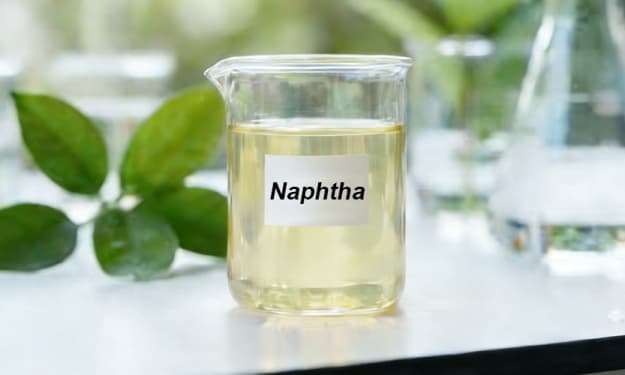
The Technical Rise of Naphtha Recovery from Plastic Waste
For decades, the global narrative surrounding plastic has been defined by a linear economy: produce, use, and dispose. While mechanical recycling has served as the primary method for managing plastic waste, its limitations are well documented. Degradation of polymer chains, contamination from food waste, and the complex composition of multilayer packaging mean that a significant portion of collected plastics—often cited as high as 70%—is relegated to landfills or incineration.
By Bestonpyrolysis5 days ago in Earth
I wanted to title this something different, but worried that my chosen title might cause problems entering the United States in the future so this is the new title. It's the greatest title. No one has ever written a title better than this. (All titles unrelated to content).
Let me be honest. I am finding this difficult. Now, I like a challenge, a stretch, a bit of an obstacle course. “Write about the decline of the British Empire in the form of a narrative poem in which your protagonist is an artichoke” I read, and flex my fingers. “Write a haiku to evoke the sensation of sibilance using only the first half of the alphabet.” “Well”, I think to myself, “this should be fun.” But “write about a system that isn’t working”? A system that isn’t working? Now? In 2026? ONE system? My favourite system that isn’t working? The sexiest system that isn’t working? The one giving me the most angst day to day? The one giving me the most existential dread? I am, as I say, finding this difficult. I will own that I have contemplated writing a thousand words on why the steady “all on” setting on my fairy lights is the EIGHTH of seven options which must be sequentially activated to get there, because that is a system that some fool came up with and it definitely doesn’t work, and now who is paying the price, eh? But how can I write about my fairy lights when…. When…. When….
By Hannah Moore4 days ago in Humans



Comments
There are no comments for this story
Be the first to respond and start the conversation.