
Emerald Valleys and Sapphire Skies: Discovering Afghanistan’s Natural Wonders
A Visual Journey Through the Breathtaking Landscapes and Hidden Gems of a Timeless Land


I arrived in Afghanistan not seeking war stories, nor political headlines—I came chasing colors. As a photographer and a wanderer of the forgotten, I had spent years chasing the world’s fading beauty. And now, I was here, drawn by whispers of emerald valleys and sapphire skies. Afghanistan, for most, meant conflict. For me, it meant a mystery yet untold.
It began in Panjshir Valley, cradled in the arms of the Hindu Kush. The morning air was crisp, sweet with the scent of wild apricot blossoms. The mountains rose like ancient guardians, cloaked in green velvet as spring spilled across the valley floor. Children’s laughter echoed through the narrow alleys of stone homes clinging to the hillsides. Old men waved from shaded porches, sipping tea and watching life unfold, unrushed.
The Panjshir River flowed confidently beside us as I walked with my guide, Ahmad, who spoke softly but carried the pride of a people untouched by time. “See that?” he pointed to a ridge. “That tree has stood through four wars. Still here. We are like that tree.”
Under the glow of early sun, the valley shimmered like a jewel set in earth’s crown—truly emerald.
But Afghanistan is no single picture. It is a kaleidoscope.
Next came Band-e Amir, the fabled chain of lakes in Bamyan province. The road there was no gentle stroll, but what awaited at the end of the dusty journey made my breath catch.
There they were—lakes so blue they defied belief. Not the blue of a postcard sea, but of something more ancient and mystical. Sapphire. The cliffs around them rose in layers of rose and ochre, carved by wind and time. The silence was cathedral-like, broken only by the wind brushing across the water’s surface.
I stood at the edge of Band-e Haibat, the "Lake of Awe," as locals call it. They say the lakes were formed by divine hands, and looking out at that tranquil expanse, I believed it. Fishermen cast their nets with quiet grace. Families picnicked on the shore, their laughter rolling out like music. There was no fear here, no sorrow. Just sky, stone, and water.
Above us, the sky stretched endlessly, a perfect dome of deep cobalt. Clouds drifted lazily, like they had nowhere else to be. It was the kind of sky that makes you feel very small and very alive.
One evening, as I camped near the water, I watched the sky shift from sapphire to violet. The stars began to burn into life, sharp and bright, unpolluted by modern light. I had seen the Milky Way before, but here it danced. It shimmered like a silk scarf caught in the wind, stretched across the heavens. In that moment, I felt like I wasn’t just looking at beauty—I was inside it.
But the heart of Afghanistan isn’t just in its landscapes—it’s in its people. In Nuristan, the land of light, I met shepherds whose eyes held centuries of stories. Their homes were carved into steep hillsides, accessed by goat trails and faith. They welcomed me with bread warm from the fire and tea that tasted of cardamom and mountains.
One old woman, her face a map of time, gave me a woven bracelet. “To remember,” she said in broken Dari. “You saw us.” It was not just hospitality—it was legacy.
As I journeyed farther south, the land changed again. From valleys and lakes to the rugged cliffs of the Wakhan Corridor, Afghanistan revealed yet another of her masks. Here, the mountains became more severe, their snowcaps like white crowns against the sky. Yaks trudged past, unbothered by altitude or time.
In a tiny village near the border with Tajikistan, a boy showed me a cave. Inside, ancient petroglyphs danced on the walls—spirals, hunters, stars. “My grandfather says they are from before time,” he told me proudly. And I believed him. Everything in Afghanistan feels older than the world, yet still full of breath.
Over 40 days, I crossed valleys carved by glaciers, rivers fed by sacred springs, plains where red poppies bloomed like spilled paint, and forests where pine trees whispered secrets to anyone who would listen.
Everywhere I went, people asked me the same thing: “Why are you here?” I would smile and say, “To see.”
And I did.
I saw a country the world forgets to look at—the one not made of conflict, but of color. I saw fields so green they hurt your eyes, skies so blue they filled your lungs, and a people who, despite everything, keep building, planting, dreaming.
Afghanistan’s natural wonders aren’t just scenery—they are acts of resistance. They are proof that beauty can outlive violence, that hope can grow wild even among ruins.
So now, when I hear the name Afghanistan, I no longer think of headlines or fear. I think of valleys that glimmer like emeralds under the morning sun. I think of lakes that hold the sky like a mirror. I think of smiles offered by strangers and stories whispered on mountaintops.
And I remember what the old woman told me in Nuristan: “You saw us.”
Yes. I did.
And I hope the world does too.
About the Creator
Keep reading
More stories from Mohammad Tariq Sideeqi and writers in Earth and other communities.
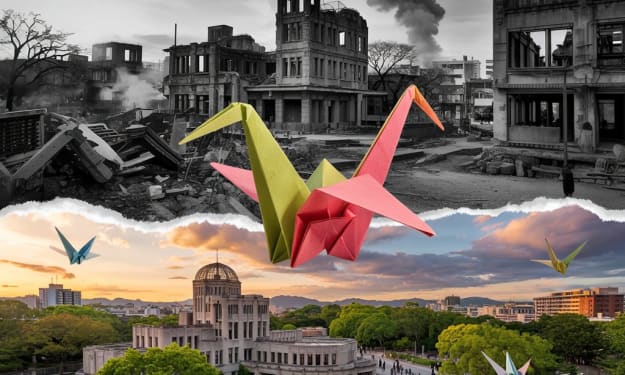
From Destruction to Peace: The Story of Hiroshima
In the quiet of a summer morning, Hiroshima stirred to life. It was August 6, 1945, and the city had already endured years of war. But beneath the tension, life persisted—vendors opened their stalls, children played in the streets, and mothers prepared breakfast for their families.
By Mohammad Tariq Sideeqi10 months ago in History
Emergency declared in USA.
A historic winter storm known as Winter Storm Fern has unleashed devastating cold, heavy snow, and dangerous ice across a vast portion of the United States, stretching from Texas in the South to New England in the Northeast. Millions of people are affected as emergency warnings flash on phones and TV screens, roads become treacherous, and travel across the country grinds to a near halt.
By USA daily update 3 days ago in Earth
Top Business Leaders Issue Expletive-Laced Message on Green Backlash
In a move that has captured global attention, a coalition of top business leaders recently issued a sharp and expletive-laden statement responding to what they describe as growing “green backlash” against corporate sustainability initiatives. The statement, which circulated widely on social media and news outlets, reflects increasing tension between business interests and environmental advocacy. Executives from some of the world’s largest corporations—including energy, manufacturing, and technology sectors—warned that the backlash threatens progress on climate goals and risks undermining long-term economic and environmental stability. What the Statement Said While the exact wording contained strong language, the core message was clear: business leaders are frustrated with public criticism that, in their view, unfairly targets companies striving to reduce emissions, invest in renewable energy, and implement sustainable practices. According to excerpts released by major media outlets, the executives argued that: Sustainability efforts are essential for long-term business survival. Criticism from political groups, activists, and some consumers is often misinformed or oversimplified. Corporations cannot be held responsible for systemic environmental challenges alone. The expletive-laced tone surprised observers and sparked debates about corporate communication strategies and the limits of public discourse in environmental debates. Why Business Leaders Are Pushing Back Many companies have invested billions in green technologies, energy-efficient processes, and corporate social responsibility initiatives. Yet, they argue that despite these investments, they face increasing public scrutiny and sometimes hostile criticism: Activist campaigns often portray corporations as greenwashing, exaggerating sustainability claims. Politicians in some regions have launched legal or regulatory challenges against certain environmental strategies. Social media amplifies criticism rapidly, sometimes disproportionately. Business leaders warn that this backlash not only demoralizes corporate teams but can also slow down innovation in areas like renewable energy, sustainable packaging, and carbon-neutral logistics. The Green Backlash: What It Is The term “green backlash” refers to growing opposition to environmental initiatives, particularly when such initiatives are perceived as expensive, disruptive, or politically motivated. Analysts suggest the backlash stems from several sources: Economic concerns: Some voters fear green policies raise costs for consumers or hurt industries reliant on traditional energy. Political polarization: Environmental issues have become entangled with partisan debates in multiple countries. Misinformation: Social media often spreads misleading narratives about corporate green practices. Executives argue that a lack of understanding among the public contributes to misdirected criticism. Examples of Corporate Sustainability Initiatives The companies represented in the statement have launched a range of initiatives over the past decade: Transitioning to 100% renewable energy in certain operations. Developing electric vehicle fleets for logistics. Investing in carbon capture technologies. Promoting sustainable supply chains and sourcing practices. While these measures have tangible environmental benefits, some critics argue that companies could do more or that efforts are motivated primarily by public relations rather than genuine ecological concern. Public and Media Reaction The expletive-laden nature of the statement drew immediate attention. Responses have ranged from support to criticism: Supporters argue the message is a wake-up call, highlighting that corporations are actively addressing climate challenges despite unfair scrutiny. Critics say that the tone reflects arrogance and defensiveness, suggesting that executives may be out of touch with public concerns. Media outlets noted the unusual directness and language, emphasizing how rare it is for top executives to express frustration so bluntly. The controversy highlights the fine line companies must walk in communicating sustainability efforts while maintaining credibility and public trust. Implications for Corporate Environmental Policy Analysts suggest this incident could have lasting impacts on corporate environmental policy: Stronger Communication Strategies: Companies may invest more in explaining their initiatives clearly to the public. Policy Advocacy: Corporations could increase lobbying efforts to protect sustainability investments from backlash. Collaboration With Stakeholders: Building alliances with NGOs, governments, and communities may help mitigate criticism. Transparency and Reporting: Enhanced sustainability reporting could counter claims of greenwashing. Overall, the backlash may push companies to balance assertiveness with accountability, ensuring their green efforts are both visible and credible. Broader Context: Climate Action and Corporate Responsibility This statement comes amid a period of heightened focus on climate change and corporate responsibility. Governments around the world are implementing stricter emissions targets, and investors are increasingly prioritizing environmental, social, and governance (ESG) metrics. At the same time, some sectors are experiencing pushback from consumers, employees, or regulators who feel that certain sustainability measures are too costly or disruptive. The tension between progressive climate goals and short-term economic or political pressures is likely to persist for years. Lessons From the Backlash Several takeaways emerge from this high-profile corporate statement: Companies must communicate proactively, not just implement policies. Strong language can grab attention, but it may also polarize stakeholders. Engagement with critics, rather than public confrontation, could yield better long-term results. The green backlash reflects a broader societal debate about the pace, cost, and responsibility of environmental action. The incident illustrates how corporate leadership and public opinion intersect in the era of climate change. Conclusion: Navigating the Green Debate The expletive-laden message from top business leaders underscores the frustration felt by corporations navigating environmental challenges in a polarized climate. While the tone may have raised eyebrows, the underlying message is clear: companies are committed to sustainability but are seeking understanding and support from the public. As environmental policies, corporate initiatives, and public expectations continue to evolve, the dialogue between business and society will remain critical. This episode may serve as a reminder that communication strategy is as important as action in achieving meaningful progress on climate change.
By Muhammad Hassan5 days ago in Earth



Comments (1)
Just wanted to drop in and say—you absolutely nailed it with this piece. 🎯 Your writing keeps getting better and better, and it's such a joy to read your work. 📚✨ Keep up the amazing work—you’ve got something truly special here. 💥 Super proud of your writing! 💖🙌 Can't wait to see what you create next! #KeepShining 🌟 #WriterOnTheRise 🚀