
Top Business Leaders Issue Expletive-Laced Message on Green Backlash
Corporate heavyweights push back against criticism of sustainability initiatives


In a move that has captured global attention, a coalition of top business leaders recently issued a sharp and expletive-laden statement responding to what they describe as growing “green backlash” against corporate sustainability initiatives. The statement, which circulated widely on social media and news outlets, reflects increasing tension between business interests and environmental advocacy.
Executives from some of the world’s largest corporations—including energy, manufacturing, and technology sectors—warned that the backlash threatens progress on climate goals and risks undermining long-term economic and environmental stability.
What the Statement Said
While the exact wording contained strong language, the core message was clear: business leaders are frustrated with public criticism that, in their view, unfairly targets companies striving to reduce emissions, invest in renewable energy, and implement sustainable practices.
According to excerpts released by major media outlets, the executives argued that:
Sustainability efforts are essential for long-term business survival.
Criticism from political groups, activists, and some consumers is often misinformed or oversimplified.
Corporations cannot be held responsible for systemic environmental challenges alone.
The expletive-laced tone surprised observers and sparked debates about corporate communication strategies and the limits of public discourse in environmental debates.
Why Business Leaders Are Pushing Back
Many companies have invested billions in green technologies, energy-efficient processes, and corporate social responsibility initiatives. Yet, they argue that despite these investments, they face increasing public scrutiny and sometimes hostile criticism:
Activist campaigns often portray corporations as greenwashing, exaggerating sustainability claims.
Politicians in some regions have launched legal or regulatory challenges against certain environmental strategies.
Social media amplifies criticism rapidly, sometimes disproportionately.
Business leaders warn that this backlash not only demoralizes corporate teams but can also slow down innovation in areas like renewable energy, sustainable packaging, and carbon-neutral logistics.
The Green Backlash: What It Is
The term “green backlash” refers to growing opposition to environmental initiatives, particularly when such initiatives are perceived as expensive, disruptive, or politically motivated. Analysts suggest the backlash stems from several sources:
Economic concerns: Some voters fear green policies raise costs for consumers or hurt industries reliant on traditional energy.
Political polarization: Environmental issues have become entangled with partisan debates in multiple countries.
Misinformation: Social media often spreads misleading narratives about corporate green practices.
Executives argue that a lack of understanding among the public contributes to misdirected criticism.
Examples of Corporate Sustainability Initiatives
The companies represented in the statement have launched a range of initiatives over the past decade:
Transitioning to 100% renewable energy in certain operations.
Developing electric vehicle fleets for logistics.
Investing in carbon capture technologies.
Promoting sustainable supply chains and sourcing practices.
While these measures have tangible environmental benefits, some critics argue that companies could do more or that efforts are motivated primarily by public relations rather than genuine ecological concern.
Public and Media Reaction
The expletive-laden nature of the statement drew immediate attention. Responses have ranged from support to criticism:
Supporters argue the message is a wake-up call, highlighting that corporations are actively addressing climate challenges despite unfair scrutiny.
Critics say that the tone reflects arrogance and defensiveness, suggesting that executives may be out of touch with public concerns.
Media outlets noted the unusual directness and language, emphasizing how rare it is for top executives to express frustration so bluntly.
The controversy highlights the fine line companies must walk in communicating sustainability efforts while maintaining credibility and public trust.
Implications for Corporate Environmental Policy
Analysts suggest this incident could have lasting impacts on corporate environmental policy:
Stronger Communication Strategies: Companies may invest more in explaining their initiatives clearly to the public.
Policy Advocacy: Corporations could increase lobbying efforts to protect sustainability investments from backlash.
Collaboration With Stakeholders: Building alliances with NGOs, governments, and communities may help mitigate criticism.
Transparency and Reporting: Enhanced sustainability reporting could counter claims of greenwashing.
Overall, the backlash may push companies to balance assertiveness with accountability, ensuring their green efforts are both visible and credible.
Broader Context: Climate Action and Corporate Responsibility
This statement comes amid a period of heightened focus on climate change and corporate responsibility. Governments around the world are implementing stricter emissions targets, and investors are increasingly prioritizing environmental, social, and governance (ESG) metrics.
At the same time, some sectors are experiencing pushback from consumers, employees, or regulators who feel that certain sustainability measures are too costly or disruptive. The tension between progressive climate goals and short-term economic or political pressures is likely to persist for years.
Lessons From the Backlash
Several takeaways emerge from this high-profile corporate statement:
Companies must communicate proactively, not just implement policies.
Strong language can grab attention, but it may also polarize stakeholders.
Engagement with critics, rather than public confrontation, could yield better long-term results.
The green backlash reflects a broader societal debate about the pace, cost, and responsibility of environmental action.
The incident illustrates how corporate leadership and public opinion intersect in the era of climate change.
Conclusion: Navigating the Green Debate
The expletive-laden message from top business leaders underscores the frustration felt by corporations navigating environmental challenges in a polarized climate. While the tone may have raised eyebrows, the underlying message is clear: companies are committed to sustainability but are seeking understanding and support from the public.
As environmental policies, corporate initiatives, and public expectations continue to evolve, the dialogue between business and society will remain critical. This episode may serve as a reminder that communication strategy is as important as action in achieving meaningful progress on climate change.
About the Creator
Muhammad Hassan
Muhammad Hassan | Content writer with 2 years of experience crafting engaging articles on world news, current affairs, and trending topics. I simplify complex stories to keep readers informed and connected.
Keep reading
More stories from Muhammad Hassan and writers in Earth and other communities.
Live Updates: Trump Promotes Gaza Plan and Meets With Zelensky at Davos
Former U.S. President Donald Trump is making headlines at the annual World Economic Forum in Davos, Switzerland, by promoting his latest plan for Gaza and holding a high-profile meeting with Ukrainian President Volodymyr Zelensky. The developments have captured global attention, highlighting Trump’s continued influence on international diplomacy and Middle East affairs.
By Muhammad Hassana day ago in Earth
Walk the Coast Your Way: A Self-Guided Cape to Cape Experience
The Cape to Cape Track is a stunning walking trail in Western Australia, stretching about 135 kilometres along the Margaret River coastline. The trail passes sandy beaches, rugged cliffs, and peaceful forests, offering a mix of adventure and calm. While guided tours are popular, many walkers prefer a self-guided experience. Walking independently lets you set your own pace, choose when to rest, and spend more time enjoying each view.
By David Jhonabout 16 hours ago in Earth
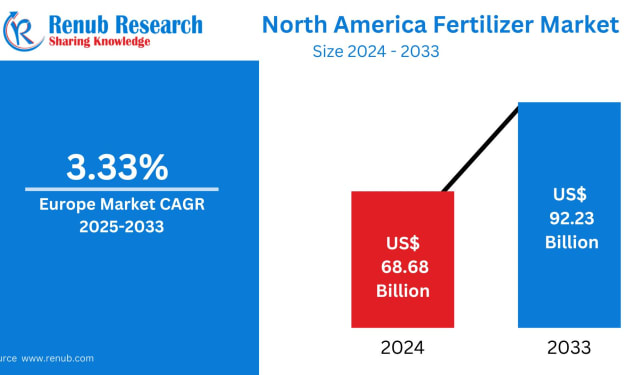
North America Fertilizer Market Size and Forecast 2025–2033
Introduction: Fertilizer as the Backbone of Modern Agriculture The fertilizer industry remains one of the most critical pillars supporting global food production, and in North America, its importance is growing stronger with each passing year. Fertilizers—whether organic or inorganic—play a vital role in replenishing soil nutrients, improving crop yields, and sustaining long-term soil fertility. As the region faces increasing food demand, climate pressure, and the need for sustainable agricultural practices, fertilizers are becoming more advanced, efficient, and environmentally responsible.
By Aaina Oberoia day ago in Earth



Comments
There are no comments for this story
Be the first to respond and start the conversation.