
Economic Viability of Rice Husk Charcoal Projects in Emerging Market
Profitability Analysis of Charcoal Production

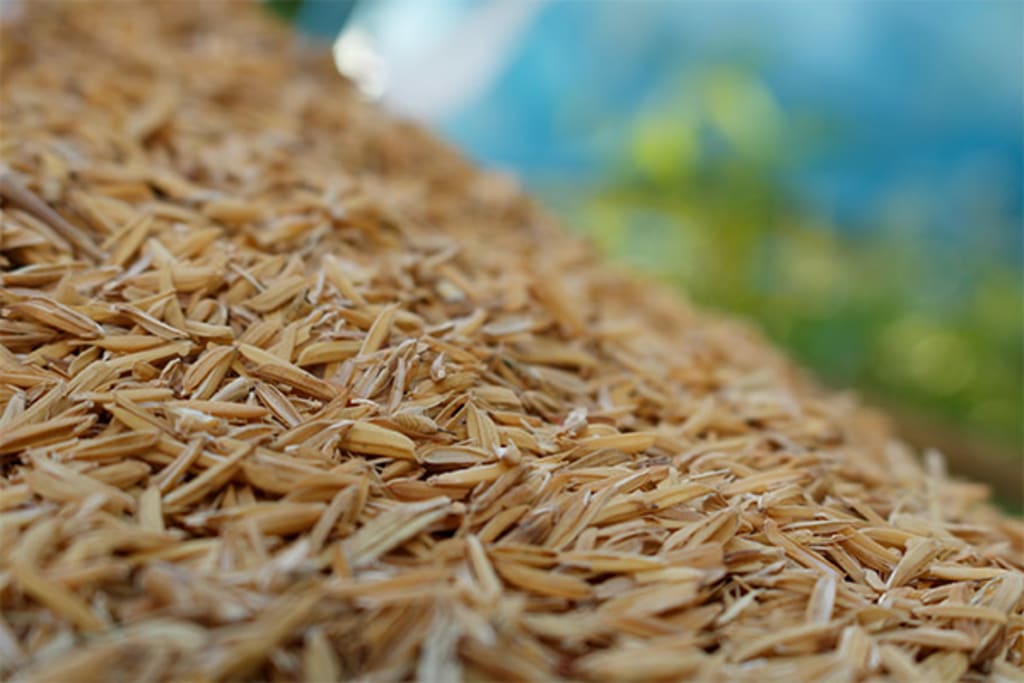
Rice husk, an abundant byproduct of global paddy milling operations, represents an undervalued feedstock for charcoal production. With high silica content, low bulk density, and a challenging combustion profile, it was historically discarded or burned inefficiently. However, thermal conversion technologies—particularly in the form of carbonisation reactors and continuous pyrolysis systems—are unlocking the latent value of rice husk through biochar production.
Abundant Feedstock Availability
Rice husk accounts for approximately 20% of the paddy's weight. According to the FAO, global rice production exceeded 510 million tonnes annually, yielding over 100 million tonnes of husk. High-production regions such as India, Vietnam, Indonesia, Thailand, and Nigeria produce surplus husk that often remains underutilised. This biomass is typically available at little to no cost, making it a stable input source for decentralised charcoal ventures.
When aggregated and pre-processed, rice husk becomes an ideal carbonisation feedstock due to its consistent availability and low collection cost. Many rice mills are actively seeking disposal solutions, which further enhances the feedstock’s economic attractiveness.
Capital Cost of Conversion Infrastructure
The core equipment investment varies by processing capacity and technology sophistication. A large-scale rice husk carbonizer designed to process 500–2000 kg/h of husk into charcoal may cost between $300,000 and $1500,000, depending on features such as continuous feeding, emission control, and heat recovery modules.
Key components include:
- Drying unit (optional for high-moisture husk)
- Biomass carbonisation furnace or pyrolysis chamber
- Gas-capture and cooling system
- Charcoal discharge and collection system
- Auxiliary components (conveyors, PLC, scrubber)
Operational automation reduces labor overhead but increases capex. Still, amortisation over 3–5 years with consistent utilisation ensures a favourable capital recovery timeline.
Product Yield and Market Revenue
Rice husk carbonisation typically yields around 25–30% charcoal by weight. From 1 tonne of husk, a plant can expect to obtain 250–300 kg of charcoal with a fixed carbon content above 70%, suitable for industrial, agricultural, and fuel applications.
Charcoal from rice husk is particularly attractive due to:
- High porosity (useful in soil amendment and filtration)
- Consistent granule size (ideal for briquetting)
- Potential for carbon credit monetisation (biochar's carbon sequestration value)
Market value varies by region, ranging from $250 to $600 per tonne depending on use-case and post-processing (powdered vs. briquetted). For 1000 kg/h production, net monthly output can exceed 180 tonnes, representing $45,000–$100,000 in gross sales under favourable pricing scenarios.
Operational Expenditures
Key running costs include:
- Labor (2–3 operators per shift)
- Electricity or fuel (for drying, feeding systems, condensers)
- Maintenance and wear-part replacement
- Emission control compliance (especially in regulated markets)
Rice husk’s light density poses some logistical handling costs, but its consistent availability offsets seasonal procurement volatility common to other biomass sources.
Where syngas from the pyrolysis process is recycled for internal heat use, energy self-sufficiency is achievable, significantly reducing OPEX.
Secondary Revenue Opportunities
- Value augmentation pathways enhance project ROI:
- Sale of pyrolysis gas or heat to nearby industrial users
- Soil biochar application (agriculture sector demand)
- Carbon removal credits via verifiable methodologies (e.g., CORC under Puro.Earth)
- Char-dust pelletisation for use in clean cookstoves or pellet markets
- These side streams, if integrated with primary operations, can lift overall profitability by 10–25%.
Return on Investment Outlook
A well-located plant with reliable feedstock contracts, minimal logistic constraints, and modest labor inputs can reach ROI within 18–30 months. Strategic siting near rice mills or in agricultural zones strengthens the business case. Additionally, low emission and low-carbon credentials position rice husk charcoal projects as prime candidates for green financing an development grants.
Rice husk charcoal production, when properly engineered and commercially structured, delivers strong margins, consistent cash flow, and sustainability credentials that align with both industrial decarbonisation and rural economic development objectives.
About the Creator
Keep reading
More stories from Wayne Shen and writers in Earth and other communities.
Naphtha as a High‑Value Output from Plastic Pyrolysis
Plastic pyrolysis converts mixed or contaminated polymer streams into liquid hydrocarbons, permanently diverting them from landfill or incineration. Among the liquid fractions, naphtha is the most commercially significant because it integrates directly into existing petrochemical value chains.
By Wayne Shen9 months ago in Earth


Comments
There are no comments for this story
Be the first to respond and start the conversation.