
Earth's Price Tag
Speculating the Value of Our Home in the Universe
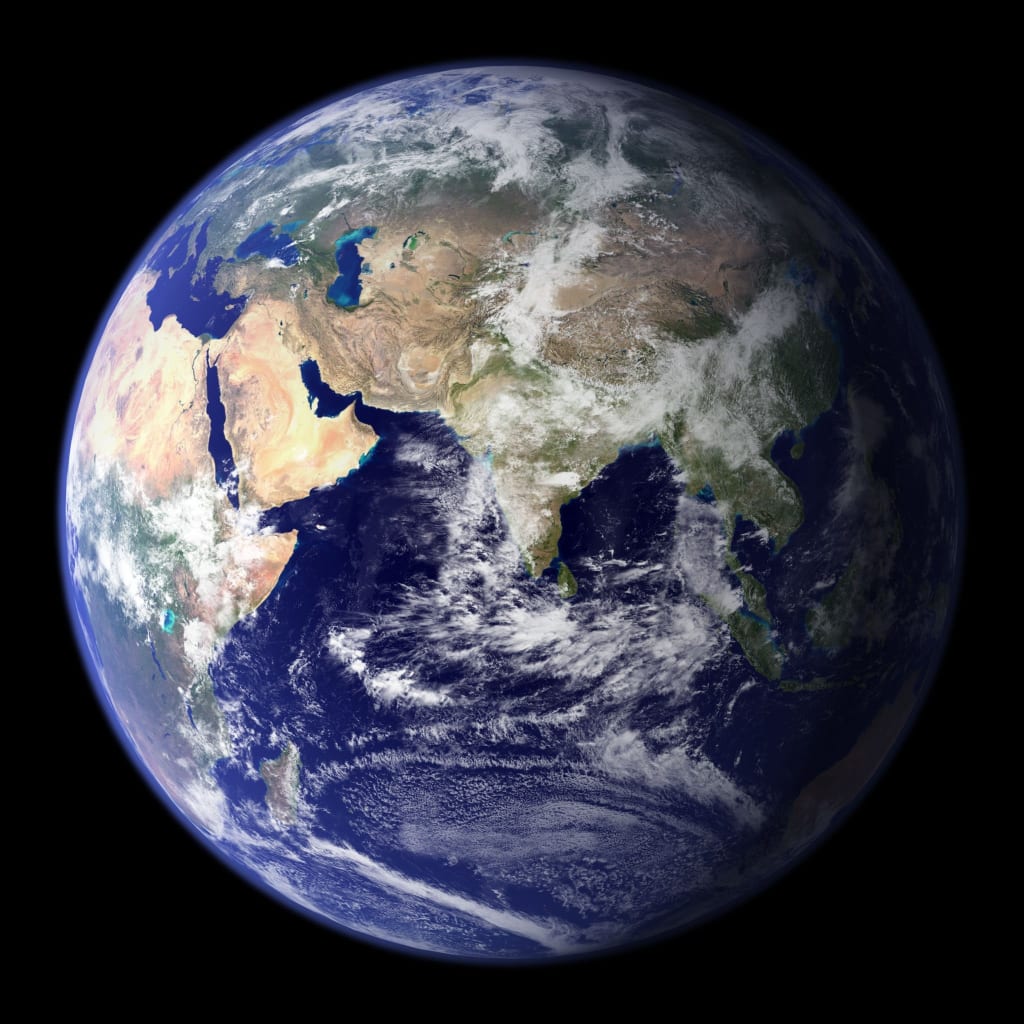
Earth, Texas – a place on Earth officially named Earth. It's a curious coincidence that Earth only contains 1066 people. But did you know that Earth, the entire planet, has had more than one Moon? While we usually think of the Moon as Earth's only natural satellite, there was a brief period from September 2006 to June 2007 when Earth had an additional Moon called 2006 RH120. This near-Earth asteroid fell into orbit around our planet, becoming another Moon of Earth. Technically, a Moon is just a natural satellite, so any object in orbit around a planet qualifies.
Interestingly, astronomers believe that Earth often has additional Moons that don't stick around for long. These temporary asteroid moons, usually about a meter in diameter, are not always detected. So, technically speaking, Earth usually has more than one Moon. But what makes something a Moon? The definition is vague, but generally, a Moon is an object in orbit around a planet that humans didn't put there. Size doesn't play a significant role in determining Moon status.
Moving away from Earth's multiple Moons, let's consider the value of our planet. Can we assign a price to the entire Earth? Astrophysicist Greg Loughman devised an equation to assess the value of exoplanets, considering factors like habitability, ease of study, and the amount of money spent on their exploration. When applying this equation to Earth, it turns out our home planet is worth about five quadrillion dollars.
The History Channel took a different approach, tallying up the value of Earth's resources based on current market prices. Water, lumber, granite, and more were considered, resulting in a grand total of seven quadrillion dollars. If we were to separate all the elements in our bodies and sell them at market price, it could fetch around two thousand dollars per person. Taking this concept further, a Reddit user estimated that if we mined the entire planet and sold all its pure elements, Earth could be worth a staggering 15.8 sextillion dollars.
But these calculations don't account for every possible aspect of Earth's value, nor do they consider supply and demand. In reality, Earth's value would likely be assessed in the galactic or universal marketplace. With thousands of asteroids near Earth, containing vast amounts of valuable resources like platinum and iron, the potential worth of our planet becomes even more significant.
However, speculating about Earth's value in the context of interstellar commerce raises important questions. What would make Earth attractive to extraterrestrial planet shoppers? While Earth may not be rare in terms of raw materials and habitability, it has unique selling points. For example, it's likely the only planet like itself within a significant distance, making its location prime real estate for intergalactic purposes. Furthermore, the intricate and diverse life forms found on Earth, from jaguars to palm trees to hairless bipeds, add a distinct flavor that can't be replicated elsewhere.
But would other intelligent life forms share our concept of ownership and the idea of buying and selling physical things? Ownership and trade are human constructs, built upon complex social agreements. While animals may barter for services, they lack the cognitive ability, communication, and enforcement mechanisms required for extensive economic systems like ours. We have developed norms and currencies to facilitate trade, but this is unique to our species.
In addition to these considerations, we must ponder the issue of demand. Despite Earth's offerings and its potential appeal to other life forms, we have received no offers or indications of interest. This aligns with the Fermi Paradox, which raises the puzzling question of why, with countless life-friendly planets in the universe, we haven't encountered intelligent extraterrestrial life.
Ultimately, the idea of selling Earth is a remarkable concept. We don't possess a deed to our planet; we emerged from it. Earth shaped us through selective pressures, making us an integral part of its natural processes. Selling our own planet is akin to a child selling their parents; it's not a straightforward analogy. Perhaps we are best described as Earth's first willful effluvia—messy, stinky, and ever-evolving. We are interconnected with Earth and will eventually return to the cosmos, just like a bodily emission.
About the Creator
Keep reading
More stories from Myke & Amy and writers in Earth and other communities.
The Dark Side of Nature
"Why do animals eat their own babies? I mean, it's a dog-eat-dog world out there, but a dog-eat-puppies world? That– it just seems too dark." You might find yourself pondering this question, wondering why certain species resort to such shocking behavior. It's true; filial cannibalism is a real phenomenon that occurs in nature, and while most cases lead to the death of the offspring, there are instances where animals feast upon their young without killing them. Let's dive into the intriguing world of filial cannibalism and explore the reasons behind this seemingly heartless behavior.
By Myke & Amy3 years ago in Earth
Seven Earth-Sized Planets Discovered Beyond Our Solar System
In one of the most exciting breakthroughs in modern astronomy, scientists have discovered a system of seven Earth-sized planets orbiting a distant star. This extraordinary finding has captured global attention because several of these planets exist in the “habitable zone,” where conditions may allow liquid water to exist. The discovery not only expands our understanding of planetary systems but also strengthens the possibility that life might exist beyond our solar system.
By Irshad Abbasi 3 days ago in Earth


Comments
There are no comments for this story
Be the first to respond and start the conversation.