
The Dark Side of Nature
A Fascinating Look at Filial Cannibalism

"Why do animals eat their own babies? I mean, it's a dog-eat-dog world out there, but a dog-eat-puppies world? That– it just seems too dark." You might find yourself pondering this question, wondering why certain species resort to such shocking behavior. It's true; filial cannibalism is a real phenomenon that occurs in nature, and while most cases lead to the death of the offspring, there are instances where animals feast upon their young without killing them. Let's dive into the intriguing world of filial cannibalism and explore the reasons behind this seemingly heartless behavior.
Although filial cannibalism might seem illogical to us, it can be a beneficial strategy for some animal parents, especially when their offspring face a low chance of survival. For example, take the long-tailed sun skinks found on Taiwan's Orchid Island. These lizards are typically negligent parents, laying their eggs and leaving the nest unprotected. However, a specific population of these skinks has evolved a bit of parental instinct due to the presence of egg-eating snakes in the area. Mothers from this population will guard their eggs for at least a week, significantly increasing the chances of survival for their babies.
But even with this added protection, the skink mothers face another threat: skinks that eat their own eggs. In a study conducted in 2008, researchers observed the behavior of these skinks when faced with either a harmless lizard or an egg-eating snake introduced into their nests. The results showed that the mothers fiercely attacked the egg-snatching snakes to protect their clutch. However, if the snakes attacked too frequently, some mothers resorted to eating their own eggs as a desperate response to prevent the snakes from benefiting from their failed nesting attempt.
Similarly, in the case of barred-chin blennies, male blennies take on the role of caregivers, watching over their fertilized eggs. However, this responsibility hampers their ability to mate with females successfully. When males have eggs to watch over, their androgen levels drop, affecting their fertility. Studies have shown that giving eggs to males that hadn't spawned on their own or removing eggs from a caregiving male caused significant changes in their hormone levels and mating behavior. Male blennies either eat eggs or spit them out of their nests to regain the ability to mate.
On the other hand, burying beetles, true to their name, bury small mammal or bird carcasses as their nursery and lay eggs nearby. The beetle parents typically lay more eggs than the limited food source can sustain. To prevent excessive competition among the offspring for the limited resources, they eat some of their weaker or slower-developing babies, ensuring the survival of the healthier ones. Studies from the 1980s and 2013 provided valuable insights into the brooding behavior of these beetles.
Male Japanese giant salamanders invest up to seven months in caring for their eggs and offspring. They have been observed eating eggs infected with water mold to prevent the spread of fungal infections that can be detrimental to the entire brood. By selectively eating infected eggs, the salamander fathers ensure that their healthier offspring have a better chance of thriving.
While these examples depict animals eating their offspring for different reasons, they all share a common theme: a willingness to resort to desperate measures to secure their progeny's best start at life. The behavior might seem heartless, but it serves as a vital strategy to ensure the survival and well-being of their offspring. Nature can be cruel and harsh, but it also demonstrates the ingenious ways different species adapt to challenging circumstances.
Filial cannibalism might be a shocking and macabre aspect of the animal kingdom, but it showcases the diverse and intricate strategies employed by creatures to navigate their environments successfully. While we might not fully understand the reasons behind these behaviors, they provide invaluable insights into the complexity of the natural world and the lengths animals will go to protect their offspring and ensure their survival.
About the Creator
Keep reading
More stories from Myke & Amy and writers in Earth and other communities.
The Domino Effect
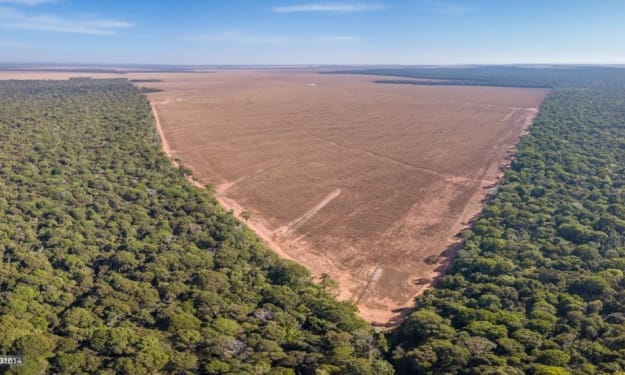
Deforestation, we often think, leads to the loss of habitat and subsequent decline in animal populations. While this is true, there's another aspect to deforestation that's less obvious but equally detrimental. It's a story of dominoes falling one after the other, resulting in the starvation of tropical birds. Surprisingly, these birds aren't directly impacted by the loss of trees or their food sources but by the disruption of a crucial service provided by ants. It's a complex tale of forest fragmentation and its cascading effects.
By Myke & Amy3 years ago in Earth
Amid European Energy Fears, Coal Creeps Back Into Favour
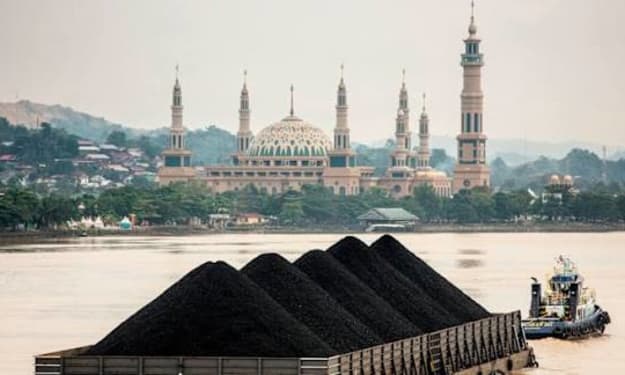
Europe’s energy landscape is shifting as fears over supply security and rising costs drive some countries back toward coal, a fossil fuel many had hoped to phase out entirely. The resurgence comes amid heightened tensions over energy imports, particularly natural gas, as the war in Ukraine and geopolitical friction with Russia have exposed vulnerabilities in the continent’s energy systems. Germany, long seen as a leader in renewable energy adoption, recently announced plans to keep several coal-fired power plants online longer than initially scheduled. Officials cited winter energy demands and the need to maintain a reliable baseload while natural gas supplies remain constrained. Similar considerations are emerging in Poland, the Czech Republic, and other nations that rely heavily on imported energy. “The energy crisis has forced governments to make difficult choices,” said Dr. Klaus Weber, an energy policy analyst at European Energy Institute. “While the climate goals remain important, ensuring citizens have access to electricity and heat this winter has become a more immediate priority.” The return to coal is not simply a response to price spikes. Energy security has become a pressing concern after European reliance on Russian gas pipelines was disrupted, prompting countries to diversify sources and store reserves. Coal, abundant in Europe and globally traded at competitive prices, provides a short-term buffer against shortages. At the same time, rising electricity costs have placed enormous pressure on households and industries. According to recent statistics from the International Energy Agency, European electricity prices surged by nearly 40% in the past year, prompting governments to subsidize energy bills and rethink fuel strategies. Coal-fired generation, though more polluting, offers predictable output and can be ramped up quickly to stabilize grids. Renewable energy advocates have expressed concern that this shift could undermine Europe’s climate leadership. Coal emits roughly twice the CO₂ per unit of energy compared to natural gas, posing challenges to achieving net-zero targets. Critics warn that extending coal use—even temporarily—risks locking in infrastructure that is inconsistent with long-term decarbonization goals. “Every megawatt-hour produced from coal is a step backward for Europe’s climate ambitions,” said Maria López, senior campaigner at Greenpeace Europe. “Governments need to pair any temporary measures with accelerated renewable deployment to avoid backsliding on emissions reductions.” Some nations are attempting to balance these pressures by deploying cleaner coal technologies. Advanced coal plants with carbon capture and storage (CCS) can reduce emissions by capturing a significant portion of CO₂ before it enters the atmosphere. Germany and the Netherlands are investing in pilot projects to integrate CCS into existing power plants, though critics note that large-scale implementation remains costly and complex. Analysts suggest that Europe’s return to coal is likely to be temporary. Once gas supplies stabilize and renewable infrastructure expands, reliance on coal is expected to decline. Yet the episode has highlighted the fragility of energy systems in the face of geopolitical shocks and the tension between short-term energy security and long-term climate goals. Meanwhile, citizens and businesses are feeling the immediate impact. Many households in Eastern and Central Europe face sharply higher heating costs this winter, and industrial manufacturers are warning that energy-intensive production could be scaled back if prices remain high. Policymakers are caught between the urgent need to maintain supply and the imperative to meet climate commitments. The European Union is working on strategies to mitigate these challenges. Measures include expanding LNG import terminals, investing in cross-border electricity interconnectors, and boosting renewable energy capacity. However, the gap between energy supply and demand, exacerbated by geopolitical tensions, means coal may remain a stopgap solution for months to come. Europe’s cautious return to coal underscores a broader reality: energy transitions are never linear. Even as governments and citizens push toward a greener future, external shocks—conflict, supply disruptions, and price volatility—can temporarily alter priorities. The key challenge for policymakers will be ensuring that short-term reliance on fossil fuels does not derail long-term climate ambitions.
By Fiaz Ahmed 7 days ago in Earth


Comments
There are no comments for this story
Be the first to respond and start the conversation.