
Disaster in Indonesia: Flood Death Toll Tops 700, One Million Evacuated
As torrential rains and landslides ravage Sumatra, survivors struggle — and the scale of the disaster continues to emerge.

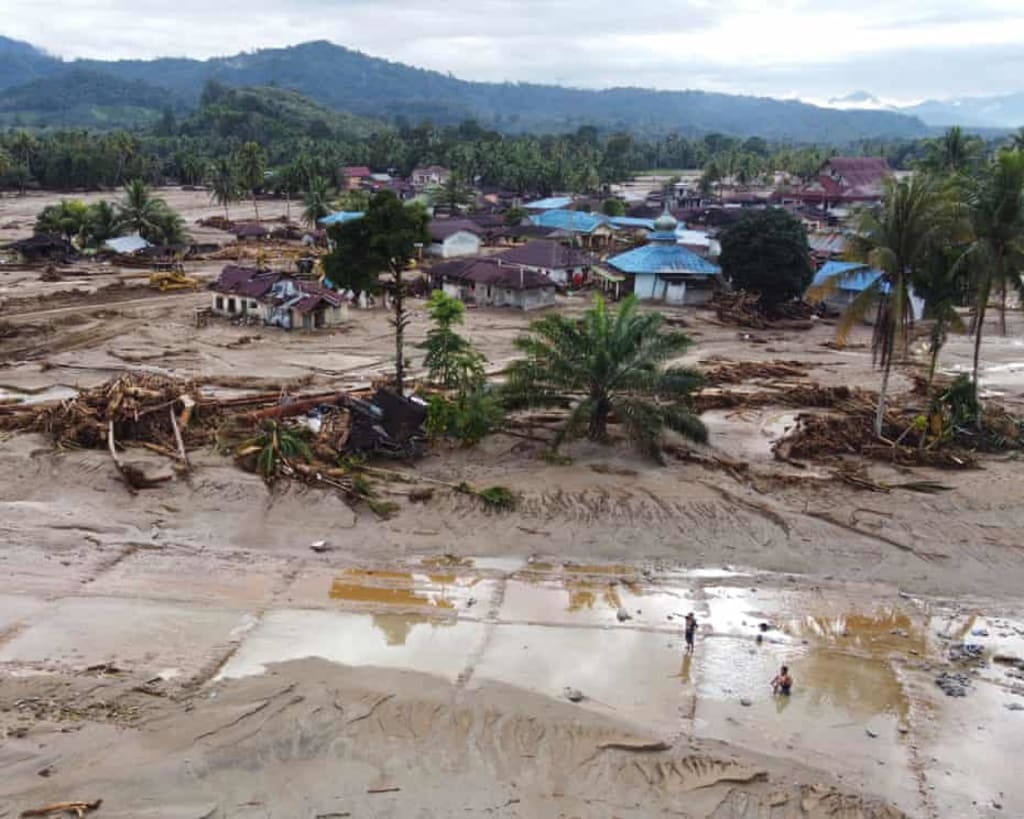
The disaster unfolding in Indonesia is one of the most tragic in recent years. According to the latest update from the country’s disaster agency, the death toll from flooding and landslides on the island of Sumatra has reached 708. Meanwhile, about 1 million people have been evacuated from high-risk areas — a vast displacement affecting hundreds of thousands of lives.
As rescue operations continue and communities struggle to recover, the event has exposed vulnerabilities tied to climate change, environmental management, and disaster preparedness. The human, social, and environmental consequences are severe — and the full extent may still be unfolding.
🌧 What Happened: Floods, Landslides, and a Deadly Storm
The deluge that struck parts of Sumatra was driven by heavy monsoon rains exacerbated by a rare tropical storm — creating conditions ripe for flash floods and landslides. The provinces of North Sumatra, West Sumatra, and Aceh are among the hardest-hit. Entire villages were submerged, roads and bridges collapsed, and many towns became inaccessible overnight.
For some communities, the floodwaters arrived with little warning. Survivors describe rivers overflowing and torrents sweeping away houses in minutes. In remote areas, steep terrain turned especially dangerous, accelerating mudslides and landslides — leaving locals with almost no time to evacuate.
💔 Human Costs: Lives Lost, Families Displaced
With more than 700 confirmed deaths, this disaster ranks among Indonesia’s deadliest in recent memory. The country’s disaster agency also reports hundreds still missing, while thousands more have been injured.
Beyond casualties, the impact on daily life is severe: over 3.2 million people are estimated to be affected. Many have lost homes, farmland, workplaces — and with it, income and security. For a million evacuees, temporary shelters now offer little more than protection from mud and rain, while basic needs like food, clean water, and medical care remain stretched thin.
In some areas, supply shortages have already led to soaring prices of essential goods, compounding the hardship for displaced families.
🆘 Rescue Efforts and Challenges on the Ground
Rescue and relief teams from national and international NGOs, along with government agencies, are working around the clock. Aid is being delivered by sea, air, and land — wherever roads are passable. But many areas remain cut off due to collapsed bridges, flooded roads, and landslide debris. That has slowed down the arrival of vital supplies.
In the worst-hit zones, relief workers are racing against time — both to find survivors and to prevent secondary disasters like disease outbreaks. The muddy floodwaters have contaminated water sources, while disrupted sanitation and trapped debris increase risks of infection. Aid organizations are warning that without swift, coordinated intervention, more lives could be at stake.
For many evacuees, the journey to safety is only the beginning of a long road to recovery — rebuilding homes, restoring livelihoods, and coping with psychological trauma from loss.
🌲 Why the Disaster Was So Destructive: More Than Just Heavy Rain
Experts and local officials point to compounding factors that made the floods so devastating. One major issue: rampant deforestation across parts of Sumatra. Trees and vegetation that once absorbed rainfall and stabilized soil have been stripped away, increasing the risk of landslides and reducing natural runoff control.
Additionally, climate change appears to be intensifying weather patterns, turning once-rare storms into increasingly frequent and powerful events. The combination of monsoon rains and a tropical storm — at this time of year — has overwhelmed traditional drainage and flood-management systems, leaving communities unprepared for the scale of this disaster.
This means that, beyond immediate rescue efforts, long-term solutions will require serious environmental and infrastructural reforms — to strengthen resilience against future extreme weather events.
🌍 What This Means — and What Comes Next
The tragedy in Sumatra is a stark reminder of how fragile vulnerable communities are when faced with extreme natural disasters — especially in regions already experiencing environmental degradation. It’s more than a local or regional event; it reflects global patterns of increasing climate risk and environmental mismanagement.
As Indonesia works to respond to immediate needs — rescue operations, food and water distribution, temporary housing — the medium- and long-term challenges will be enormous: rebuilding homes, restoring infrastructure, rehabilitating land, and providing support for displaced people.
International aid and solidarity will likely play a role, but the government and local communities must also focus on climate adaptation, reforestation, and improved disaster preparedness to reduce the likelihood of a repeat.
In the short term, global attention and support could make the difference between survival and collapse for many families. In the long term, this disaster might serve as a wake-up call for more sustainable policies.
✨ Final Thoughts
The floods sweeping through Indonesia are tragic and heart-wrenching. With over 700 dead and a million evacuees, the scale of the disaster is enormous — and the suffering widespread. But beyond the numbers lie stories of loss, resilience, and a collective struggle to survive and rebuild.
As the world watches, there is a chance for solidarity: for aid, for awareness, for action. For the affected communities, every helping hand counts. For policymakers and citizens worldwide, this is a moment to reflect — on environmental responsibility, climate risk, and how to protect vulnerable lives before the next storm hits.
About the Creator
Asad Ali
I'm Asad Ali, a passionate blogger with 3 years of experience creating engaging and informative content across various niches. I specialize in crafting SEO-friendly articles that drive traffic and deliver value to readers.
Trump’s Greenland Threats Push Europe Toward Divorcing America
When you think of Greenland, the first things that probably come to mind are icebergs, polar bears, and maybe some adventurous explorers. But lately, Greenland has become the center of a major diplomatic drama — one that’s forcing Europe to question its long-standing relationship with the United States. And the spark? Donald Trump’s threats over Greenland. The Controversy: Trump’s Unusual Move Back in January 2026, Trump shocked the world again, not with an election campaign but with a bold — and many would say bizarre — plan to acquire Greenland. But he didn’t stop at just “expressing interest.” He threatened eight European nations with tariffs — starting at 10% and potentially climbing to 25% — unless Denmark agreed to sell Greenland to the U.S. Yes, you read that right: tariffs on allies to buy a remote Arctic island. For Europe, this was more than shocking — it felt like a betrayal from a partner they’ve relied on for decades. Europe’s Response: Outrage and Solidarity European leaders didn’t hold back. Germany, France, Norway, the UK, and others banded together to condemn Trump’s approach. The message was clear: Europe won’t be blackmailed. Even usually cautious leaders spoke up. Norway’s Prime Minister bluntly said, “Threats have no place among allies.” Meanwhile, European Commission President Ursula von der Leyen emphasized that tariffs between allies “have no place” and could undermine decades of cooperation. This isn’t just a political disagreement. Europe sees this as a test of trust, sovereignty, and alliance reliability. Why Greenland Matters At first glance, Greenland might seem like just a frozen island. But strategically, it’s a big deal: Location: Greenland sits between North America and Europe, controlling key air and sea routes. Military Importance: It hosts radar and U.S. military infrastructure critical to early-warning systems. Resources: Beneath the ice lie minerals and rare earth elements that the world desperately needs. For Europe, Greenland is also about principle. The island belongs to Denmark and the Greenlandic people, not Washington. Europe’s support for Denmark shows a broader commitment to respecting sovereignty — a principle that Trump’s threats directly challenged. The Bigger Picture: A Crisis of Trust Greenland may just be the tip of the iceberg. For years, European nations have felt frustrated by U.S. policies that seemed unpredictable — whether it’s climate agreements, trade deals, or security commitments. Trump’s Greenland threats amplified these frustrations. Suddenly, Europe is questioning something fundamental: Can the U.S. be trusted as a long-term partner? Some European leaders have even started talking about a kind of “divorce” from the U.S. — not literally leaving NATO, but rethinking how dependent they should be on America for security and strategic decisions. Europe’s Path Toward Strategic Independence This Greenland drama is accelerating discussions about European strategic autonomy. Basically, Europe is asking: Should we be able to protect our own interests without always relying on the U.S.? The EU has long talked about building stronger defense capabilities and investing more in its own military, but progress has been slow. Greenland might just be the wake-up call that finally pushes Europe to act. What’s Next? So, what happens from here? Europe isn’t just going to sit quietly. Leaders are looking at: Economic counter-measures like tariffs on U.S. goods Strengthening European defense and security collaboration Reasserting Europe’s role on the global stage, with less reliance on Washington Even if Europe doesn’t fully “divorce” America, Greenland is changing the terms of the transatlantic partnership. Europe will now demand more respect, clearer rules, and recognition of its sovereignty — and they’re not afraid to make that clear. Why This Matters to All of Us You might wonder why this matters if you’re not in Europe or the U.S. Greenland may seem remote, but this story is about alliances, trust, and how global power is shifting. The way Europe responds could reshape the world order, affect trade, military cooperation, and even the global economy. And for anyone following U.S.-European relations, it’s a reminder that sometimes the smallest places — even a frozen island — can have huge global consequences. Bottom line: Trump’s Greenland threats aren’t just a bizarre footnote in history. They’re a wake-up call for Europe, forcing the continent to rethink its ties with America and consider a future where it can act independently — strategically, economically, and politically. Greenland, icy as it is, might just melt the old rules of alliance forever.
By Muhammad Hassanabout 17 hours ago in Earth
High-Speed Train Crash in Southern Spain Leaves at Least 21 Dead
A devastating high-speed train crash in southern Spain has left at least 21 people dead and dozens injured, shocking the nation and triggering a major emergency response. The incident, which occurred on a busy rail route connecting key southern cities, has reignited concerns over railway safety, infrastructure maintenance, and emergency preparedness in one of Europe’s most advanced rail networks.
By Aarif Lasharia day ago in Earth
Center Stage with Paul Stewart
*** I'm keen to republish the interviews I did for my series with Vocal creators. It's been a few years and I thought it might be nice to revisit these wonderful conversations. I'll be releasing them one at a time for a few weeks/months.
By Heather Hubler5 days ago in Interview



Comments
There are no comments for this story
Be the first to respond and start the conversation.