
Deforestation and reforestation
Deforestation: The Widespread Problem

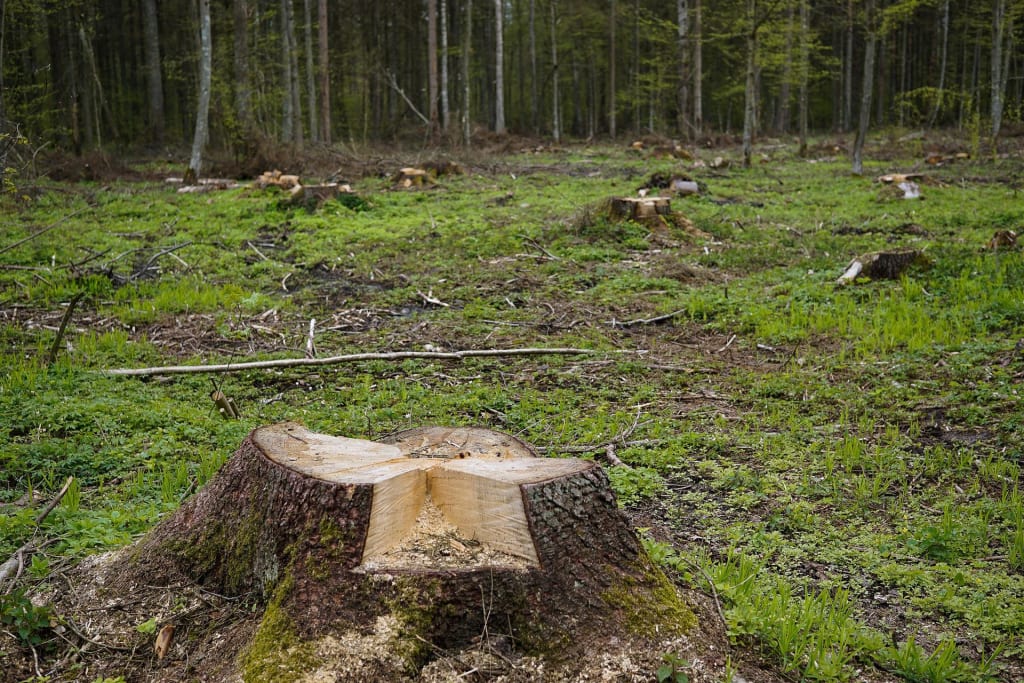
Deforestation refers to the large-scale clearing or removal of forests, often for agricultural activities, urban expansion, logging, or mining. This practice has been ongoing for centuries, but its pace has dramatically accelerated in recent decades, leading to significant environmental consequences. The causes of deforestation are complex, but they are primarily driven by human needs such as the demand for land to grow crops and raise livestock, as well as the need for timber and other resources.
In many parts of the world, forests are cleared to make way for agricultural plantations, including palm oil, soy, and cattle farming. In some countries, illegal logging practices also contribute heavily to deforestation. The Amazon Rainforest, for example, has faced tremendous deforestation due to agricultural expansion and logging, resulting in the destruction of one of the world’s most critical ecosystems.
The consequences of deforestation are far-reaching. Forests play a critical role in maintaining the global carbon cycle. Trees absorb carbon dioxide, a major greenhouse gas, and release oxygen into the atmosphere. When trees are cut down or burned, not only is this process disrupted, but the stored carbon is released back into the atmosphere, contributing to global warming and climate change.
Furthermore, deforestation leads to habitat loss for countless species of animals and plants, many of which are endemic and face extinction when their natural habitats disappear. Biodiversity is threatened, and the ecosystems that depend on forests for balance are weakened. Soil erosion and desertification are also consequences of deforestation, as the roots of trees help to anchor the soil and maintain its fertility. Without these trees, the soil becomes more prone to erosion, leading to poor agricultural land and compromised water systems.
(I)Reforestation: A Path Toward Restoration
Reforestation is the process of replanting trees in areas where forests have been cut down or degraded. It is an essential part of efforts to combat climate change and restore lost ecosystems. While deforestation has devastating effects, reforestation offers a hopeful solution. The goal of reforestation is not just to plant trees but to restore the health and biodiversity of ecosystems, helping to mitigate environmental damage.
One of the key benefits of reforestation is the restoration of carbon sequestration. By planting trees, which absorb carbon dioxide during photosynthesis, reforestation can help reduce the concentration of greenhouse gases in the atmosphere. This process contributes to mitigating the effects of climate change. In addition to storing carbon, reforestation provides a range of environmental benefits such as improving water quality, stabilizing soil, and enhancing biodiversity.
Reforestation efforts can take several forms. One method is large-scale, government-led initiatives where tree planting is organized and executed in deforested or degraded areas. These projects often involve the restoration of native forests that support diverse ecosystems. In some cases, reforestation efforts focus on planting fast-growing tree species to help restore the forest canopy more quickly, although this can sometimes come at the cost of reducing biodiversity.
Another important form of reforestation is the promotion of agroforestry, where trees are integrated into agricultural landscapes. Agroforestry can help create more sustainable farming practices by providing farmers with additional sources of income, improving soil quality, and reducing the need for harmful pesticides and fertilizers. Agroforestry can be a win-win solution for both farmers and the environment.
(II)Challenges in Reforestation Efforts
Despite the potential benefits of reforestation, it is not always a simple solution. One challenge lies in the competition for land. In many regions, land that was once forested is now used for agriculture or urban development. Reforestation projects must navigate land rights and the needs of local communities, ensuring that they do not disrupt livelihoods but instead offer sustainable alternatives.
Another challenge is the appropriate selection of tree species. In some areas, reforestation projects may involve the planting of non-native or fast-growing tree species that are not well-suited to the local environment. These species can sometimes crowd out native flora, disrupting the local ecosystem and reducing biodiversity.
Moreover, reforestation is a long-term commitment. Trees take time to grow and reach their full potential in terms of carbon sequestration and ecosystem restoration. This means that reforestation efforts need to be sustained for many years, requiring consistent funding, careful planning, and community involvement.
(III)The Role of Technology and Global Cooperation
Technology plays an increasingly important role in the success of reforestation projects. Remote sensing tools, drones, and satellite imagery can be used to monitor deforestation and assess the success of reforestation efforts. These technologies help ensure that reforestation initiatives are carried out effectively and efficiently, tracking the progress of tree planting and identifying areas that need more attention.
On a global scale, international cooperation is essential in tackling deforestation and promoting reforestation. Programs like the United Nations’ REDD+ (Reducing Emissions from Deforestation and Forest Degradation) aim to provide financial incentives for countries to protect their forests and invest in reforestation efforts. Additionally, companies and organizations can help by sourcing sustainable timber and other forest products, reducing their impact on forests worldwide.
IN THE END
Deforestation and reforestation are two sides of the same coin. While deforestation continues to threaten the health of our planet, reforestation offers hope for restoration. By planting trees and restoring ecosystems, we can help mitigate climate change, preserve biodiversity, and secure the health of our environment for future generations. However, success requires a global effort, including government support, technological innovation, and local community involvement. It is up to all of us to take action—whether through advocacy, supporting sustainable practices, or directly participating in reforestation projects—to ensure the restoration and preservation of our forests.
About the Creator
Badhan Sen
Myself Badhan, I am a professional writer.I like to share some stories with my friends.
Keep reading
More stories from Badhan Sen and writers in Earth and other communities.
Human Impact & Sustainability
The pursuit of economic growth and technological advancement has brought prosperity, but it has also led to deforestation, pollution, and climate change. Sustainability, the practice of meeting present needs without compromising future generations' ability to meet theirs, has become a crucial global goal. This article explores human impact on the environment and strategies for achieving sustainability.
By Badhan Senabout a year ago in Earth
Earth Is Being Covered in a ‘Forever Chemical’ That Won’t Break Down, Scientists Warn.
Scientists are sounding the alarm over a growing environmental threat that is nearly impossible to erase. Known as “forever chemicals,” a group of synthetic substances called PFAS (per- and polyfluoroalkyl substances) are spreading across the Earth—from drinking water and soil to rain, snow, and even human blood.
By Sajida Sikandara day ago in Earth




Comments
There are no comments for this story
Be the first to respond and start the conversation.