
Human Impact & Sustainability
Human activities have profoundly influenced the environment, shaping ecosystems, altering climate patterns, and depleting natural resources.

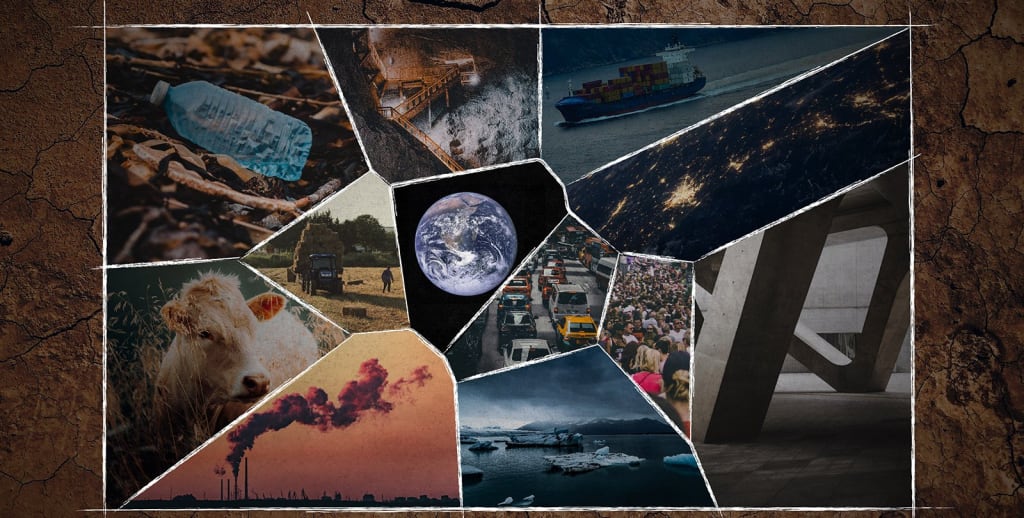
The pursuit of economic growth and technological advancement has brought prosperity, but it has also led to deforestation, pollution, and climate change. Sustainability, the practice of meeting present needs without compromising future generations' ability to meet theirs, has become a crucial global goal. This article explores human impact on the environment and strategies for achieving sustainability.
Human Impact on the Environment
Human impact on the environment can be categorized into various domains, each of which presents significant challenges.
Deforestation and Biodiversity Loss
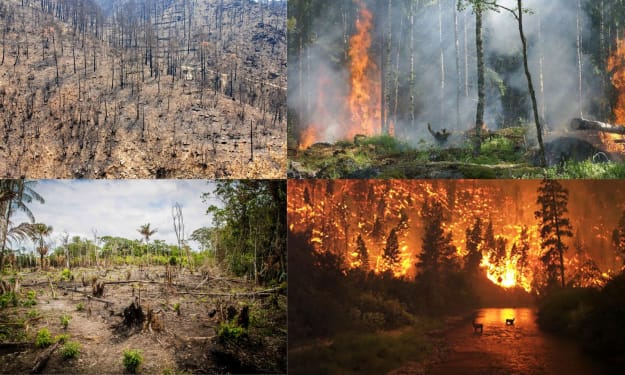
Deforestation is a major environmental issue driven by agriculture, urbanization, and logging. Forests are home to over 80% of terrestrial species, and their destruction leads to biodiversity loss. Habitat destruction forces animals to migrate or face extinction, disrupting ecosystems and food chains. The Amazon rainforest, often called the “lungs of the Earth,” has suffered extensive deforestation, contributing to carbon emissions and climate change.
Climate Change and Global Warming
The burning of fossil fuels such as coal, oil, and gas releases greenhouse gases (GHGs) like carbon dioxide (CO2) and methane (CH4). These gases trap heat in the atmosphere, leading to rising global temperatures, melting ice caps, and extreme weather events. Industrial activities, deforestation, and excessive energy consumption have accelerated climate change, posing threats to agriculture, water availability, and human health.
Pollution and Waste Generation
Pollution, in its many forms—air, water, and soil—has reached alarming levels. Industrial emissions and vehicular exhaust contribute to air pollution, leading to respiratory diseases. Plastic waste contaminates oceans, harming marine life, while chemical fertilizers degrade soil health. Additionally, electronic waste (e-waste) has surged due to rapid technological advancements, causing toxic heavy metal contamination.
Water Scarcity and Overconsumption
Freshwater resources are dwindling due to overuse, pollution, and climate change. Agriculture accounts for nearly 70% of global freshwater consumption. Over-extraction of groundwater leads to aquifer depletion, affecting both human and ecological systems. In many regions, water scarcity threatens food production, hygiene, and overall human being.
Strategies for Sustainability
Achieving sustainability requires collective action from governments, businesses, and individuals. Several strategies can mitigate human impact on the environment.
Renewable Energy Transition
Replacing fossil fuels with renewable energy sources like solar, wind, and hydroelectric power can significantly reduce greenhouse gas emissions. Investment in clean energy infrastructure can provide sustainable alternatives to traditional power generation while creating jobs and boosting economies.
Afforestation and Reforestation
Planting trees and restoring degraded forests can help absorb carbon dioxide, improve air quality, and preserve biodiversity. Governments and environmental organizations worldwide are implementing afforestation programs to counteract deforestation's negative effects.
Sustainable Agriculture
Adopting sustainable farming practices, such as organic farming, crop rotation, and precision agriculture, reduces environmental impact while maintaining food security. Reducing the use of chemical fertilizers and pesticides preserves soil health and prevents water contamination.
Waste Management and Recycling
Efficient waste management systems, including recycling and composting, can minimize pollution. Reducing single-use plastics, promoting biodegradable packaging, and encouraging circular economies ensure that resources are used efficiently and waste is minimized.
Water Conservation and Management
Implementing water conservation techniques, such as rainwater harvesting, efficient irrigation systems, and wastewater treatment, ensures sustainable water use. Public awareness campaigns can educate communities about responsible water consumption.
Eco-Friendly Urban Planning
Sustainable urban development involves creating green spaces, improving public transportation, and constructing energy-efficient buildings. Smart city initiatives incorporate renewable energy, efficient waste disposal, and eco-friendly infrastructure to minimize the ecological footprint of urban areas.
Environmental Policies and International Cooperation
Governments play a pivotal role in enforcing environmental policies. International agreements, such as the Paris Agreement, aim to reduce carbon emissions and combat climate change. Strict regulations on industrial pollution, carbon taxation, and incentives for sustainable practices encourage businesses to adopt eco-friendly models.
Individual Responsibility and Action
Every individual has a role to play in promoting sustainability. Simple actions, such as reducing energy consumption, using public transport, practicing minimalism, and supporting eco-friendly brands, contribute to a healthier planet. Adopting a plant-based diet or reducing meat consumption can also lower carbon footprints, as livestock farming is a major contributor to greenhouse gas emissions.
IN THE END
Human impact on the environment has been profound, but solutions exist to mitigate damage and promote sustainability. Through renewable energy, conservation efforts, sustainable policies, and responsible individual actions, humanity can work towards a greener and healthier planet. The transition to sustainability requires commitment and collaboration at all levels, ensuring that future generations inherit a world capable of supporting life in harmony with nature. As stewards of the Earth, it is our duty to protect and preserve it for generations to come.
About the Creator
Badhan Sen
Myself Badhan, I am a professional writer.I like to share some stories with my friends.
Keep reading
More stories from Badhan Sen and writers in Earth and other communities.
Invasive species and ecological disruption
Invasive species often thrive in new environments due to a lack of natural predators, competitors, or diseases that would normally regulate their populations. While some introduced species do not cause harm, others can become invasive, leading to significant ecological, economic, and social consequences. The disruption caused by invasive species can threaten biodiversity, alter ecosystems, and negatively impact human activities such as agriculture and fisheries.
By Badhan Senabout a year ago in Earth
Low Honey Harvest Expected as North Island Beekeepers Grapple With Storm Effects
Beekeepers across New Zealand’s North Island are bracing for one of the weakest honey harvests in years as the lingering impacts of severe storms continue to disrupt flowering cycles, damage hives, and strain an industry already under pressure from rising costs and environmental challenges. Unseasonal rainfall, strong winds, and repeated flooding events over recent months have left many apiarists facing reduced nectar flows and delayed hive recovery. Regions that normally provide abundant manuka and clover blooms have seen flowering patterns thrown off balance, cutting into the peak production period that beekeepers rely on for much of their annual income. “This season has been incredibly difficult,” said one commercial beekeeper operating in Hawke’s Bay. “We lost access to several sites because roads were washed out, and even where hives survived, the bees haven’t had consistent weather to forage properly.” Storm Damage and Disrupted Bloom Cycles The North Island experienced a series of intense storms that damaged farmland, forests, and coastal areas. For beekeepers, the consequences go beyond physical destruction of equipment. Flooding saturated soils and uprooted vegetation, while prolonged cloud cover reduced sunlight necessary for plants to produce nectar. Botanists and agricultural scientists say flowering plants are highly sensitive to weather patterns. When storms arrive during crucial blooming windows, nectar production can drop sharply. “Bees need stable conditions to collect nectar,” explained an environmental researcher at a New Zealand agricultural institute. “If rain washes pollen away or temperatures stay too low, flowers simply don’t provide enough resources.” In areas such as Northland and Waikato, beekeepers report hive productivity down by as much as 30 to 40 percent compared with average seasons. Some smaller operators fear they may not harvest enough honey to cover operational expenses. Economic Pressure on the Industry The beekeeping sector has already been grappling with challenges including fluctuating manuka honey prices, increased biosecurity requirements, and rising fuel and transport costs. A low harvest year adds further strain to businesses that rely heavily on exports. Manuka honey remains one of New Zealand’s most valuable agricultural exports, with international demand particularly strong in Asian and European markets. However, reduced supply could push prices higher, potentially benefiting some producers while limiting access for smaller exporters. “For large companies, there may be ways to absorb the losses,” said an industry representative. “But for family-run operations, this could be a make-or-break season.” Some beekeepers are considering scaling back hive numbers or shifting locations next year to avoid areas more vulnerable to extreme weather. Others are exploring diversification into pollination services for crops such as kiwifruit and apples to offset lost honey revenue. Impact on Bee Health Beyond production losses, bee health has also suffered. Wet conditions increase the risk of fungal diseases inside hives, while weakened colonies are more susceptible to pests such as varroa mites. Veterinary experts warn that stressed bees may struggle to survive winter if they enter the colder months with insufficient food reserves. Beekeepers are now spending more on supplemental feeding using sugar syrup and protein patties to keep colonies alive. “We’re not just losing honey,” one apiarist said. “We’re spending more to keep the bees healthy, and that cuts into any profit we might make.” Climate Change and Long-Term Risks Scientists link the increasing frequency and intensity of storms to broader climate change trends. Warmer oceans and shifting weather patterns are making extreme rainfall events more common in New Zealand, raising concerns about the long-term stability of industries dependent on predictable seasons. Agricultural economists argue that beekeeping is particularly vulnerable because it depends on both plant health and insect behavior, two systems sensitive to environmental stress. “This season may be a warning sign,” said a climate policy analyst. “If storms continue at this pace, the industry will need stronger adaptation strategies, such as moving hives more frequently or planting storm-resistant forage crops.” Government agencies are monitoring the situation closely. Some regional councils are assessing whether emergency assistance or recovery grants may be needed for affected farmers and beekeepers. Community and Environmental Role Beekeepers play a critical role in pollination, supporting food production far beyond honey. Crops such as berries, avocados, and squash rely heavily on bees, and reduced hive numbers could affect yields next year. Local farming communities have already reported lower pollination activity in some storm-hit districts, raising concerns about knock-on effects for the wider agricultural economy. Environmental groups stress that protecting bee populations is essential not only for economic reasons but for biodiversity. Native plants depend on healthy pollinator networks to regenerate after disasters. “Bees are part of the recovery process,” said a conservation spokesperson. “When storms damage ecosystems, pollinators help bring them back to life.” Looking Ahead Despite the grim outlook, many beekeepers remain cautiously hopeful. Weather forecasts suggest more stable conditions in the coming months, which could allow late-season flowering to provide some relief. However, expectations remain low compared with previous years. Industry leaders are urging collaboration between scientists, policymakers, and producers to build resilience against future storms. Ideas include expanding research into climate-resistant plants, improving hive design, and developing early-warning systems for extreme weather.
By Fiaz Ahmed 5 days ago in Earth
Why India's Water Is Vanishing
Imagine standing in a vast field that once bloomed with lush green crops, now reduced to a mosaic of deep cracks under a relentless sun. A farmer tilts his head back, sipping the last drops from a clay pot, his face etched with worry. This isn't a scene from a distant dystopia it's the reality for millions in rural India today. Groundwater, the invisible lifeline that sustains over 60% of India's irrigated agriculture and provides drinking water to countless households, is disappearing at an alarming rate. India is the world's largest user of groundwater, extracting more than the United States and China combined. Yet, this precious resource is being depleted faster than nature can replenish it, creating a silent crisis that threatens food security, livelihoods, and the environment.
By Arjun. S. Gaikwadabout 15 hours ago in Earth


Comments (1)
How true your article is to the world around us, but one must get people to listen. Good job.