
Deep-Sea Volcano Discovered Alive and Covered in Mystery Eggs
Researchers have found an ancient underwater volcano off Canada's coast, blanketed with up to a million mysterious eggs

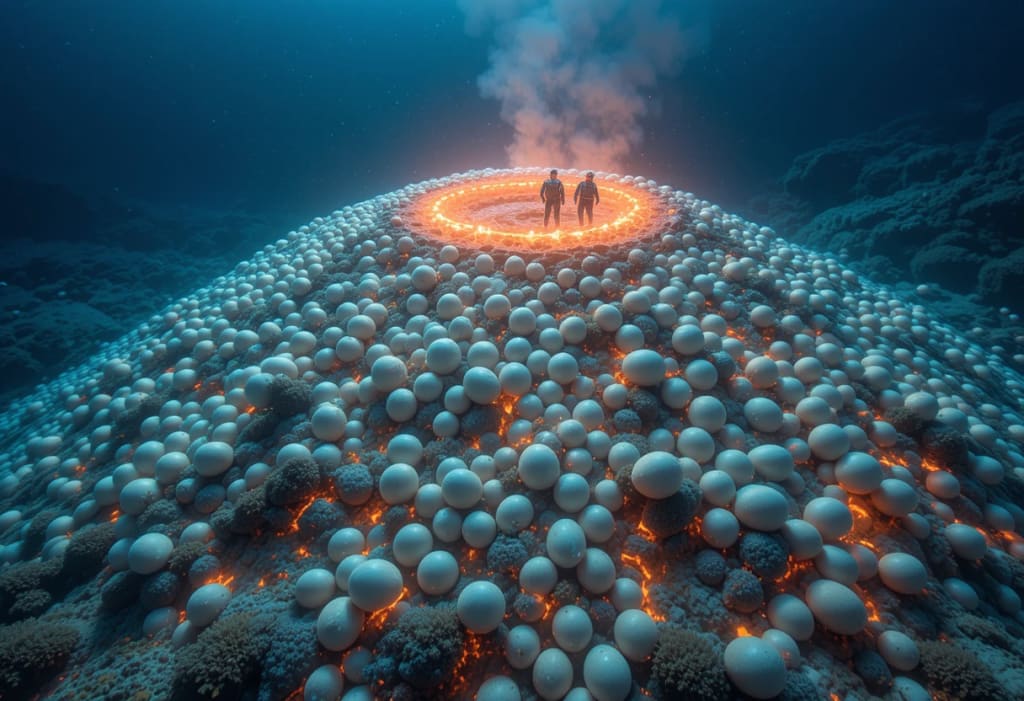
The ocean has a way of throwing curveballs at even the most seasoned explorers. A group of marine researchers set out to examine what they believed was a dormant underwater volcano, buried deep in the Pacific, lifeless and forgotten. What they found instead rewrote everything they thought they knew.
Beneath nearly a mile of crushing water pressure, this ancient seamount was not only active but teeming with unexpected life. At its summit, something extraordinary lay waiting to be uncovered. Thousands, if not a million, of massive eggs blanketed the volcanic rock, creating a sight that left scientists speechless. These weren’t just any eggs. They belonged to the elusive Pacific white skate, a deep-sea species related to sharks and rays. And this was no accident. Something about the volcano made it the perfect, almost sacred, nursery for these creatures.
The sheer size of the eggs was enough to baffle researchers. Each one measured around 1.5 feet, far larger than most deep-sea eggs ever recorded. But what made this discovery even more incredible was the volcano itself. Rather than being cold and barren, it was very much alive. Warm, mineral-rich water was steadily leaking from its cracks, creating an almost otherworldly environment. While most deep-sea creatures live in extreme cold, these skates had seemingly found a secret weapon. The warmth from the volcano may have been speeding up their development, giving them a head start in an ocean filled with dangers.
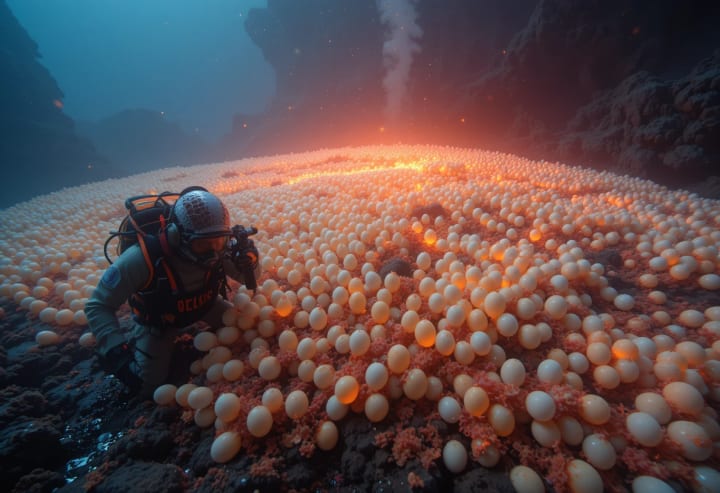
This discovery raises more questions than it answers. How long have these creatures been using this underwater volcano as a breeding ground? Have other deep-sea species discovered this hidden oasis? The ocean is full of mysteries, but finding a giant underwater volcano swarming with eggs is not something that happens every day.
This discovery underscores the intricate dynamics of marine ecosystems. For those interested in delving deeper into the complexities of marine life, 'Marine Biology: Function, Biodiversity, Ecology' by Jeffrey S. Levinton offers a comprehensive overview
One of the most astonishing aspects of this find is the idea that volcanoes, usually associated with destruction, could actually be giving life instead. This changes the way scientists view deep-sea ecosystems. It proves that life finds a way, even in the harshest and most unexpected conditions. The Pacific white skate is known to lay its eggs in deep-sea areas, but no one expected them to be concentrated in such massive numbers around an active volcanic structure. The heat from the seamount could be significantly reducing the long incubation period these eggs typically require. Without this natural heater, some skates would take up to four years to hatch, an almost impossible wait in the unpredictable depths of the ocean.
The footage captured during the expedition stunned marine experts worldwide. Seeing an entire summit coated in eggs, each one strategically placed along the warmest spots of the volcano, was unlike anything ever recorded. This wasn’t just a random occurrence. It was a well-calculated survival strategy, proof of nature’s incredible adaptability. The skates had instinctively selected a location that increased their offspring’s chances of survival, using the volcano as a natural incubator.
The implications of this discovery stretch far beyond the world of marine biology. If one species has learned to harness volcanic energy to survive, how many others might be doing the same? Deep-sea ecosystems remain one of the least explored places on Earth, yet they hold some of the most bizarre and fascinating survival stories. Every new expedition pushes the boundaries of human knowledge, proving that the ocean is far from understood.
As breathtaking as this discovery is, it also serves as a wake-up call. Deep-sea habitats are facing increasing threats from human activity, including deep-sea mining, pollution, and climate change. Scientists worry that without proper protection, extraordinary places like this could be disturbed or even destroyed before their secrets are fully understood. The skates have relied on this hidden sanctuary for generations, but how much longer will it remain untouched?
This volcano, now named by researchers as a hotspot for marine reproduction, adds another layer to the ever-growing realization that the deep sea is far more dynamic than previously thought. It’s not just a cold, dark void. It’s a thriving, evolving world where life bends the rules to survive.
Scientists plan to continue studying this remarkable site, using advanced deep-sea technology to uncover more about the behaviors and survival mechanisms of the skates. There’s still so much to learn, and every new discovery proves that the ocean holds far more than we ever imagined.
Advanced equipment, such as the GENEINNO 500w Electric Underwater Sea Scooter Trident Diving Equipment, facilitates efficient navigation and detailed exploration of submerged volcanic structures
For those who dream of uncovering the mysteries of the deep, this find is a reminder that the most astonishing discoveries are often where we least expect them. The ocean is alive, evolving, and full of secrets waiting to be revealed.
About the Creator
Ojo
🔍 I explore anything that matters—because the best discoveries don’t fit into a box...
Evidence Suggests a Large Hidden Planet May Exist in Our Solar System
For centuries, scientists believed the major members of our Solar System were fully known. From the rocky inner planets to the gas giants and icy bodies beyond, astronomers thought they had mapped most of the significant objects orbiting the Sun. However, new research by American scientists suggests that a large, hidden planet may still be lurking in the distant reaches of our Solar System.
By Irshad Abbasi 5 days ago in Earth




Comments
There are no comments for this story
Be the first to respond and start the conversation.