
Cyclone Stories from Around the World
Firsthand Accounts of Survivors and Heroes


Cyclones are a powerful and destructive force of nature that have impacted communities around the world for centuries. From devastating hurricanes in the United States to the tropical storms that regularly hit countries in Southeast Asia, cyclones are a reminder of the awesome power of the natural world. Despite their destructive force, however, cyclones have also inspired stories of courage, resilience, and hope from people who have experienced their power firsthand.
In this article, we'll be exploring some of the most compelling "Cyclone Stories from Around the World," sharing personal accounts, historical perspectives, and international viewpoints to give readers a glimpse into the impact of these storms on communities across the globe. From the incredible stories of survival to the inspiring tales of recovery and resilience, these stories offer a unique window into the human experience of one of nature's most powerful forces. And while the devastation caused by cyclones can be overwhelming, we hope that these stories will also offer a glimmer of hope and inspiration for those who are impacted by these storms
Climate Change and Cyclones:
As we continue to experience the effects of climate change, it's becoming increasingly clear that our planet is facing a new reality when it comes to natural disasters like cyclones. In recent years, we've seen record-breaking storms in regions like the Caribbean, the Pacific, and the Indian Ocean, causing widespread devastation and loss of life. These storms are not only more frequent and more powerful than in the past, but they are also impacting areas that have not historically experienced cyclones, making it clear that we are dealing with a new and unpredictable threat.
At the root of this issue is the way in which climate change is altering our planet's weather patterns. As sea levels rise and the planet warms, there is more energy available for cyclones to form and intensify. This means that even relatively weak storms can become powerful and dangerous, particularly in areas where communities are not prepared to deal with the impacts of these events. In addition to the immediate damage caused by cyclones, the long-term effects of rising sea levels can lead to increased flooding and erosion, causing significant economic and social impacts for coastal communities around the world.
While the impacts of climate change on cyclones are undoubtedly significant, there is also reason to be optimistic. From global initiatives like the Paris Agreement to local efforts to reduce greenhouse gas emissions, there are many different strategies being implemented to address the root causes of climate change. In addition, community-based adaptation programs are working to help vulnerable communities prepare for the impacts of cyclones and other natural disasters, building resilience and increasing the chances of survival in the face of these powerful storms.
As we continue to grapple with the impacts of climate change on cyclones, it's clear that we are dealing with a complex and evolving challenge. But by working together, we can build a more sustainable and resilient future for ourselves and for generations to come.
Cyclone Preparedness
When it comes to dealing with the impacts of cyclones, one of the most important factors is preparation. By taking steps to prepare for the arrival of a cyclone, communities and individuals can minimize the risks to life and property and increase their chances of survival. Here are some of the key topics to consider when it comes to cyclone preparednessn
Early Warning Systems: One of the most important aspects of cyclone preparedness is having a strong and reliable early warning system. This can include everything from local news broadcasts to national emergency alerts, providing communities with the information they need to prepare for the storm and evacuate if necessary.
Emergency Supplies: In order to weather a cyclone, it's important to have a stockpile of emergency supplies on hand. This can include everything from food and water to first aid kits, flashlights, and other essential items. By having these supplies ready before the storm hits, individuals and families can ensure that they have everything they need to stay safe and healthy.
Evacuation Plans: In some cases, the best way to prepare for a cyclone is to evacuate the area entirely. This requires careful planning, including identifying evacuation routes and shelters, making transportation arrangements, and communicating with family members and loved ones.
Secure Property: In addition to taking care of themselves, individuals and families also need to take steps to secure their property in advance of a cyclone. This can include everything from boarding up windows to tying down outdoor furniture, ensuring that potential hazards are minimized and damage is kept to a minimum.
Post-Storm Cleanup: Finally, it's important to have a plan for dealing with the aftermath of a cyclone. This can include everything from cleaning up debris and fallen trees to assessing damage and filing insurance claims. By having a clear plan in place, communities can ensure that they are able to recover and rebuild in the wake of a devastating storm.
About the Creator
Trump’s Greenland Threats Push Europe Toward Divorcing America
When you think of Greenland, the first things that probably come to mind are icebergs, polar bears, and maybe some adventurous explorers. But lately, Greenland has become the center of a major diplomatic drama — one that’s forcing Europe to question its long-standing relationship with the United States. And the spark? Donald Trump’s threats over Greenland. The Controversy: Trump’s Unusual Move Back in January 2026, Trump shocked the world again, not with an election campaign but with a bold — and many would say bizarre — plan to acquire Greenland. But he didn’t stop at just “expressing interest.” He threatened eight European nations with tariffs — starting at 10% and potentially climbing to 25% — unless Denmark agreed to sell Greenland to the U.S. Yes, you read that right: tariffs on allies to buy a remote Arctic island. For Europe, this was more than shocking — it felt like a betrayal from a partner they’ve relied on for decades. Europe’s Response: Outrage and Solidarity European leaders didn’t hold back. Germany, France, Norway, the UK, and others banded together to condemn Trump’s approach. The message was clear: Europe won’t be blackmailed. Even usually cautious leaders spoke up. Norway’s Prime Minister bluntly said, “Threats have no place among allies.” Meanwhile, European Commission President Ursula von der Leyen emphasized that tariffs between allies “have no place” and could undermine decades of cooperation. This isn’t just a political disagreement. Europe sees this as a test of trust, sovereignty, and alliance reliability. Why Greenland Matters At first glance, Greenland might seem like just a frozen island. But strategically, it’s a big deal: Location: Greenland sits between North America and Europe, controlling key air and sea routes. Military Importance: It hosts radar and U.S. military infrastructure critical to early-warning systems. Resources: Beneath the ice lie minerals and rare earth elements that the world desperately needs. For Europe, Greenland is also about principle. The island belongs to Denmark and the Greenlandic people, not Washington. Europe’s support for Denmark shows a broader commitment to respecting sovereignty — a principle that Trump’s threats directly challenged. The Bigger Picture: A Crisis of Trust Greenland may just be the tip of the iceberg. For years, European nations have felt frustrated by U.S. policies that seemed unpredictable — whether it’s climate agreements, trade deals, or security commitments. Trump’s Greenland threats amplified these frustrations. Suddenly, Europe is questioning something fundamental: Can the U.S. be trusted as a long-term partner? Some European leaders have even started talking about a kind of “divorce” from the U.S. — not literally leaving NATO, but rethinking how dependent they should be on America for security and strategic decisions. Europe’s Path Toward Strategic Independence This Greenland drama is accelerating discussions about European strategic autonomy. Basically, Europe is asking: Should we be able to protect our own interests without always relying on the U.S.? The EU has long talked about building stronger defense capabilities and investing more in its own military, but progress has been slow. Greenland might just be the wake-up call that finally pushes Europe to act. What’s Next? So, what happens from here? Europe isn’t just going to sit quietly. Leaders are looking at: Economic counter-measures like tariffs on U.S. goods Strengthening European defense and security collaboration Reasserting Europe’s role on the global stage, with less reliance on Washington Even if Europe doesn’t fully “divorce” America, Greenland is changing the terms of the transatlantic partnership. Europe will now demand more respect, clearer rules, and recognition of its sovereignty — and they’re not afraid to make that clear. Why This Matters to All of Us You might wonder why this matters if you’re not in Europe or the U.S. Greenland may seem remote, but this story is about alliances, trust, and how global power is shifting. The way Europe responds could reshape the world order, affect trade, military cooperation, and even the global economy. And for anyone following U.S.-European relations, it’s a reminder that sometimes the smallest places — even a frozen island — can have huge global consequences. Bottom line: Trump’s Greenland threats aren’t just a bizarre footnote in history. They’re a wake-up call for Europe, forcing the continent to rethink its ties with America and consider a future where it can act independently — strategically, economically, and politically. Greenland, icy as it is, might just melt the old rules of alliance forever.
By Muhammad Hassan3 days ago in Earth
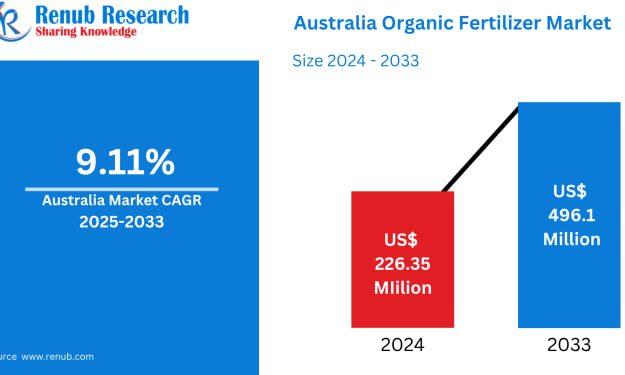
Australia Organic Fertilizer Market Size and Forecast 2025–2033
Australia Organic Fertilizer Market Outlook The Australia Organic Fertilizer Market is entering a strong growth phase as sustainability becomes a core priority for farmers, consumers, and policymakers alike. According to Renub Research, the market is expected to reach US$ 496.1 million by 2033, rising from US$ 226.35 million in 2024, expanding at a CAGR of 9.11% from 2025 to 2033.
By jaiklin Fanandishabout an hour ago in Earth
The CEO of Everything
They say "jack of all trades, master of none," but they forgot to mention the part where the jack of all trades is also the camera woman, the makeup artist, and the person currently yelling at a tangled Wii microphone cable in a her own bathroom while recording herself singing and trying to make it look realistic and professional. (As professional as you can make it with nothing but a cell phone camera and a mic that doesn't work)
By Sara Wilson4 days ago in Humans



Comments
There are no comments for this story
Be the first to respond and start the conversation.