

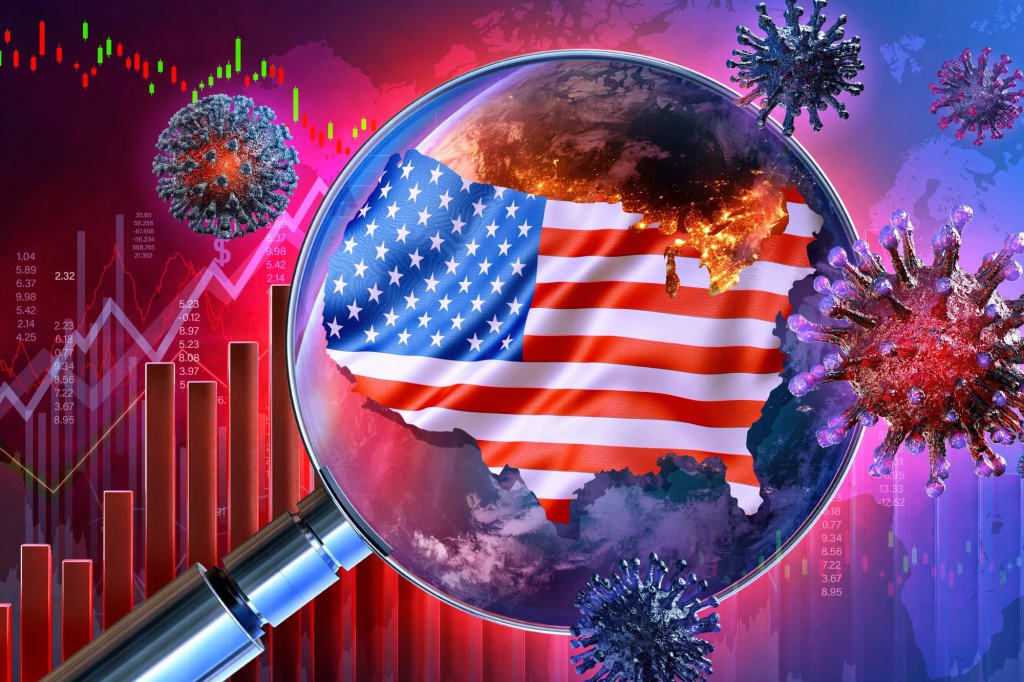
The COVID-19 pandemic has had a profound impact on the United States and the world as a whole. It first emerged in Wuhan, China in late 2019 and quickly spread globally, leading to the declaration of a pandemic by the World Health Organization in March 2020.
In the US, the first cases were reported in Washington state in January 2020, and the virus quickly spread across the country. The initial response to the pandemic was criticized for being slow and disorganized, with a shortage of personal protective equipment (PPE) and testing supplies. The country also struggled to coordinate a nationwide response, with varying levels of restrictions and mandates imposed by individual states and localities.
The impact of COVID-19 on the US economy was severe, with millions of jobs lost and small businesses forced to close their doors. The federal government stepped in with several relief packages, including the CARES Act, which provided economic assistance to individuals and businesses affected by the pandemic.
The healthcare system was also put to the test, with hospitals and healthcare workers facing overwhelming demand for care, PPE, and testing supplies. Despite the efforts of healthcare workers, the pandemic resulted in a high number of fatalities, with over 500,000 deaths in the US as of early 2023.
The COVID-19 pandemic has also exacerbated existing inequalities in the US, with communities of color and low-income communities being disproportionately affected. This is due to a combination of factors, including underlying health conditions, exposure to high-risk jobs, and a lack of access to quality healthcare.
In response to the pandemic, the US has rolled out a massive vaccine campaign, with multiple vaccines being approved for emergency use. The vaccine rollout has been met with some challenges, including vaccine hesitancy, logistical challenges, and limited access to vaccines in certain communities.
Despite the challenges, the US has made significant progress in controlling the spread of the virus, and the rate of new cases and hospitalizations has declined steadily since the peak of the pandemic in early 2021. The increasing availability of vaccines and continued adherence to health guidelines such as wearing masks, practicing social distancing, and getting tested will be crucial in bringing the pandemic to an end.
In conclusion, the COVID-19 pandemic has had a profound impact on the US, affecting the economy, healthcare system, and exacerbating existing inequalities. The US response to the pandemic has been a mix of success and challenges, but with continued efforts and cooperation from the public, there is hope for a return to a more normal state in the near future.
Conclusion

The COVID-19 pandemic has had a profound impact on the United States, affecting nearly every aspect of daily life, from the economy and healthcare system to individual well-being. The country has seen high numbers of cases and deaths, as well as significant strain on healthcare facilities and workers. However, the rollout of vaccines has brought new hope for controlling the spread of the virus and eventually ending the pandemic.
The response to the pandemic has been complex, with varying approaches and policies implemented at the local, state, and federal levels. The pandemic has also highlighted pre-existing disparities and inequities in the healthcare system, with communities of color being disproportionately affected.
As the country continues to grapple with the pandemic, it will be important to maintain progress in vaccine distribution and continue following health guidelines such as wearing masks, social distancing, and avoiding large gatherings. It will also be important to address the long-term effects of the pandemic, including economic recovery, mental health support, and addressing healthcare disparities.
In conclusion, while the exact end of the COVID-19 pandemic in the United States remains uncertain, the continued rollout of vaccines and increased public cooperation offer hope for a return to a more normal state in the future. However, it will take a sustained and comprehensive effort to address the various challenges posed by the pandemic and ensure a safe and healthy future for all.
About the Creator
Keep reading
More stories from Sumit mittal and writers in Earth and other communities.
FLOWERS
Flowers have been a source of beauty and fascination for humans for thousands of years. In addition to their aesthetic value, many flowers also offer a wide range of health benefits. Here are some of the most popular types of flowers and the benefits they provide:
By Sumit mittal3 years ago in Earth
Why Everyone Is Talking About the Next Solar Maximum
The Sun looks calm from 93 million miles away. It rises. It sets. It warms our skin and fades behind buildings like it always has. But beneath that steady glow, something is building — a cycle of magnetic chaos that peaks every eleven years.
By Abubakar2203 days ago in Earth




Comments
There are no comments for this story
Be the first to respond and start the conversation.