
Continental Drift and the Future of Supercontinents: Unveiling Earth's Dynamic Evolution
From Pangea to the Unknown: Exploring Plate Tectonics, Supercontinent Cycles, and their Environmental Implications

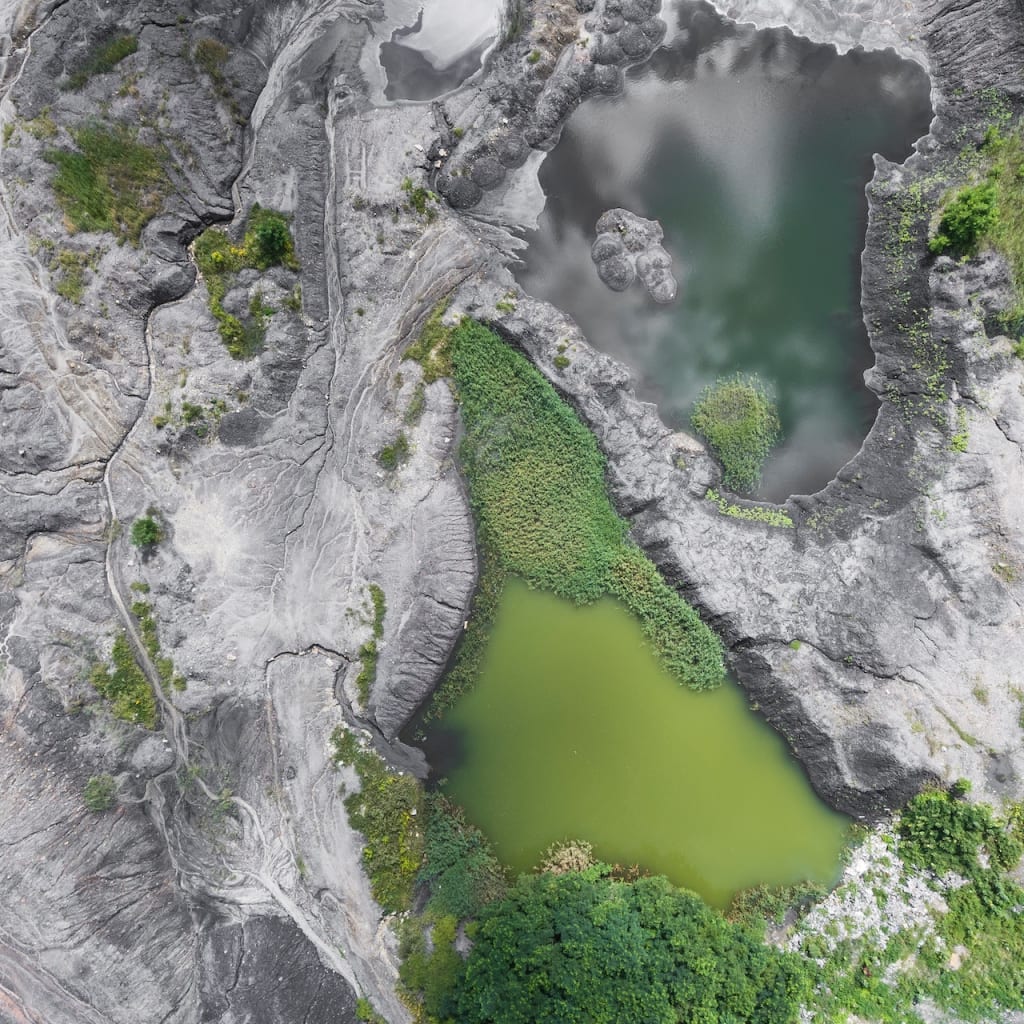
In the early 20th century, Alfred Wegener, a meteorologist, made a groundbreaking observation. He noticed remarkable similarities between the coastlines of Africa and South America, leading him to propose the controversial theory of Continental Drift. This theory challenged the prevailing belief that Earth's continents had remained stationary for millennia. However, it took nearly half a century for Wegener's advocates to convince the broader scientific community of its validity. Today, we understand an even more remarkable truth—Pangea, the supercontinent, was just one chapter in an ancient saga of interconnected landmasses, and there are more to come.
Wegener's Theory of Continental Drift laid the foundation for our modern understanding of plate tectonics. It reveals that Earth's crust consists of vast, fragmented plates that float and shift over a layer of partially molten rock called the mantle. Although these plates move at a relatively slow pace of around 2.5 to 10 centimeters per year, their incremental movements shape the surface of our planet. To predict the emergence of a new supercontinent, scientists study the trajectory of these plates by examining their past movements.
One method involves measuring changes in Earth's magnetic field to track the position of continents over time. When molten rock cools and solidifies, its magnetic minerals preserve the magnetic field's orientation, offering insights into the latitude at which the rock was formed. However, this approach has limitations. Magnetic data does not provide information about a plate's longitude, and it can be lost through reheating during volcanic activity or continental collisions. Geologists must employ alternative methods to reconstruct the positions of continents.
By dating local fossils and comparing them to the global fossil record, scientists can identify previously connected regions. They also analyze cracks and deformations in the Earth's crust, which can sometimes be traced across different plates. These techniques have enabled researchers to piece together a relatively reliable history of plate movements, unveiling a pattern known as the Wilson Cycle. This cycle predicts how continents diverge and reassemble, suggesting that the next supercontinent will form in approximately 50 to 250 million years. While the shape and size of this future landmass remain uncertain, its formation will undoubtedly have profound implications beyond national borders.
The collision of plates in the past has triggered significant environmental changes. When the Rodinia supercontinent fragmented around 750 million years ago, large landmasses became susceptible to weathering. The newly exposed rock absorbed more carbon dioxide from rainfall, leading to a substantial decrease in atmospheric CO2. This prolonged period, known as Snowball Earth, eventually ended as volcanic activity released enough CO2 to melt the ice, but the process took millions of years. Conversely, the assembly of the next supercontinent is more likely to cause global warming. Shifting plates and continental collisions could create and enlarge cracks in the Earth's crust, potentially releasing vast amounts of carbon and methane into the atmosphere. This influx of greenhouse gases would rapidly raise global temperatures, potentially triggering a mass extinction event. The scale of these cracks makes them extremely challenging to seal, and attempting to do so could create additional ruptures due to increased pressure.
Fortunately, we have at least 50 million years to find solutions to mitigate the environmental consequences of future supercontinent formation. Promising experiments in Iceland have explored the possibility of storing carbon in basalt, rapidly transforming greenhouse gases into solid rock. A global network of pipelines redirecting vented gases into basalt formations could potentially help reduce emissions and safeguard our supercontinental future.
As we unravel the secrets of Earth's dynamic evolution and prepare for the inevitable formation of new supercontinents, it is essential to recognize the delicate balance between geological forces and environmental impacts. Understanding these processes can guide us in developing innovative strategies to mitigate the potential risks and ensure a sustainable future for our planet and its inhabitants.
Henrik Leandro
About the Creator
Henrik Leandro Laukholm Solli
Free thinker, traveler and humanist <3
Keep reading
More stories from Henrik Leandro Laukholm Solli and writers in Earth and other communities.
The Horse's Journey: From Wild Creatures to Agents of History
For millennia, horses have enthralled humanity like no other creature. Their presence dominates ancient cave paintings that date back a staggering 30,000 years. But how did these majestic animals transition from being untamed beings to becoming companions that humans could harness and ride? This profound shift not only influenced the fate of civilizations but also left an indelible mark on history.
By Henrik Leandro Laukholm Solli3 years ago in Earth
Asia’s Second-Best Island in DestinAsian Ranking
Vietnam’s largest island, Phu Quoc, has achieved a remarkable milestone in global tourism by being ranked the second-best island in Asia in the prestigious DestinAsian Readers’ Choice Awards 2026, surpassing the world-famous Maldives. The recognition marks a major moment for Vietnam’s tourism industry and highlights the island’s rapid rise as one of the most desirable tropical destinations in the world. 
By Irshad Abbasi a day ago in Earth
Hottest in the Office
Dear Rafi, You’re very distracting to work around. For the first second I saw you the other day, I thought you were some type of executive. It took a moment to realize no, you were just the new guy, dressed up for the job he wants. Be still, my heart.
By Gabriel Shames3 days ago in Pride




Comments
There are no comments for this story
Be the first to respond and start the conversation.