
The Horse's Journey: From Wild Creatures to Agents of History
Tracing the Impact of Horses on Human Civilization and Cultural Transformation


For millennia, horses have enthralled humanity like no other creature. Their presence dominates ancient cave paintings that date back a staggering 30,000 years. But how did these majestic animals transition from being untamed beings to becoming companions that humans could harness and ride? This profound shift not only influenced the fate of civilizations but also left an indelible mark on history.
The origins of equids can be traced back to North America, where they first emerged. Around four million years ago, ancient equid species embarked on a journey across the Bering land bridge, eventually dispersing across Eurasia and Africa. Over time, these equids diversified into lineages that would evolve into the modern-day horses, donkeys, and zebras. Early humans, including the earliest inhabitants of the Americas, hunted wild horses, utilizing their bones as tools.
However, between 15,000 and 5,000 years ago, horses vanished from the archaeological record in the Americas. This disappearance can be attributed to a changing climate, hunting pressures from humans, and competition with bison. Nonetheless, horses would make a triumphant return in due course. Meanwhile, on the opposite side of the world, a momentous event occurred around 2,000 BCE: people inhabiting the western Eurasian steppe successfully domesticated horses.
While western Asia had already domesticated various animals and employed them for pulling carts, horses presented unique challenges due to their speed and unruliness. The steppe people developed a system consisting of bridles and bits, along with chariots equipped with lighter, spoked wheels. Horses swiftly became integrated into numerous ancient cultures, although horseback riding initially appeared to be less prevalent.
Archaeological findings indicate that early horse riders did not utilize structured saddles or stirrups, which sometimes led to skeletal alterations or injuries in both horses and riders. However, humans persisted in selectively breeding less aggressive horses with enhanced endurance and weight-bearing capacities. They also devised improved techniques and tools for better control and rider comfort.
Around 1000 BCE, cavalry units emerged in combat across various regions in Asia. Riders hailing from steppe and desert cultures gained renown for their equestrian skills. Ceremonial horse sacrifices became part of the funerary customs in certain cultures. One notable burial site from the 9th century BCE, attributed to the Scythians, contained the remains of approximately 200 horses adorned with riding gear.
In ancient China, officials recognized the strategic value of horses possessed by neighboring territories. Some coveted substantial numbers of these equines for their own empire. Around 100 BCE, the Chinese emperor reportedly dispatched a 30,000-strong army westward, laying siege to a city and eliminating its king, all to secure 3,000 of the coveted "heavenly horses" from Ferghana.
Between the 4th and 8th centuries CE, horsemen from the steppe spread riding technologies like stirrups, profoundly impacting diverse cultures. Nomadic groups eventually coalesced into unstoppable forces on horseback. The Mongol Empire ascended to power in the 13th century, conducting raids, trades, and the overthrow of empires across unimaginable distances. They established a horse-backed postal relay system that spanned over 60,000 kilometers. The empire's triumphs depended on the well-being of their horses, a fact well understood by their leaders. In 1252, before launching military campaigns, Möngke Khan sent officials ahead to ensure ample pastureland by prohibiting cattle grazing.
The presence of horses continued to expand, eventually giving rise to equestrian empires that extended southward into the Sahara. By the mid-14th century, the Mali Empire boasted a cavalry of over 10,000, commanding vast territories encompassing one million square kilometers in West Africa. Finally, by 1500, horses were reintroduced to the Americas. Rapidly escaping Spanish control, they became part of extensive trade networks among Indigenous peoples from the Pampas to the Great Plains. The subsequent processes of colonization and trade propelled horses further across the globe, solidifying their status as a widespread and indispensable means of travel and transportation well into the 20th century.
However, this transformation was not without challenges. Issues of hygiene and animal welfare emerged, particularly in urban centers. The advent of non-living modes of transport, such as the automobile, revolutionized many human settlements. Nevertheless, people have maintained their multifaceted relationships with horses, engaging in activities such as riding, herding, racing, and simply admiring them, across vast landscapes—from the steppes of Mongolia to the prairies of Montana. The timeless connection between humans and horses endures.
Henrik Leandro
About the Creator
Henrik Leandro Laukholm Solli
Free thinker, traveler and humanist <3
Keep reading
More stories from Henrik Leandro Laukholm Solli and writers in Earth and other communities.
Unveiling the Perils: The Dangers and Controversy Surrounding Lab Leaks
In the annals of biosecurity, the spring of 1979 marked a tragic incident in Sverdlovsk, USSR. It was a seemingly innocuous mistake—a clogged air filter removed from the ventilation system, left unreplaced by a lab worker. Unbeknownst to them, this negligence unleashed a silent killer. Anthrax, a deadly pathogen produced in massive quantities within the facility, drifted into the sky, resulting in the largest recorded outbreak of inhalation anthrax. The repercussions were devastating, claiming the lives of at least 64 individuals. While the Soviet bioweapons program stood in violation of international law, the incident brought to light the grave dangers of lab leaks. Today, concerns extend beyond state-sponsored bioweapons programs, as experts are haunted by an even more perilous prospect—a type of lab leak that could have catastrophic consequences. This article explores the controversial realm of bioengineering, shedding light on the risks associated with gain-of-function research and the urgent need for global biosecurity measures.
By Henrik Leandro Laukholm Solli3 years ago in Earth
Himalayas Bare and Rocky After Reduced Winter Snowfall, Scientists Warn
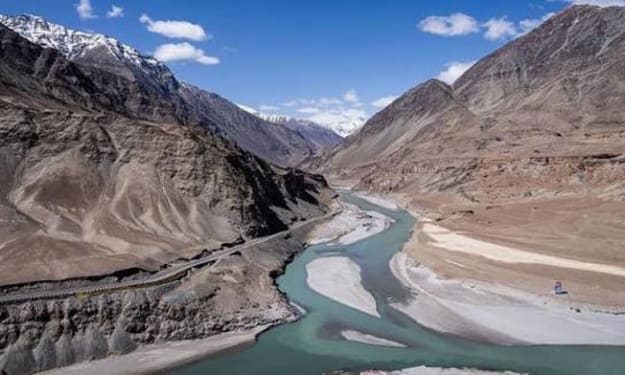
The Himalayas, often described as the world’s “Third Pole,” are facing a dramatic and worrying transformation. Scientists are warning that reduced winter snowfall is leaving vast stretches of the mountain range bare, rocky, and increasingly vulnerable to long-term environmental damage. Once known for their thick snow blankets and powerful glaciers, parts of the Himalayas are now showing exposed rock earlier than ever before—an alarming sign of climate stress in one of Earth’s most critical ecosystems. A Visible Change in the World’s Highest Mountains Winter snowfall plays a vital role in the Himalayan climate system. Snow acts as a protective layer, insulating glaciers and regulating the slow release of meltwater into rivers during warmer months. However, researchers monitoring satellite data and ground stations report that recent winters have brought significantly less snowfall across large areas of the range. As a result, snowlines are rising higher up the slopes, leaving lower and mid-altitude regions exposed. This has turned once-white mountain landscapes into expanses of dark rock, which absorb more heat from the sun, accelerating warming in a dangerous feedback loop. Why Reduced Snowfall Matters Snow is more than a scenic feature—it is essential to the health of Himalayan glaciers. When snowfall declines, glaciers lose their main source of replenishment. At the same time, exposed ice and rock melt faster under direct sunlight. Scientists warn that this imbalance is speeding up glacier retreat across the Himalayas. Many glaciers are now shrinking at rates not previously recorded, threatening the long-term stability of water systems that support nearly two billion people across South and Southeast Asia. Impact on Asia’s Major Rivers The Himalayas feed some of the world’s most important rivers, including the Indus, Ganges, Brahmaputra, Yangtze, and Mekong. These rivers depend on seasonal snow and ice melt to maintain consistent flow throughout the year. Reduced snowfall means less stored water for the dry season. In the short term, faster melting can cause floods and landslides. In the long term, however, shrinking glaciers could lead to water shortages, affecting agriculture, hydropower, and drinking supplies across multiple countries. A Growing Risk of Disasters Bare, rocky slopes are far more unstable than snow-covered ones. Snow helps bind loose material together, while exposed rock and soil increase the likelihood of landslides and avalanches. Scientists have already observed a rise in slope failures and glacial lake outburst floods in the region. As glaciers retreat, meltwater often accumulates in fragile lakes dammed by loose rock and ice. These lakes can burst suddenly, releasing destructive floods that threaten mountain communities and downstream infrastructure. Climate Change at the Core Researchers agree that climate change is the primary driver behind the declining snowfall. Rising global temperatures are altering weather patterns, causing more winter precipitation to fall as rain rather than snow. Even small temperature increases at high altitudes can drastically change how moisture behaves. Additionally, warming oceans and shifting atmospheric circulation are affecting the timing and intensity of winter storms that traditionally brought snow to the Himalayas. Effects on Local Communities and Wildlife Mountain communities that rely on predictable snowfall for farming, tourism, and water storage are already feeling the effects. Farmers report changes in planting cycles, while winter tourism has declined in some regions due to unreliable snow conditions. Wildlife is also under pressure. Species adapted to cold environments are losing habitat as snow cover shrinks. Plants that depend on snowmelt are struggling to survive in drier, warmer conditions, disrupting fragile alpine ecosystems. Scientists Call for Urgent Monitoring and Action Experts stress the importance of improved monitoring of snowfall, glacier health, and water flows across the Himalayan region. Better data can help governments plan for future water management challenges and disaster risks. At the same time, scientists emphasize that local adaptation alone is not enough. Reducing global greenhouse gas emissions remains critical to slowing temperature rise and preserving what remains of the Himalayan snow and ice. What the Future Holds If current trends continue, large parts of the Himalayas could see permanent changes within decades. Reduced snowfall and accelerating glacier loss may reshape landscapes, ecosystems, and human livelihoods on an unprecedented scale. The sight of bare, rocky Himalayan slopes is more than a visual change—it is a warning signal. The world’s highest mountains are responding rapidly to a warming planet, and the consequences will extend far beyond the peaks themselves.
By Fiaz Ahmed Brohi6 days ago in Earth
Nature’s Hidden Gems: Discovering the Rarest Flowers on Earth
Introduction: When Beauty Meets Rarity Nature is filled with wonders, but few are as captivating—and as elusive—as the rarest flowers on Earth. From enormous parasitic blooms to delicate orchids that appear only under precise conditions, these plants challenge our understanding of survival, evolution, and beauty.
By Ahmed aldeabella3 days ago in Earth



Comments
There are no comments for this story
Be the first to respond and start the conversation.