
"Climatic Changes and Religion"
“Exploring Faith-Based Perspectives on Environmental Responsibility”

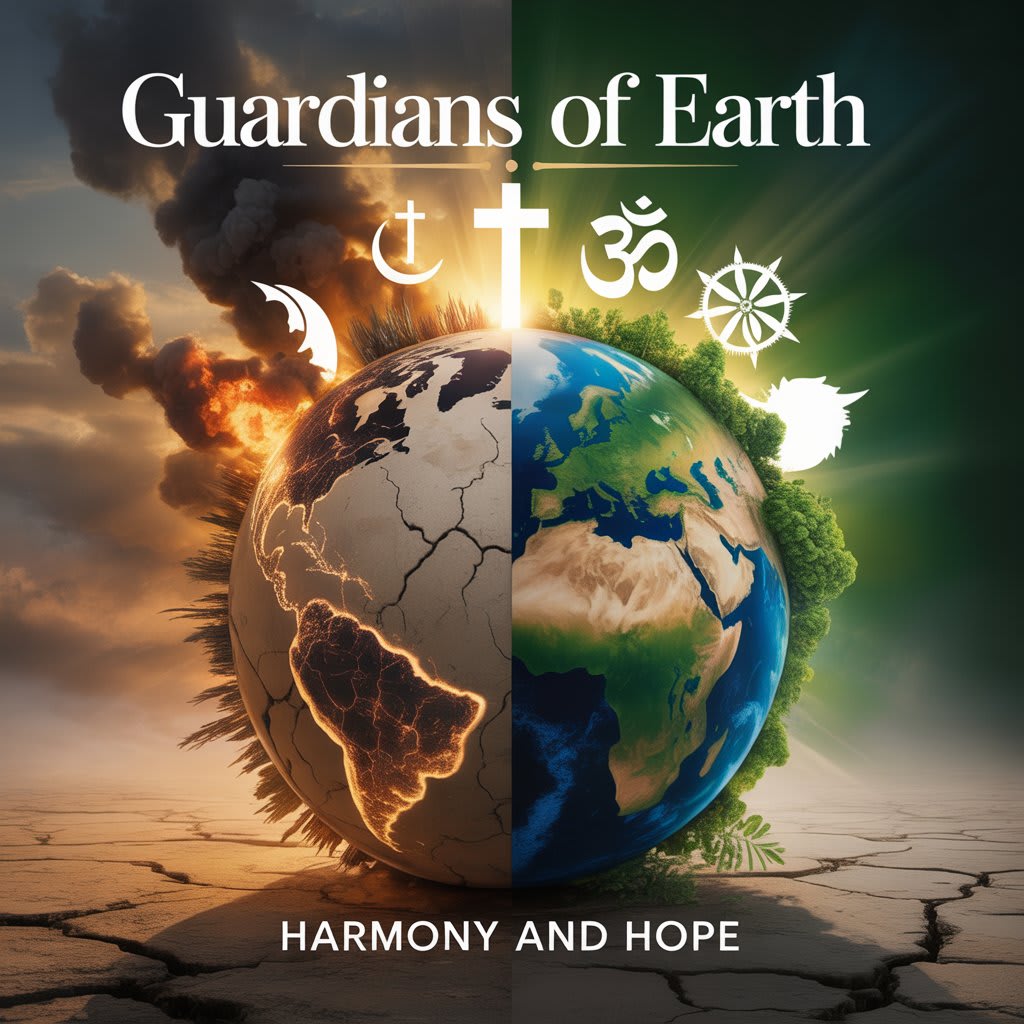
A Critical Analysis of Faith-Based Denial and Responsibility
Climate change is one of the greatest global threats of the 21st century. Rising sea levels, intense heat waves, prolonged droughts, and more frequent floods are no longer abstract predictions but realities confronting communities worldwide. Yet, despite overwhelming scientific evidence, many religious groups and individuals remain skeptical, dismissing climate change as either an exaggeration, a natural cycle, or worse, a punishment sent by God. This mindset, while rooted in faith, creates significant barriers to climate action. In this article, we critically analyze how religion can sometimes fuel denial of climate change, why this perspective is dangerous, and how religious frameworks can still be redirected toward constructive solutions.
Religion as a Lens for Understanding Disaster
Religious traditions have historically provided explanations for natural disasters. Floods, earthquakes, and plagues were often understood as divine punishments or tests of faith. In the modern context, this worldview persists: when devastating storms, droughts, or wildfires occur, some religious voices declare them as “acts of God” rather than consequences of human activity.
While faith can offer comfort during suffering, framing disasters exclusively as divine will has two consequences. First, it discourages responsibility by suggesting that nothing can be done to prevent such events. Second, it creates resistance to scientific explanations and solutions, fostering a culture of inaction.
For example, after major hurricanes in North America, certain preachers declared that such disasters were God’s punishment for moral decline. Similarly, in parts of the Middle East and South Asia, droughts and floods are sometimes attributed to divine anger rather than deforestation, overconsumption, or greenhouse gas emissions. This perception is not only misleading but also harmful, as it diverts attention away from human accountability.

Why Do Some Religious Groups Deny Climate Change?
Several reasons contribute to the denial or skepticism of climate change among religious communities:
Conflict with Theology: Accepting climate change as a human-driven phenomenon can seem to undermine the belief in God’s absolute control over creation. For some, acknowledging human responsibility for global environmental crises appears to challenge divine sovereignty.
Distrust of Science: In certain contexts, religion and science are seen as competing forces. If climate science is associated with secular or liberal agendas, religious groups may reject it to protect their worldview.
Fatalism: Many believers accept the idea of an inevitable “end of times.” Climate disasters are sometimes interpreted as signs of prophecy rather than preventable crises. This fatalistic approach reduces urgency for action.
Political and Economic Influences: In some regions, religious groups align with political movements that downplay environmental regulation. This alignment reinforces climate denial, cloaked under religious justifications.
The Dangers of Faith-Based Denial
Religious denial of climate change carries serious consequences:
Delays in Action: If communities believe disasters are purely divine punishments, they are less likely to support scientific solutions such as renewable energy, carbon reduction, or sustainable agriculture.
Misinformation: Religious leaders often have immense influence. When they preach denial, they shape the perceptions of millions, spreading misinformation that undermines global consensus.
Justice Ignored: Climate change disproportionately impacts the poor and vulnerable—those least responsible for emissions. By framing disasters as “God’s will,” the real issue of injustice and inequality is sidelined.
Spiritual Disconnection: Ironically, denying human responsibility for environmental destruction contradicts many religious teachings about stewardship, compassion, and justice. This selective interpretation weakens the moral authority of religion itself.
Reinterpreting Religion for Climate Responsibility
Despite denial in some circles, religion also contains resources for constructive engagement. Many theologians argue that disasters may be understood not only as divine tests but also as consequences of human arrogance, greed, and neglect. This interpretation bridges faith with science: humans, entrusted with the Earth, have violated divine order by polluting, exploiting, and destabilizing nature.
For example:
In Islam, the Qur’an’s warnings against corruption on Earth can be read as a call to prevent ecological destruction caused by human activities.
In Christianity, instead of interpreting disasters as punishments, some scholars stress stewardship, arguing that climate change is the result of failing to honor God’s creation.
In Hinduism and Buddhism, which emphasize balance and interconnectedness, climate disasters can be seen as the karmic consequences of human excess and disharmony with nature.
By reframing faith in this way, religion can become a powerful motivator for climate action rather than a barrier.
Toward a Critical Synthesis of Science and Faith
The tension between religious denial and scientific evidence does not have to remain a permanent conflict. A critical synthesis is possible if religious leaders and communities acknowledge the validity of climate science while maintaining theological perspectives. Instead of viewing disasters purely as divine punishment, they can interpret them as warnings about human negligence. Instead of rejecting science, they can embrace it as a tool gifted by God to protect creation.
Moreover, religious communities possess immense organizational power: places of worship can model sustainable practices, sermons can raise awareness, and interfaith alliances can pressure governments to act. But this requires moving beyond simplistic explanations and accepting that climate change is both a spiritual and a human-made crisis.
Conclusion
Climate change denial within religious circles is not merely a matter of opinion—it is a dangerous stance that hinders urgent action. While faith can provide strength in times of disaster, using it to dismiss scientific evidence creates passivity, misinformation, and injustice. A critical analysis shows that this approach contradicts the deeper values of most religions, which emphasize responsibility, justice, and care for creation.
The challenge ahead is to confront denial with both science and theology, urging religious communities to reinterpret their traditions in ways that support climate responsibility. Only then can faith and science together contribute to the urgent task of safeguarding the planet.
About the Creator
Malik Rohail Khan
A curious writer crafting thoughts on life, lessons, and leaps of faith. I write to connect, inspire, and reflect the little things that shape big changes. I believe words shape the world—let’s write something that matters.
Keep reading
More stories from Malik Rohail Khan and writers in Earth and other communities.
The anatomy of a good human
When we talk about anatomy, our minds often drift toward the biological blueprint of a person—bones, muscles, organs, and cells that make up our physical body. Yet, there exists another type of anatomy that is just as vital, perhaps even more so: the anatomy of a good human. This is not about flesh and blood, but about virtues, principles, and moral qualities that define who we are beyond our physical form. In a world where technology advances faster than morality, taking time to explore the traits of a truly good human is essential.
By Malik Rohail Khan5 months ago in Humans
Snow Causes Rush Hour Misery: How a Winter Blast Disrupted Commuters Across the UK
Commuters across the UK faced widespread disruption as an unexpected snowstorm hit during morning rush hour, leaving roads treacherous, public transport in chaos, and many struggling to reach work on time. From London to Glasgow, icy conditions and snow-covered streets created a perfect storm of travel misery, prompting warnings from authorities and emergency services.
By Fiazahmedbrohi 5 days ago in Earth
Australia Heatwave Temperatures and the Cost of Endless Summers
There was a time when summer in Australia meant long afternoons, sunburnt shoulders, and the hum of cicadas at dusk. Heat was expected, even welcomed. But something has shifted. In recent years, summer no longer arrives gently. It presses down, day after day, with a weight that feels harder to escape. Australia heatwave temperatures are no longer short bursts of discomfort. They are long, exhausting stretches that change how people live, work, and rest. This article looks beyond the numbers to explore what these heatwaves feel like on the ground. It examines how rising temperatures are reshaping daily life, the land, and the quiet routines people once took for granted.
By Muqadas khan5 days ago in Earth
Bruce Lee and The God of War: Kuan Ti
It starts with love.. The Power to the God Of War and Wealth Walk into a Chinese restaurant (even in Oklahoma, USA), a Chinese police station, a kung fu martial arts studio or even a Chinese temple and you often see a red faced warrior holding a heavy quan-do (spear like weapon).
By WILD WAYNE : The Dragon King5 days ago in Chapters



Comments
There are no comments for this story
Be the first to respond and start the conversation.