
Biology: The Fascinating Study of Life and Living Organisms
Exploring the Building Blocks of Life, From Cells to Ecosystems

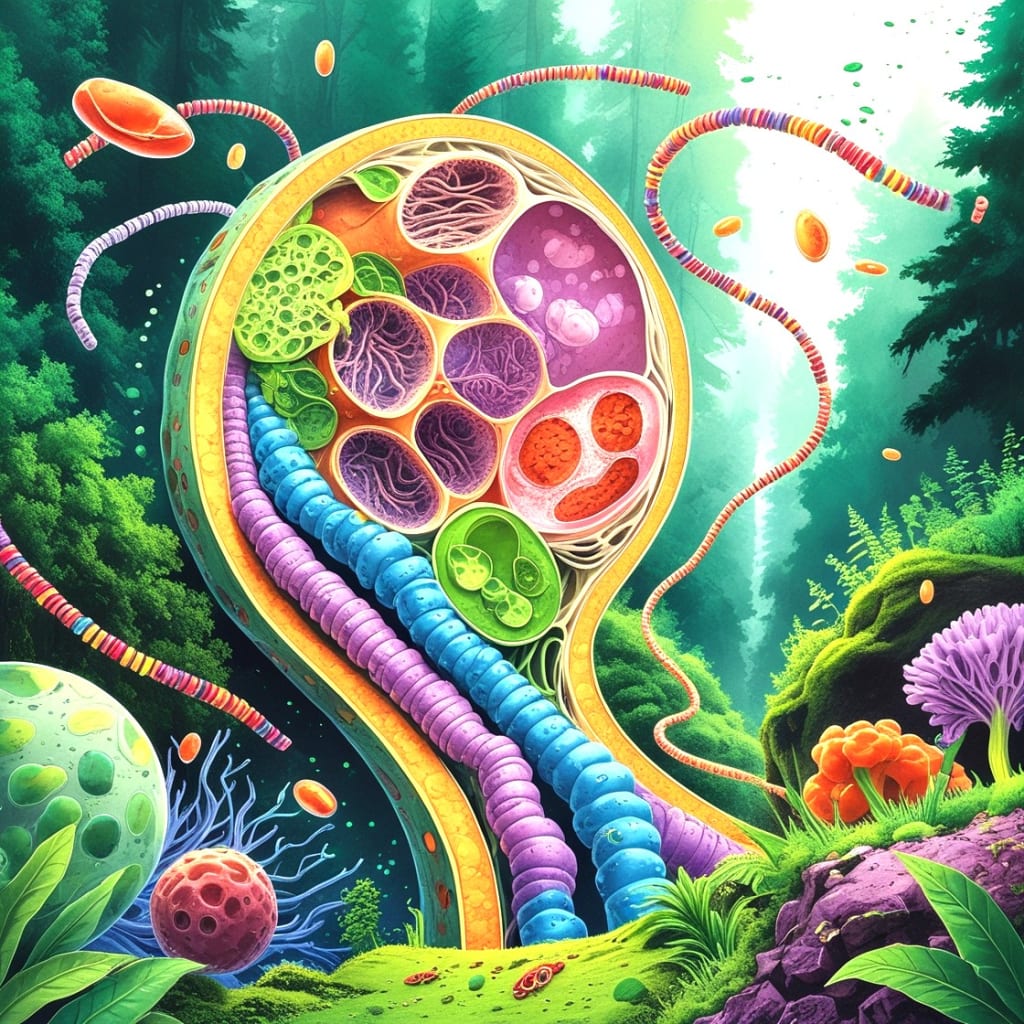
Biology, derived from the Greek words bios (life) and logos (study), is the scientific exploration of life and living organisms. It spans an immense range of topics—from the microscopic structures within cells to the vast, interconnected ecosystems that sustain life on Earth. This discipline helps us comprehend the structure, function, growth, origin, evolution, and distribution of all living beings. By studying biology, we gain insight into the mechanisms that drive life, paving the way for medical breakthroughs, environmental conservation, and technological advancements.
The Diverse Branches of Biology
Given the complexity of life, biology is divided into several specialized branches, each focusing on different aspects of living organisms. Some of the most significant branches include:
Botany – The study of plants, covering their physiology, structure, genetics, and ecological roles.
Zoology – The examination of animals, including their behavior, classification, and evolutionary history.
Microbiology – The investigation of microorganisms such as bacteria, viruses, and fungi, which play crucial roles in health and disease.
Genetics – The science of heredity and genetic variation, explaining how traits are passed from one generation to the next.
Ecology – The study of interactions between organisms and their environments, including food webs, energy flow, and ecosystem dynamics.
Biotechnology – The application of biological processes in industries such as medicine, agriculture, and environmental science.
Molecular Biology – The exploration of biological molecules, particularly DNA and proteins, and their functions within cells.
Each of these branches contributes uniquely to our understanding of life, driving innovations that improve human health, food security, and environmental sustainability.
The Cell: Life’s Fundamental Unit
All living organisms are composed of cells, the smallest structures capable of performing life-sustaining functions. Cells are categorized into two primary types:
Prokaryotic Cells – Simple cells lacking a nucleus, found in bacteria and archaea.
Eukaryotic Cells – Complex cells with a defined nucleus, present in plants, animals, fungi, and protists.
Cells carry out essential processes such as metabolism, growth, and reproduction. The discovery of cells by Robert Hooke in 1665 marked a turning point in biology, leading to the formulation of the cell theory, which states:
Each living thing is made up of one or more cells. The cell is the basic structural and functional unit of life.
All cells arise from pre-existing cells.
This theory remains a cornerstone of biological science, emphasizing the cell's central role in life processes.
Genetics: The Blueprint of Life
Genetics is the study of heredity—how traits are inherited through DNA. Gregor Mendel, often called the father of genetics, established the fundamental principles of inheritance through his experiments with pea plants. Modern genetics encompasses:
DNA Structure – The double-helix model proposed by Watson and Crick in 1953 revolutionized our understanding of genetic information storage.
Genetic Engineering – Techniques like CRISPR allow scientists to edit genes, offering potential cures for genetic disorders and improvements in agriculture.
Evolution: The Driving Force of Biodiversity
Charles Darwin’s theory of natural selection explains how species evolve over time. Evolution occurs through mechanisms such as:
Mutations – Random changes in DNA that can lead to new traits.
Genetic Drift – Random fluctuations in gene frequencies within a population.
Environmental Pressures – Factors like climate change and competition that influence survival and reproduction.
These processes result in the incredible diversity of life on Earth, from microscopic bacteria to towering redwood trees.
Ecology: The Web of Life
Ecology examines how organisms interact with each other and their environments. Key ecological concepts include:
Food Chains and Webs – The flow of energy from producers (plants) to consumers (animals) and decomposers (fungi and bacteria).
Biomes – Large-scale ecosystems such as tropical rainforests, deserts, and coral reefs, each with unique climates and species.
Conservation Biology – Efforts to protect endangered species and restore damaged ecosystems.
Human activities, including deforestation, pollution, and climate change, threaten ecological balance, making ecological research vital for sustainability.
Biology in Medicine and Technology
Biology has led to groundbreaking advancements that improve human life:
Medicine – Vaccines, antibiotics, and gene therapy have eradicated diseases and extended lifespans.
Biotechnology – Genetically modified crops enhance food production, while synthetic biology creates sustainable materials.
Stem Cell Research & CRISPR – These cutting-edge fields hold promise for regenerating tissues and curing genetic disorders.
Conclusion: The Future of Biology
Biology is a dynamic and ever-evolving field of study that contributes to our greater comprehension of life. Its impact is profound and far-reaching, ranging from deciphering genetic codes to protecting ecosystems. As technology advances, biology will continue to shape medicine, agriculture, and environmental policies, ensuring a healthier and more sustainable future.
By studying biology, we not only unlock the mysteries of life but also learn how to preserve and enhance it for generations to come.
About the Creator
Keep reading
More stories from Rocky Brahma and writers in Earth and other communities.
10 Easy Ways to Maintain a Sustainable Lifestyle Without Breaking the Bank
Many of us want to contribute to a more sustainable way of life in a world where environmental degradation and climate change dominate the news. However, let's be honest: if you're on a budget, the idea of going green can be overwhelming. The bright side? Sustainable living doesn't have to be hard or expensive. In fact, some of the changes that have the greatest impact are also the simplest. Without jeopardizing your wallet or your sanity, here are ten simple and inexpensive methods for leading a more sustainable lifestyle.
By Rocky Brahma11 months ago in Earth
High-Speed Train Crash in Southern Spain Leaves at Least 21 Dead
A devastating high-speed train crash in southern Spain has left at least 21 people dead and dozens injured, shocking the nation and triggering a major emergency response. The incident, which occurred on a busy rail route connecting key southern cities, has reignited concerns over railway safety, infrastructure maintenance, and emergency preparedness in one of Europe’s most advanced rail networks.
By Aarif Lashariabout 11 hours ago in Earth
Icy Chaos in Central and Eastern Europe
Winter has unleashed its fury across central and eastern Europe, leaving travelers frustrated and transport networks struggling to keep up. Over the past few days, freezing rain and ice have wreaked havoc on airports, train stations, and highways — forcing flight diversions, delaying trains, and making roads treacherously slippery. From Vienna to Budapest, Prague to Bratislava, this icy grip has brought travel to a near standstill. Let’s take a closer look at what’s happening, how it’s affecting people on the move, and what it tells us about winter travel in Europe. A Sudden Winter Blow A sudden wave of freezing rain swept across the region, coating runways, rail tracks, and roads with a dangerous layer of ice. Major airports in Austria, Hungary, Slovakia, and the Czech Republic were particularly affected. At Vienna International Airport, operations were temporarily suspended when runways became too slick for flights to land safely. Travelers already in the air had to divert to alternative airports in Munich, Frankfurt, and Venice. Meanwhile, Budapest’s Ferenc Liszt International Airport paused all arrivals and departures, and Prague’s Václav Havel Airport continued operating but at limited capacity. Trains Crawling Through Ice Rail networks weren’t spared. Across Austria, Hungary, and the Czech Republic, ice on tracks and power lines caused delays and cancellations. Austria’s national rail operator, ÖBB, urged passengers to postpone non-essential journeys. In the Czech Republic, travelers at Prague’s main station faced long waits as trains struggled to maintain schedules. Hungary’s tram and suburban rail services were temporarily suspended due to ice buildup on power lines. This combination of black ice, frozen switches, and heavy snowfall has tested the limits of winter infrastructure in Europe. Roads Turn Into Skating Rinks The icy weather didn’t just affect public transport — roads became treacherous, too. Authorities in Slovakia and the Czech Republic warned residents to avoid non-essential travel as highways turned into slippery skating rinks. Accidents and minor collisions were reported, and emergency services were busy responding to dozens of injuries from slips and falls. Even schools weren’t immune: parts of Romania shifted to online learning, keeping children safe during the extreme temperatures, which dropped to around -13°C in some areas. Why This Weather Is So Disruptive Meteorologists point to several factors that made this storm particularly severe: Freezing rain on top of existing snow creates an icy layer that’s extremely hard to clear. Rapidly refreezing surfaces make conditions unpredictable. Temperatures hovering around freezing prevent efficient melting during the day. This “perfect storm” scenario underscores just how vulnerable transport systems are to extreme weather. Even well-prepared airports and rail networks can struggle when weather transitions from snow to freezing rain. Voices From the Ground Passengers took to social media to express their frustration: Crowded airports as travelers scrambled to rebook flights. Train stations packed with delayed commuters, unsure when the next train would depart. Warming centers opened to provide shelter and hot drinks for stranded travelers. For many, a simple trip turned into a test of patience and resilience. Tips for Traveling in Freezing Conditions If you must travel during winter storms, experts recommend: Check flight and train schedules regularly, as delays can change quickly. Allow extra time for travel to avoid missing connections. Consider travel insurance that covers weather-related disruptions. If driving, carry winter essentials: blankets, food, water, and check road conditions before departure. Most importantly, prioritize safety over schedules — icy conditions can change rapidly, making travel risky. A Reminder From Winter This recent chaos in central and eastern Europe serves as a stark reminder of how interconnected transport systems are, and how vulnerable they can be to extreme weather. Flights grounded, trains stalled, and highways turned icy show that winter can bring travel to a halt — sometimes with very little warning. As Europe continues to face volatile winter conditions, travelers and authorities alike are reminded: preparation and flexibility are key. Sometimes, the weather truly has the final say. ❄️🛫🚆
By Muhammad Hassan5 days ago in Earth
Silver Screen Magic with Mae West
American actress and singer Mae West became a popular film actress during the Great Depression. She started entertaining in vaudeville, then performed on Broadway, and finally went to Hollywood. She signed up with Paramount Pictures and made her debut in the 1932 film “Night After Night.” She also starred in musicals, comedies, and crime dramas. The American Film Institute named her one of the best classic Hollywood actresses.
By Rasma Raisters6 days ago in Geeks


Comments
There are no comments for this story
Be the first to respond and start the conversation.