
Beyond the Blue Sky: Exploring the Wonders and Mysteries of Outer Space
From ancient stargazers to intergalactic missions, a journey through humanity's fascination with the cosmos
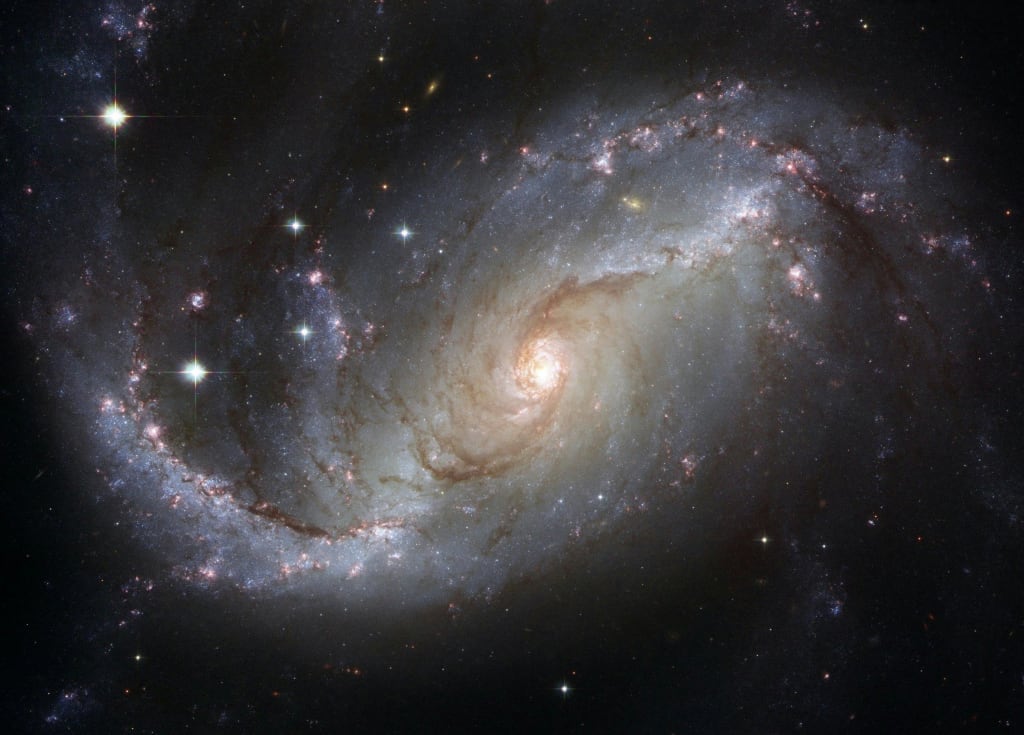
Title:
Beyond the Blue Sky: Exploring the Wonders and Mysteries of Outer Space
Subtitle:
From ancient stargazers to intergalactic missions, a journey through humanity's fascination with the cosmos
---
Introduction: Why Space Captivates Us
For centuries, humans have looked up at the stars in wonder, questioning what lies beyond our planet. From early myths to modern scientific breakthroughs, space has captured the imagination of poets, philosophers, and physicists alike. The infinite nature of the cosmos, combined with our innate curiosity, continues to drive exploration and innovation.
In this article, we’ll journey through the history of space exploration, explore its current achievements, dive into the mysteries of the universe, and look ahead at the future of space travel.
---
1. A Brief History of Humanity’s Fascination with Space
Humans have been observing the sky since the dawn of civilization. Ancient cultures like the Babylonians, Egyptians, and Mayans tracked celestial events and developed early forms of astronomy. The Greeks introduced scientific reasoning, with thinkers like Ptolemy and Aristotle shaping early models of the universe.
The Copernican Revolution in the 16th century was a major turning point. Nicolaus Copernicus proposed that the Earth orbits the Sun, challenging long-held beliefs. Later, Galileo Galilei’s telescope revealed moons orbiting Jupiter and craters on the Moon—evidence that revolutionized our understanding of the cosmos.
By the 20th century, space exploration became a reality. In 1957, the Soviet Union launched Sputnik, the first artificial satellite. This sparked the Space Race between the U.S. and USSR, culminating in Apollo 11 in 1969, when Neil Armstrong took the first human steps on the Moon.
---
2. The Modern Era of Space Exploration
Today, space is more accessible than ever. Government agencies like NASA, ESA (European Space Agency), and ISRO (Indian Space Research Organisation) lead major missions, while private companies like SpaceX, Blue Origin, and Rocket Lab are reshaping the future of travel beyond Earth.
Some key achievements include:
The International Space Station (ISS): A global science laboratory in low Earth orbit, continuously inhabited since 2000.
Mars Rovers (Spirit, Opportunity, Curiosity, Perseverance): These robotic explorers have sent invaluable data about Mars' geology and potential for life.
James Webb Space Telescope (JWST): Launched in 2021, this powerful telescope is peering back in time to the earliest galaxies.
These advances highlight humanity’s growing ability to explore, understand, and perhaps one day colonize space.
---
3. The Mysteries That Still Baffle Us
Despite all we’ve learned, space remains full of unknowns.
🔹 Dark Matter and Dark Energy
Scientists estimate that 85% of the universe’s mass is dark matter, which we can’t see or touch, and 68% is dark energy, a mysterious force causing the universe’s expansion to accelerate. What these are and how they work remains one of the greatest puzzles in science.
🔹 Black Holes
These cosmic giants are regions of space where gravity is so intense, not even light can escape. Recent imaging of a black hole’s shadow was a scientific milestone, but many questions remain: What happens inside a black hole? Could they be portals to other universes?
🔹 The Possibility of Life
Are we alone in the universe? So far, Earth is the only planet known to support life, but discoveries of exoplanets (planets outside our solar system) in the "habitable zone" have sparked hope. Moons like Europa (around Jupiter) and Enceladus (around Saturn) may also have subsurface oceans that could harbor life.
---
4. Living in Space: The Challenges and Rewards
While space travel is exciting, it comes with serious challenges:
Radiation exposure: Without Earth’s atmosphere, astronauts are vulnerable to cosmic rays.
Muscle and bone loss: Microgravity causes physical decline during long missions.
Psychological effects: Isolation and confinement can impact mental health.
Despite these, the benefits of space research are immense. Technologies developed for space have led to everyday innovations like GPS, memory foam, weather satellites, and even scratch-resistant lenses.
Living in space also teaches us how to live more sustainably. Astronauts must recycle everything—from water to air—offering insights into efficient resource use on Earth.
---
5. The Future: Colonizing the Moon, Mars, and Beyond
We’re on the cusp of a new era in space.
🔹 Moon Missions
NASA's Artemis Program aims to return humans to the Moon by mid-decade, with the goal of building a sustainable lunar base. This could be a launchpad for missions to Mars.
🔹 Human Missions to Mars
Elon Musk’s SpaceX is developing the Starship rocket, designed for long-distance space travel. NASA also has long-term plans for sending astronauts to Mars, possibly in the 2030s.
🔹 Space Tourism and Commercial Exploration
Companies like Blue Origin and Virgin Galactic are making space tourism a reality. While still costly, suborbital flights could eventually become as common as air travel.
🔹 Asteroid Mining
Future missions may involve mining asteroids for rare minerals. This could supply Earth and support off-world colonies, potentially creating a space-based economy.
---
6. Space and Humanity: Why Exploration Matters
Space exploration isn't just about rockets and planets—it’s about understanding our place in the universe. It drives scientific progress, fuels innovation, and unites humanity around shared goals.
Looking at Earth from space, as astronauts often describe, gives a profound sense of perspective. Political borders vanish, and the fragility of our planet becomes clear. In many ways, space reminds us that we are all part of something bigger.
---
Conclusion: The Final Frontier Awaits
Space remains one of the most awe-inspiring and promising frontiers we’ve ever encountered. Thanks to advancements in technology, collaboration across nations, and visionary private companies, we're closer than ever to unlocking its secrets.
Whether it’s the dream of walking on Mars, discovering alien life, or simply marveling at a galaxy millions of light-years away, space continues to inspire us to think beyond limits and reach for the stars.
So next time you gaze at the night sky, remember: what you’re seeing is just the beginning.
About the Creator
Keep reading
More stories from Rahmat Ullah Khan and writers in Earth and other communities.
Beyond the Postcard: Why Travel Still Matters in a Hyperconnected World
Title: Beyond the Postcard: Why Travel Still Matters in a Hyperconnected World Subtitle: From slow travel to digital nomadism, sustainability to self-discovery—how modern journeys reshape our minds, economies, and the planet.
By Rahmat Ullah Khan8 months ago in Earth
Global Agreement to Limit Greenhouse Gases Enters into Force
A major step in the global fight against climate change has begun as countries around the world start implementing a landmark agreement designed to limit greenhouse gas emissions. The agreement represents years of negotiations, scientific warnings, and increasing public concern about the growing impacts of global warming on ecosystems, economies, and human life.
By Irshad Abbasi 8 days ago in Earth


Comments
There are no comments for this story
Be the first to respond and start the conversation.